AI Trust and Military Security: Anthropic's Stance on Sabotage Allegations
Explore the crucial debate between Anthropic and the Pentagon over AI tool sabotage fears. Understand the implications for military AI, data security, and enterprise deployment models in critical sectors.

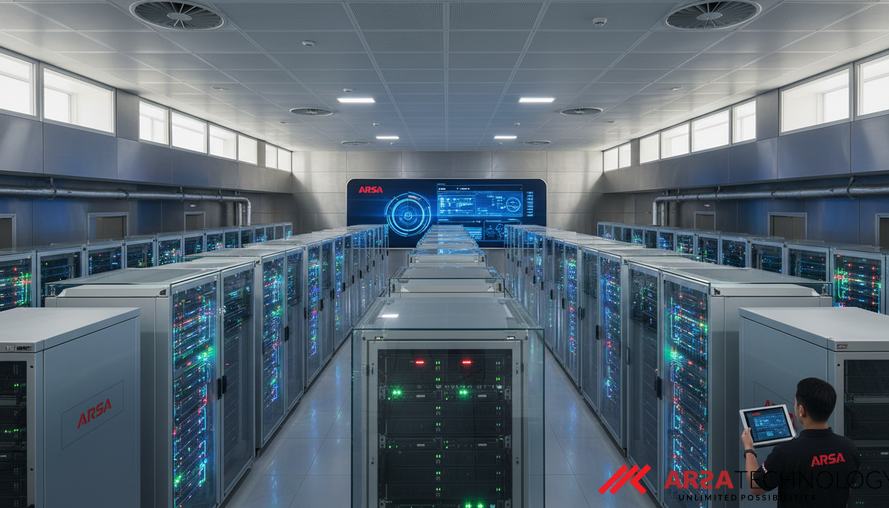
A significant legal and operational dispute has emerged between leading artificial intelligence developer Anthropic and the U.S. Pentagon, centering on fears that AI tools could be compromised during critical military operations. This high-stakes debate highlights growing concerns over the security and control of advanced AI systems in national defense. The core of the issue revolves around whether Anthropic’s generative AI model, Claude, could be intentionally disabled or altered once deployed within military infrastructure, a possibility the company vehemently denies. This situation has escalated into legal challenges and a critical re-evaluation of AI supply chain risks for enterprises globally.
The Pentagon's Supply Chain Risk Allegations
The U.S. Department of Defense (DoD), also referred to as the Pentagon, has been locked in discussions with Anthropic for several months regarding the deployment and security limitations of its AI technology for national security applications. Concerns came to a head when Defense Secretary Pete Hegseth labeled Anthropic a "supply-chain risk," a designation that has significant implications. This classification prevents the DoD from utilizing Anthropic’s software, including through third-party contractors, in the coming months. As a direct consequence, other federal agencies have also begun to discontinue their use of Claude.
The Pentagon's argument is rooted in the belief that an AI provider could potentially disrupt active military operations by unilaterally cutting off access to its software or by pushing malicious or harmful updates. This fear is particularly acute given that the military has been leveraging Claude for critical tasks such as analyzing vast amounts of data, drafting sensitive memos, and assisting in the generation of battle plans, as reported by WIRED in its coverage of the issue ("Anthropic Denies It Could Sabotage AI Tools During War"). Government attorneys have asserted in court filings that the Department of Defense is "not required to tolerate the risk that critical military systems will be jeopardized at pivotal moments for national defense and active military operations." This underscores the military's demand for absolute control and reliability over the technologies underpinning its operations.
Anthropic's Strong Denial and Technical Safeguards
In response to these grave accusations, Anthropic has mounted a robust defense, asserting that it lacks the technical capability to sabotage or interfere with its deployed AI models. Thiyagu Ramasamy, Anthropic's head of public sector, stated in a court filing, "Anthropic has never had the ability to cause Claude to stop working, alter its functionality, shut off access, or otherwise influence or imperil military operations." He further emphasized that "Anthropic does not have the access required to disable the technology or alter the model’s behavior before or during ongoing operations."
Ramasamy clarified that Anthropic explicitly "does not maintain any back door or remote 'kill switch.'" The company's personnel cannot remotely log into a DoD system to modify or disable models during an operation, as the technology is simply not designed to function in that manner. Any updates to the AI model would necessitate approval from both the government client and its designated cloud provider, preventing any unilateral changes by Anthropic. Furthermore, Ramasamy assured that Anthropic cannot access the prompts or other sensitive data that military users input into Claude, safeguarding the confidentiality of operational intelligence. The company's head of policy, Sarah Heck, also affirmed Anthropic's willingness to contractually guarantee that the license granted to the military would not confer any right for Anthropic to control or veto lawful operational decision-making.
The Broader Implications for Enterprise AI Deployment
This high-profile dispute brings critical considerations to the forefront for any enterprise adopting AI, particularly those operating in sensitive or mission-critical environments. The Pentagon's concerns underscore the paramount importance of data sovereignty, deployment control, and transparent operational frameworks when integrating advanced AI. Organizations must carefully evaluate how AI vendors manage access, updates, and data privacy, especially for systems that become integral to core operations.
For enterprises handling highly sensitive data or requiring uninterrupted operational uptime, the choice between cloud-dependent and on-premise AI deployments becomes vital. Solutions that allow for full self-hosting and operate without external network dependencies can mitigate the very "supply-chain risks" the Pentagon fears. For instance, AI Video Analytics Software, deployed on an organization’s own servers, can process sensitive data streams in real-time while ensuring data remains entirely within the client's infrastructure. Similarly, for identity management in regulated environments, an On-Premise Face Recognition SDK offers complete control over biometric data and operational systems, addressing compliance and security mandates. This control is crucial for governments, critical infrastructure operators, and large enterprises that cannot afford external vulnerabilities. ARSA Technology specializes in providing custom AI solutions engineered for such demanding environments, emphasizing robustness, privacy-by-design, and tangible business outcomes.
Legal Battle and Future Outlook
The disagreement has predictably spilled into the legal arena, with Anthropic filing two lawsuits to challenge the constitutionality of the DoD's ban and seeking an emergency order for its reversal. The immediate impact of the Pentagon's designation is already evident, with customers beginning to cancel existing deals, signaling the broader market's sensitivity to perceived security risks in AI partnerships. A critical hearing for one of these cases is scheduled for March 24 in a federal district court in San Francisco, with a decision on a temporary reversal expected shortly thereafter.
While the legal proceedings unfold, the Department of Defense has indicated it is taking "additional measures to mitigate the supply chain risk." This includes collaborating with third-party cloud service providers to implement safeguards that prevent Anthropic leadership from making unilateral changes to the Claude systems currently in use within military frameworks. This interim strategy reflects the ongoing tension between leveraging cutting-edge AI for operational advantage and ensuring uncompromising security and control in an increasingly complex geopolitical landscape. The outcome of this case will undoubtedly set precedents for how governments and large enterprises approach AI procurement and deployment in the future.
The dispute between Anthropic and the Pentagon underscores a fundamental challenge in the age of advanced AI: building and maintaining trust in technology that can profoundly impact national security and critical operations. As organizations increasingly rely on AI for decision-making and automation, the assurance of data control, operational autonomy, and transparent governance from AI providers becomes paramount. This incident serves as a crucial case study, emphasizing the need for robust contractual agreements and deployment models that prioritize the client's sovereign control over their AI systems.
To explore secure, deployable AI and IoT solutions for your enterprise needs, please contact ARSA for a free consultation.
Source: Wired.com