AI Unlocks Ancient History: Revolutionizing Oracle Bone Inscription Recognition
Explore how Multi-Scale Layer Attention (MSLA) with AI is revolutionizing Oracle Bone Inscription (OBI) recognition, preserving cultural heritage, and enabling new historical insights.

The Enduring Mystery of Oracle Bone Inscriptions
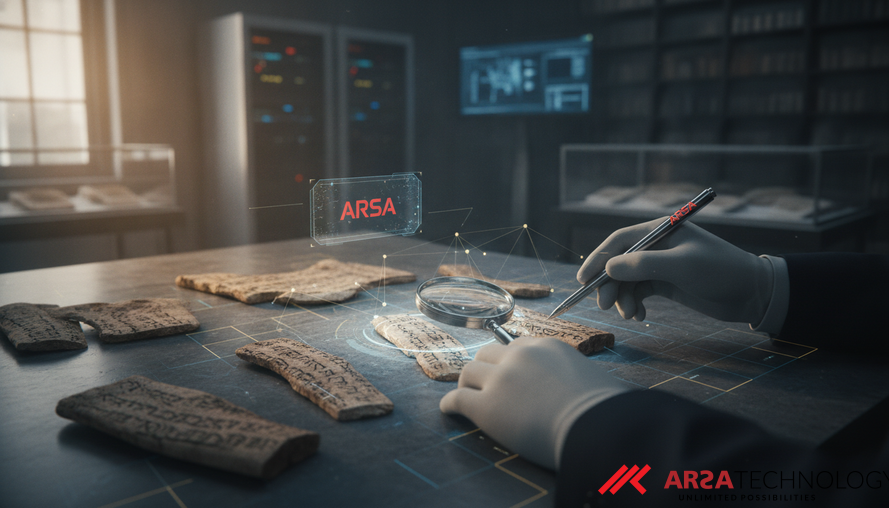
The earliest known systematized form of Chinese writing, Oracle Bone Inscriptions (OBIs), etched onto turtle shells and ox scapulae, represent a profound connection to ancient Chinese civilization. These inscriptions are not merely ancient texts; they are invaluable historical records, offering unparalleled insights into the society, culture, and beliefs of the Shang Dynasty, effectively forming the bedrock of modern Chinese characters. Deciphering them is crucial not only for archaeologists and historians but also for anyone seeking to understand the origins and evolution of human civilization. However, the task of accurately recognizing these ancient characters has long presented a formidable challenge, primarily due to their intricate nature and the passage of millennia.
The Unique Challenges of Ancient Script Recognition
Unlike modern, standardized typography, Oracle Bone Inscriptions possess complex, often irregular, and frequently degraded shapes. Over thousands of years, the bone or shell material has suffered natural erosion, fragmentation, and damage, making the inscribed characters difficult to discern even for human experts. Traditionally, the recognition of OBIs relied heavily on the specialized knowledge and painstaking manual analysis of epigraphers. This approach, while invaluable for initial breakthroughs, is inherently time-consuming, prone to human error, and simply unscalable for the vast datasets of inscriptions now available.
The advent of Artificial Intelligence (AI) and deep learning offered a promising path forward. Deep learning, a subset of AI, involves training computer systems to learn patterns from data, much like the human brain. While deep learning has brought revolutionary advancements to general image recognition tasks—such as identifying objects in photographs or classifying images—ancient scripts like OBIs present distinct hurdles. Research indicates that ancient script recognition faces specific challenges, including highly imbalanced data distributions (some characters appear rarely) and severe image degradation, which differ significantly from common images AI models are trained on ["Ancient Script Image Recognition and Processing: A Review" by Diao et al.]. The fine-grained details and subtle variations inherent in each OBI character often elude conventional AI models, resulting in limited performance when applied to this specialized domain.
Advancing AI with Attention: From General Images to Fine-Grained Details
To enhance AI models’ ability to process complex visual information, researchers developed "attention mechanisms." These mechanisms allow an AI model to selectively focus on the most relevant parts of an image or data input, mimicking how humans pay attention to specific details. Various forms of attention, such as channel attention (focusing on important feature maps), spatial attention (focusing on key regions), and temporal attention (for sequences), have significantly improved general image recognition.
However, when applied to the intricate world of OBIs, even these advanced attention mechanisms exhibited marginal improvements. The profound morphological variations, diverse writing styles, and degradation patterns present in OBIs proved too complex for these methods to fully capture. This highlighted a critical gap: existing techniques struggled to extract the nuanced, fine-grained details necessary for robust OBI recognition. More recent innovations introduced "layer attention," an approach where different processing layers within a deep learning model dynamically interact, allowing each layer to draw insights from its predecessors. This design was intended to capture richer, more fine-grained dependencies across the entire model's depth. Yet, even layer attention, when applied to OBIs, demonstrated only modest gains. Further analysis revealed a limitation: these layer attention mechanisms typically operate with a very small number of "tokens"—small units of data processed by the AI—which restricts the diversity of information exchanged between layers, thereby limiting their capacity to encode truly fine-grained details.
Multi-Scale Layer Attention (MSLA): A New Paradigm for Precision
To overcome these inherent limitations, a novel approach called Multi-Scale Layer Attention (MSLA) has been proposed. MSLA introduces a fundamental shift by explicitly modeling both multi-scale and cross-layer feature interactions. In simple terms, this means the AI system processes the OBI images at multiple levels of detail simultaneously—capturing both broad strokes and minute intricacies—while also ensuring deep, dynamic communication between different layers of its processing architecture.
The core innovation of MSLA lies in its "multi-scale token enrichment and progressive accumulation strategy." Instead of relying on a limited set of data tokens, MSLA enriches this set by deriving tokens from both global (overall character shape) and local (specific strokes or degraded areas) spatial representations. This allows the model to simultaneously perceive both the comprehensive context and the granular details within an inscription. Furthermore, through progressive accumulation, MSLA aggregates key information from all preceding layers, allowing each subsequent layer to access a continuously expanding pool of diverse, multi-scale data. This robust information exchange greatly enhances the AI's ability to identify subtle variations and complex structural dependencies within OBIs. Extensive experiments on large datasets of Oracle Bone Inscriptions have consistently shown that MSLA significantly outperforms existing attention mechanisms, all while maintaining efficient computational performance ["Enhancing Oracle Bone Inscription Recognition via Multi-Scale Layer Attention" by Yan et al.].
Beyond Academia: Practical Applications and Future Impact
The advancements in OBI recognition, exemplified by MSLA, extend far beyond academic research. For enterprises, particularly those involved in digital humanities, cultural preservation, and large-scale data processing, these technologies offer substantial practical value:
- Accelerated Research and Discovery: Automating OBI recognition dramatically speeds up the process of deciphering and cataloging ancient texts. This allows historians and archaeologists to analyze vastly more data than previously possible, leading to faster breakthroughs in understanding ancient civilizations.
- Cultural Heritage Preservation: Digital recognition techniques enable the meticulous preservation of fragile historical artifacts. By creating high-fidelity digital representations and automatically transcribing them, invaluable cultural heritage can be protected from further degradation and made accessible globally. AI's capabilities extend to predicting missing sections and enhancing faded inscriptions, offering new ways to reconstruct and recover lost knowledge.
- Enhanced Accessibility: As AI decodes more ancient scripts, these historical records become accessible to a wider audience, fostering greater public engagement with history and culture. AI acts as a bridge, allowing modern society to "listen to the threads" of communication from millennia past ["How AI Is Decoding Ancient Languages We Couldn’t Read" by Science News Today].
- Foundation for Broader AI Applications: The techniques developed for OBI recognition, particularly those focused on fine-grained detail and robust pattern recognition in degraded data, are transferable. These methodologies can enhance other complex visual recognition tasks in various industries, from quality control in manufacturing to specialized medical image analysis.
ARSA Technology, with its expertise in custom AI solutions and AI video analytics software, is well-positioned to leverage such advanced AI paradigms. By developing tailored computer vision systems that integrate sophisticated attention mechanisms like MSLA, enterprises can transform challenging image recognition problems into actionable intelligence. Whether it's processing historical documents, analyzing complex industrial imagery, or enhancing smart city surveillance for unique patterns, the capability to capture fine-grained details and contextual relationships is paramount for accuracy and reliability. ARSA's solutions are designed for mission-critical applications, delivering proven and scalable AI for governments and enterprises that demand precision and operational reliability.
Sources:
Yan, C., Wang, K., Wang, Y., Xiong, J., & He, T. (2026). Enhancing Oracle Bone Inscription Recognition via Multi-Scale Layer Attention*. arXiv preprint arXiv:2607.00057. Diao, X., Bo, R., Xiao, Y., Shi, L., Zhou, Z., Xu, H., Li, C., Tang, X., Poesio, M., John, C. M., & Shi, D. (2025). Ancient Script Image Recognition and Processing: A Review*. arXiv preprint arXiv:2506.19208. Editors of ScienceNewsToday. (2025, December 30). How AI Is Decoding Ancient Languages We Couldn’t Read*. Science News Today.
Ready to explore how advanced AI can transform your complex data challenges into measurable insights? Contact ARSA today to discuss custom AI solutions engineered for precision and impact.