Airport Security in Flux: Examining the Role of Federal Agents Amidst Operational Challenges
Explore the complex operational challenges in airport security, from government shutdowns impacting staff to the visible presence of federal agents. Discover how AI and IoT solutions can enhance efficiency and security in critical infrastructure.

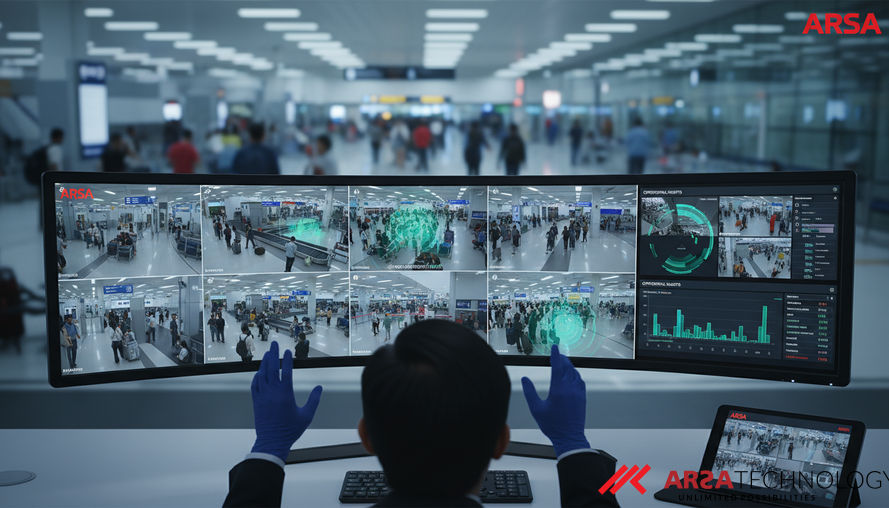
Airport environments are complex ecosystems, vital for global travel and commerce. Maintaining their security and operational fluidity requires precise coordination, robust staffing, and advanced technology. However, as demonstrated by past events, even well-established systems can face significant disruptions, leading to widespread concern among travelers and industry stakeholders. A notable example from March 2026 at John F. Kennedy International Airport (JFK) underscored how a partial government shutdown could ripple through critical infrastructure, creating palpable tension and raising questions about the roles of various federal agencies.
The Ripple Effect of Operational Disruptions in Air Travel
The incident at JFK stemmed from a political stalemate in the U.S. Congress, which failed to pass an appropriations bill to fund the Department of Homeland Security (DHS). This lapse in funding meant that thousands of federal employees, including critical Transportation Security Administration (TSA) agents responsible for airport screening, were working without pay. The financial strain led to widespread absenteeism among TSA staff, resulting in severe shortages and frustratingly long security lines at airports nationwide. For travelers, this translated into extended wait times and a noticeable decline in the typically smooth airport experience.
Against this backdrop of operational strain, former President Donald Trump deployed between 100 and 150 agents from U.S. Immigration and Customs Enforcement (ICE) to several airports, ostensibly to help manage the growing crowds and alleviate wait times. This decision, however, immediately raised eyebrows and discomfort among the public. The primary responsibility of ICE’s Enforcement and Removal Operations (ERO) division is immigration arrests and raids, not crowd management or passenger processing. Their presence, as observed by a policy reporter at The Verge (Gaby Del Valle, March 24, 2026), added a layer of unease rather than reassurance, with agents often seen standing idly or conversing, rather than actively assisting with passenger flow.
The Disconnect: Federal Presence vs. Operational Needs
The reporter's observations at JFK's various terminals painted a consistent picture: ICE agents from both ERO and Homeland Security Investigations (HSI) — the unit typically tasked with investigating serious crimes like terrorism and human smuggling—were present but not engaged in crowd control or TSA assistance. HSI, which during that period reportedly had its resources diverted towards immigration enforcement efforts, saw its agents similarly inactive in the terminals. This deployment highlighted a significant disconnect between the stated purpose (managing crowds) and the reality on the ground, where the agents' specialized training and typical duties did not align with the immediate operational needs of the airport during a staffing crisis.
The situation brought into sharp focus the vulnerabilities of critical infrastructure when human resources are stretched thin and political decisions impact daily operations. While the deployment aimed to address the visible symptoms of the shutdown – long lines – it failed to provide the practical support needed for passenger processing. In such scenarios, the clear identification of roles and the appropriate allocation of resources become paramount for maintaining both security and public confidence.
Leveraging AI and IoT for Enhanced Airport Operations
The challenges highlighted by the government shutdown underscore the growing need for resilient and intelligent operational systems in critical environments like airports. While human personnel are irreplaceable for many security functions, AI and IoT technologies can significantly augment their capabilities, providing crucial support during staffing shortages or unexpected events. For instance, advanced AI video analytics can transform passive CCTV feeds into real-time operational intelligence.
These systems can:
- Monitor crowd density and flow: Automatically identify bottlenecks and areas of congestion, allowing airport staff to reallocate resources proactively.
- Predict wait times: Provide accurate estimations for security lines, enhancing passenger experience and allowing for better planning.
- Detect anomalies and security breaches: Alert personnel to unusual behavior or unauthorized access in restricted areas, freeing up human agents for critical interventions.
- Optimize resource allocation: Based on real-time data, optimize the deployment of available staff, be it TSA, airport operations, or even emergency services.
Implementing solutions like ARSA AI Video Analytics Software can provide such capabilities on-premise, ensuring data privacy and operational autonomy, which is critical in highly regulated sectors. ARSA Technology has been experienced since 2018 in delivering robust, production-ready AI and IoT systems that solve real-world problems.
Beyond Human Intervention: The Future of Adaptive Security
The incident also revealed deeper systemic issues within government agencies and their ability to adapt to crises. The calls for requiring federal agents to wear identifying badges or masks, and the push for independent funding for agencies like TSA and FEMA, indicate a desire for greater transparency and accountability. In an era where security threats are constantly evolving and operational demands are increasing, relying solely on ad-hoc human deployment is often insufficient.
The development of integrated AI and IoT platforms offers a path towards more adaptive and resilient security infrastructure. These systems can provide continuous monitoring, automate routine tasks, and deliver actionable insights, thus enabling human operators to focus on complex decision-making and critical responses. Whether through pre-configured edge AI systems like the ARSA AI Box Series for rapid deployment or custom AI solutions, technology can bridge operational gaps and enhance overall efficiency.
The chaos experienced at JFK and other airports served as a stark reminder of the delicate balance required to maintain public services, especially in critical infrastructure. While political resolutions are essential, the strategic integration of advanced AI and IoT solutions offers a pragmatic approach to strengthening operational resilience, improving efficiency, and ensuring public safety, even amidst unforeseen challenges.
Source: Del Valle, G. (2026, March 24). What is ICE actually doing at the airport? The Verge. https://www.theverge.com/policy/899855/ice-airports-tsa-shutdown-dhs-jfk
To explore how ARSA Technology's AI and IoT solutions can fortify your critical operations and enhance security, we invite you to contact ARSA for a free consultation.