Digital Memories and Enterprise Efficiency: The Unseen Potential of NFC-Powered E-Ink Displays
Explore how innovative NFC and E-Ink technologies, transforming digital fridge magnets, reveal a powerful blueprint for low-power, real-time visual intelligence in enterprise AI and IoT solutions.

The Evolution of Visual Memorabilia
For many, a fridge door adorned with instant photos serves as a vibrant, ever-changing timeline of cherished moments, reflecting recent adventures, social gatherings, and everyday joys. This analogue tradition, however, comes with its own set of trade-offs: the bulkiness of instant cameras, the recurring cost of film, and the occasional unpredictable results. Imagine, then, a digital counterpart that captures the same nostalgic aesthetic but with modern convenience – a reusable, digital Polaroid that wirelessly updates its display with new memories from your smartphone. This innovative concept, as seen in products like the VidaBay Snap, leverages advanced technologies such as Near Field Communication (NFC) and E-Ink displays to offer a fresh take on personal visual storytelling. While seemingly a consumer novelty, the underlying technological principles hold significant implications for enterprise AI and IoT solutions, pointing towards a future of highly efficient, dynamic visual intelligence.
This blend of old-world charm with cutting-edge tech highlights a broader trend: the intelligent integration of low-power display solutions within our daily lives. Beyond personal keepsakes, these advancements signify a crucial step towards more adaptable and sustainable visual communication in various professional settings, from industrial monitoring to smart retail. The core technologies driving these innovations offer a glimpse into how data can be presented efficiently at the edge, reducing energy consumption and infrastructure complexity.
Decoding the Tech: NFC and E-Ink Displays
At the heart of these digital fridge magnets are two critical technologies: Near Field Communication (NFC) and E-Ink displays. NFC is the same wireless technology that enables tap-to-pay functionality with smartphones. In this context, it serves a dual purpose: wirelessly powering the device and facilitating the transfer of image data from a smartphone. This means the digital magnet itself requires no internal battery or charging, drawing all necessary power directly from the phone during the brief transfer process. E-Ink, or electronic ink, is a display technology known for its paper-like appearance and extremely low power consumption. Unlike conventional LCD or OLED screens that constantly refresh and emit light, E-Ink displays only consume power when the image changes, retaining the displayed content indefinitely once rendered. This inherent energy efficiency is why devices like e-readers boast exceptionally long battery lives.
The particular E-Ink screen utilized in some of these consumer devices, such as the Spectra 3100, was originally developed for retail applications like electronic shelf labels. This choice brings certain advantages, primarily cost-effectiveness and robustness. However, it also comes with specific limitations regarding color reproduction. These screens are typically capable of displaying only a limited palette, often black, white, red, and yellow. While this restricts the accuracy of color representation, leading to desaturation or reinterpretation of hues like blues and greens, it also contributes to a distinctive, "lo-fi" aesthetic reminiscent of classic instant photographs. The image transfer and screen refresh process, taking approximately 25-30 seconds, is a consequence of how E-Ink displays with multiple color pigments update their content, a slightly longer process compared to monochrome E-Ink screens with color filters. This blend of power efficiency and unique visual characteristics makes E-Ink an intriguing candidate for specialized display needs.
From Consumer Novelty to Enterprise Utility: The Power of Edge Displays
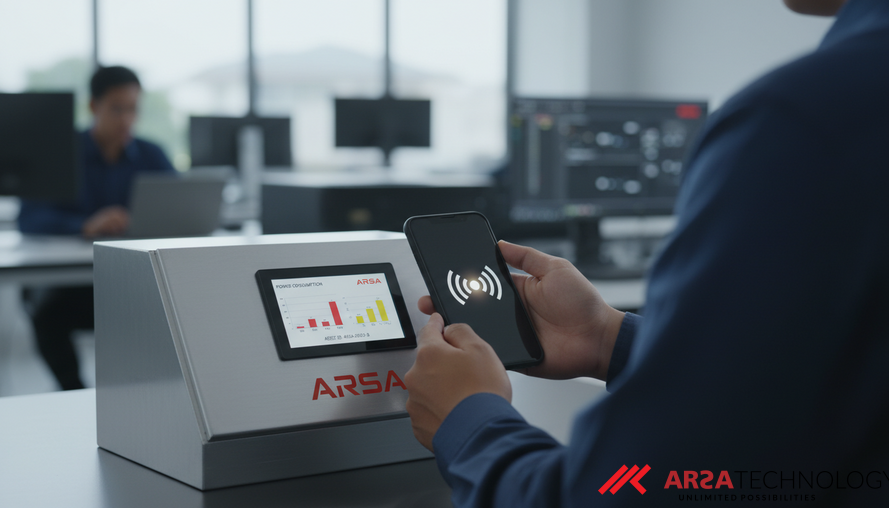
While a digital photo magnet might seem like a mere consumer gadget, the underlying principles of NFC-powered E-Ink displays hold significant promise for enterprise applications. Consider scenarios where real-time, low-power visual information is critical. In industrial settings, E-Ink displays could provide energy-efficient status updates for machinery, safety alerts, or inventory levels at various points on a factory floor. Imagine production line managers receiving instant, dynamic visual cues on AI Box - Basic Safety Guard metrics, like PPE compliance or restricted area breaches, displayed directly on wall-mounted E-Ink panels that only refresh when new incidents occur. This reduces the need for constant power, complex wiring, and frequent battery replacements, offering a cost-effective alternative to traditional LED screens.
Similarly, in retail environments, these displays could dynamically update product information, promotions, or queue management statistics, leveraging NFC for staff to quickly update signage via a handheld device. For digital signage (DOOH - Digital Out-of-Home), the ability to display static content with minimal power consumption could lead to more sustainable and flexible advertising solutions, especially in locations where power access is challenging or intermittent. The "no charging" aspect of NFC-powered E-Ink makes them ideal for remote monitoring and asset tracking applications where devices need to operate autonomously for extended periods. This aligns with ARSA Technology's focus on AI Box Series, which delivers edge processing and real-time insights, allowing for local data presentation and control, minimizing latency, and preserving privacy.
Practical Deployment: Overcoming Integration Challenges
The journey from concept to practical deployment, whether for a consumer magnet or an industrial sensor display, often involves specific technical hurdles. For example, the source article highlights that NFC transfers for these digital Polaroids require close proximity and can be obstructed by phone cases, sometimes requiring multiple attempts to get the alignment right. This illustrates a common challenge in wireless technology integration: ensuring robust and reliable communication in real-world conditions. In enterprise deployments, such considerations become even more critical.
For industrial IoT devices or smart city infrastructure, successful integration demands solutions that are not only energy-efficient but also resilient to environmental factors, user error, and diverse hardware compatibility. ARSA Technology, with its expertise since 2018, designs systems with these practical deployment realities in mind, from on-premise SDKs for sensitive environments to plug-and-play edge AI systems. The precision required for NFC-based transfers emphasizes the need for intuitive design and clear operational guidelines, whether for personal photo updates or critical business data displays. Developing an intuitive mobile application for managing the content on these E-Ink displays is also vital, allowing users to crop, zoom, rotate, and adjust images, along with providing a preview function to anticipate the limited color palette.
Data Management and Visual Storytelling in Business
In a business context, the ability to selectively display and update information on low-power screens opens new avenues for data management and visual storytelling. While a consumer might use the accompanying mobile app to apply artistic filters or adjust basic image properties, an enterprise version could integrate seamlessly with existing data analytics platforms. Imagine an E-Ink display on a warehouse wall instantly showing a critical alert generated by ARSA's AI Video Analytics, perhaps indicating a safety compliance issue or a sudden drop in inventory. The "lo-fi" aesthetic, while charming for personal photos, transforms into a functional advantage in enterprise—offering highly legible, glanceable data points in stark, impactful colors (black, white, red, yellow) that immediately draw attention to key metrics or alerts without overwhelming the viewer.
The capability to pre-process images or data through a specialized app, generating a preview of how information will appear on the limited color screen, is crucial. This ensures that essential data remains clear and actionable, even with color constraints. Enterprises can leverage this to create custom dashboards for quick operational overviews, environmental sensor readings, or dynamic pricing displays, where the primary goal is clarity and immediate understanding rather than photorealistic fidelity. This efficiency in data presentation, combined with minimal power draw, positions E-Ink displays as a strategic component in the future of intelligent operations across various industries.
The ROI of Intelligent Display Solutions
Investing in intelligent display solutions that leverage technologies like NFC and E-Ink offers significant returns on investment for enterprises. The "never needs charging" aspect translates directly into reduced maintenance costs and operational overhead. For large-scale deployments, this eliminates the need for complex battery management, power infrastructure, or manual charging routines that can be expensive and time-consuming. The extended lifespan inherent in low-power E-Ink displays also contributes to a lower total cost of ownership. These systems can be deployed in remote or hard-to-reach locations where traditional power sources are impractical, expanding the reach of real-time monitoring and data visualization.
Moreover, the ability to update content wirelessly and on-demand enhances operational agility. Retailers can quickly adjust promotions, manufacturing plants can display urgent safety protocols, and logistics hubs can track package status with dynamic, energy-efficient signage. This real-time flexibility, combined with the power of embedded AI and IoT, transforms passive infrastructure into active, intelligent assets. As ARSA Technology demonstrates with its AI and IoT solutions, the focus is always on delivering measurable business outcomes, reducing costs, and enhancing efficiency, aligning perfectly with the strategic advantages offered by these innovative display technologies.
Conclusion: Shaping the Future with Smart Visuals
The unassuming digital Polaroid magnet, powered by NFC and utilizing E-Ink technology, offers more than just a nostalgic way to display personal photos. It acts as a tangible demonstration of how advanced, low-power visual intelligence can be integrated into everyday objects. The principles of wireless power delivery, passive displays, and localized data processing are not confined to consumer gadgets but represent foundational elements for the next generation of enterprise AI and IoT solutions. As industries seek more sustainable, efficient, and flexible ways to deploy technology, these innovations provide a compelling blueprint. From smart manufacturing floors to dynamic retail spaces, the future of operational visibility lies in intelligent, energy-efficient displays that deliver critical information precisely where it’s needed, without compromise.
To explore how ARSA Technology can engineer intelligent, low-power display solutions and other AI/IoT systems to transform your operations, we invite you to contact ARSA for a free consultation.
Source: The Verge: These reusable digital Polaroids are a clever way to cover a fridge in memories