Dynamic Gesture Recognition: Bridging Human Interaction and AI for Smart Systems
Explore a novel AI method for dynamic hand gesture recognition, using MediaPipe and CNNs to interpret complex movements like LIBRAS for home automation and enterprise control. Learn how skeletal keypoints and spatiotemporal matrices enable robust, real-time interaction.

Introduction: Bridging the Gap Between Human Gestures and Intelligent Machines
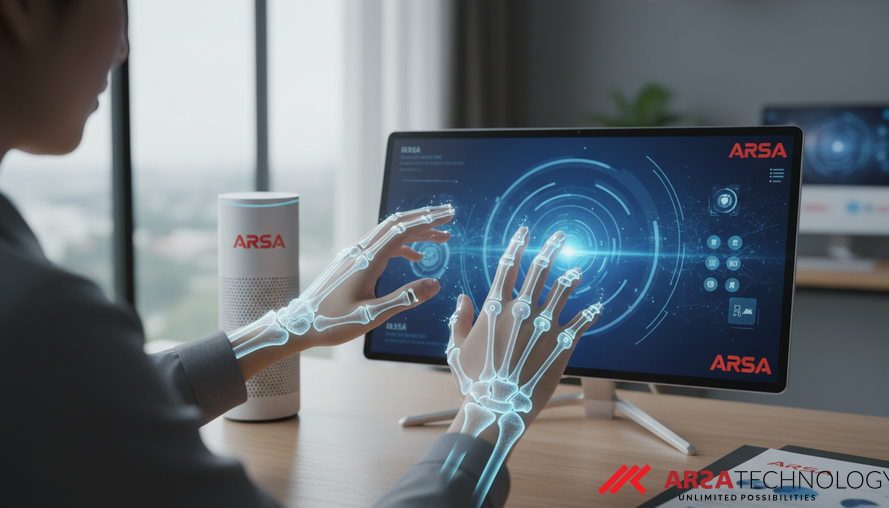
The ability to interact with technology naturally, using intuitive hand movements, has long been a vision for human-machine interfaces. From controlling devices with a simple wave to interpreting complex sign languages, automatic hand gesture recognition is a cornerstone of this future. However, precisely recognizing dynamic gestures—those involving nuanced movements over time—presents a significant challenge. The human hand's intricate anatomy, with its numerous joints, tendons, and individual variations, makes building AI models that generalize across diverse users particularly difficult. Moreover, capturing both the instantaneous hand configuration and its evolution through movement is crucial for accurate interpretation.
Traditional approaches that rely on raw image pixels often struggle with varying lighting, skin tones, and high dimensionality, leading to less robust systems. A more promising avenue lies in abstracting visual appearance to focus solely on the geometric structure of the hand. This is where skeletal keypoints, extracted by specialized computer vision models, offer a robust alternative, providing a foundation for more accurate and private gesture recognition.
The Power of Skeletal Keypoints for Robust Gesture Understanding
To overcome the limitations of raw image processing, a recent academic paper by Jasmine Moreira (2026) in Dynamic LIBRAS Gesture Recognition via CNN over Spatiotemporal Matrix Representation proposes a method that leverages the strength of skeletal keypoints. Instead of analyzing entire images, this approach first uses a pre-trained model like Google's MediaPipe Hand Landmarker to detect and pinpoint 21 key skeletal points on the hand for each video frame. Think of these keypoints as a digital skeleton, capturing the precise position and orientation of fingers and the palm. This abstraction significantly reduces data complexity, making the system less sensitive to visual noise, background distractions, and individual skin color, while also enhancing privacy compared to processing full facial or body images.
The MediaPipe Hand Landmarker is an advanced tool that can identify these keypoints in real-time. It provides coordinates (x, y, z) for each joint, indicating its spatial location, along with information on handedness (left/right) and a confidence score for the detection. This efficient keypoint extraction, with low latency even on standard CPUs or GPUs, is critical for real-time applications, ensuring that subsequent analytical stages receive clean, structured data promptly. Companies like ARSA Technology regularly utilize advanced computer vision techniques for enterprise solutions, building on the capabilities of such robust foundational tools. For enterprises looking to implement sophisticated video analytics, solutions like ARSA's AI Video Analytics can transform raw CCTV feeds into actionable intelligence.
Transforming Movement into Measurable Data: Spatiotemporal Matrix and CNN
The core innovation described in the paper lies in how these individual frame keypoints are aggregated and interpreted. For dynamic gestures, the sequence of movements is just as important as the static hand shapes. To capture this "movement over time," the 21 skeletal keypoints (each with x, y, z coordinates) from multiple frames are organized into a novel spatiotemporal matrix representation. This matrix, dimensioned at 90x21 (representing the keypoints across multiple frames and their axes), essentially transforms a complex, time-series of 3D hand movements into a 2D "image." This structured representation is then fed into a standard 2D Convolutional Neural Network (CNN).
A CNN is a type of artificial neural network that excels at recognizing patterns in image-like data. By treating the spatiotemporal matrix as an image, the CNN can effectively learn the unique "visual patterns" associated with different dynamic gestures, even tolerating variations in expression rhythm and exact finger positioning. This elegant approach avoids the computational complexity often associated with recurrent neural networks (RNNs) typically used for sequential data, making the system more lightweight and suitable for real-time deployment on general-purpose hardware. For organizations seeking tailored AI implementations, custom AI solutions are essential to convert unique operational data into intelligent decision engines.
Real-Time Responsiveness: The Sliding Window Advantage
Achieving smooth, continuous recognition of dynamic gestures in real-time is paramount for practical applications. The paper addresses this by implementing a sliding window strategy coupled with temporal frame triplication. Imagine a fixed "window" of frames constantly sliding over the incoming video stream. This window captures a segment of recent hand movements, creating the spatiotemporal matrix for that specific interval. To enhance the system's robustness and accuracy within this real-time stream, temporal frame triplication is applied. This means that each frame within the sliding window is effectively sampled multiple times, providing a denser and more stable input to the CNN.
This combination allows the system to continuously infer gestures without needing computationally intensive recurrent networks, which typically have a higher latency. The approach enables a system to track and identify a gesture as it unfolds, rather than waiting for an entire movement sequence to complete. With an achieved rate of 30 frames per second (fps) and low processing latency, the system demonstrates its capability for responsive interaction in dynamic environments, a critical factor for enterprise-grade solutions.
Practical Impact: LIBRAS for Smart Home Automation
The practical application highlighted in the paper focuses on controlling a home automation system using LIBRAS (Língua Brasileira de Sinais), the official Brazilian Sign Language. This showcases the immediate potential of dynamic gesture recognition to enhance accessibility and convenience. The system covers 11 classes of both static and dynamic LIBRAS gestures, associating specific signs (e.g., the letter "A" for air conditioning, "J" for windows, or a toggle command) with device control. This direct, intuitive interaction paradigm moves beyond traditional buttons and voice commands, offering a new layer of user experience.
Beyond smart homes, the implications for enterprise are vast. Imagine industrial workers controlling machinery with gestures, healthcare professionals navigating digital records hands-free in sterile environments, or retail staff managing inventory with specific hand signs. The ability to accurately interpret dynamic gestures in varied conditions, even low-light scenarios where the system achieved 95% accuracy (92% under normal lighting), underscores its robustness. ARSA Technology frequently deploys edge AI systems, such as the ARSA AI Box Series, that enable real-time processing and intelligent control in demanding industrial and commercial environments, mirroring the on-premise, low-latency requirements of this gesture recognition system.
Beyond the Lab: Performance, Challenges, and Future Directions
The impressive accuracy rates achieved in the experimental setup demonstrate the effectiveness of this novel approach. However, the researchers acknowledge that further systematic experiments with greater user diversity are essential for a more thorough evaluation of the system's generalization capabilities. Ensuring that an AI model performs consistently across a wide range of individuals, irrespective of hand size, movement style, or subtle variations in gesture execution, is a key challenge in deploying such technologies in the real world.
The paper emphasizes a lightweight 2D CNN architecture (approximately 25,000 parameters), which, combined with the sliding window and temporal frame triplication, contributes to its real-time robustness on general-purpose hardware. This focus on efficiency and deployability is a critical consideration for any enterprise implementation, where cost-effectiveness and seamless integration into existing infrastructure are paramount. As ARSA Technology has been experienced since 2018 in building and deploying AI solutions that move beyond experimentation into measurable impact, this practical approach aligns well with industry demands.
This research contributes significantly to the field of human-machine interaction by offering a robust and efficient method for dynamic gesture recognition. As AI continues to evolve, methods like these will pave the way for more intuitive, accessible, and secure ways for humans to interact with the digital world around them.
To explore how ARSA Technology can transform your operational challenges into intelligent solutions using advanced AI and IoT, we invite you to contact ARSA for a free consultation.
**Source:** Moreira, J. (2026). Dynamic LIBRAS Gesture Recognition via CNN over Spatiotemporal Matrix Representation. arXiv preprint arXiv:2603.25863.