Enhancing Analog Circuit Design: AI for Stable HP-Splines in Signal Analysis
Explore how Artificial Neural Networks provide stable and accurate parameter selection for HP-Splines, revolutionizing signal processing and analog circuit design with data-driven optimization.

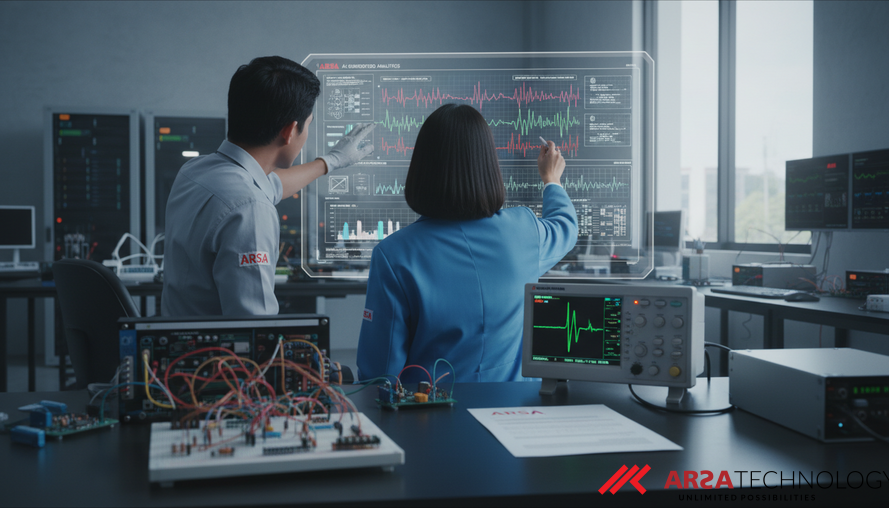
Multiexponential analysis plays a crucial role in a wide array of scientific and engineering disciplines, from remote sensing and antenna design to digital imaging and Nuclear Magnetic Resonance (NMR) analysis. This powerful technique dissects complex signals into their fundamental exponential components. However, accurately modeling these exponential decay patterns often presents a significant challenge, especially when dealing with noisy or "ill-conditioned" data, where small input changes can lead to large, unpredictable outputs. To overcome this, researchers frequently employ regularization techniques and specialized regression models.
One such advanced modeling tool is the hyperbolic polynomial penalized spline (HP-spline). Unlike traditional splines that primarily handle polynomial trends, HP-splines are specifically designed to adapt to data exhibiting exponential characteristics. A critical component of an HP-spline is its "frequency parameter" (α). This parameter directly influences the spline's ability to accurately reproduce exponential trends and adapt to the unique structural behavior of the data. The proper selection of this parameter is paramount, as an unsuitable choice can result in poor data fitting or excessive sensitivity to data perturbations, compromising the model's reliability.
The Intricacies of HP-Spline Parameter Selection
While HP-splines offer superior flexibility for exponential data, their effectiveness hinges on the accurate selection of the frequency parameter (α). This parameter essentially defines the underlying mathematical space in which the spline operates, acting as a shape control for the approximation. A well-chosen α allows the hyperbolic B-spline basis (HB-splines) to precisely capture the nuances of exponential growth or decay. Conversely, an incorrect α can lead to an approximation that is either too rigid or overly sensitive, amplifying noise and instability.
Traditional methods for selecting this critical parameter, such as the data-driven algorithm proposed in academic research (Bruni et al., "Accuracy and stability of Artificial Neural Networks for HP-Splines frequency parameter selection"), involve minimizing an estimate of the condition number associated with the penalized model. While effective, this process demands repeated evaluations across a predefined range of candidate frequencies. Such iterative calculations are computationally intensive, a burden that escalates significantly in more complex scenarios like bivariate multiexponential analysis, where parameters must be selected along multiple grid lines. This computational overhead motivates the search for more efficient and adaptable parameter selection strategies.
Leveraging AI for Adaptive Parameter Estimation
Enter Artificial Neural Networks (ANNs). These data-driven learning models offer a robust alternative for estimating complex parameters that characterize functional spaces. By framing the frequency parameter (α) as a multivariate function of the input data, researchers can design an ANN to predict its optimal value. This innovative approach harnesses the inherent approximation capabilities of neural networks, allowing them to learn intricate relationships within the data that traditional analytical methods might struggle to capture efficiently.
The beauty of using an ANN for this task lies in its ability to significantly reduce computational burden and enhance flexibility. Instead of iterative evaluations, a trained neural network can provide instant predictions, adapting dynamically to the data's characteristics. This is particularly impactful for enterprises involved in complex signal processing or analog circuit design, where rapid and accurate parameter optimization can translate directly into faster development cycles and improved product performance. Companies like ARSA Technology, with its expertise in custom AI solutions, are well-positioned to implement such advanced data-driven optimization.
Ensuring Robustness: Accuracy and Stability Through AI
The success of any AI-driven optimization depends not only on its predictive power but also on its accuracy and stability. The academic paper delves into the theoretical approximation properties of deep neural network architectures, establishing a crucial link between classical spline-based regression and modern data-driven learning methods. This analysis underpins the design of a neural network that predicts optimal HP-spline parameters by carefully balancing approximation accuracy, stability analysis, and complexity control. The goal is to produce neural architectures that are both highly expressive and inherently stable, ensuring reliable performance even with varying data inputs.
To guarantee this robustness, the research provides rigorous mathematical derivations, including upper bounds for the HP-spline approximation error when the frequency parameter is predicted by the ANN. This enhances the interpretability of the network's predictions, providing confidence in its output. Furthermore, the paper introduces stability results for a two-stage estimation model, deriving a wavelet-based generalization bound via uniform stability. This theoretical framework ensures that the AI model will perform consistently on new, unseen data and is not overly sensitive to minor data perturbations – a critical requirement for mission-critical deployments in areas like industrial IoT or defense.
Real-World Impact: Applications Beyond Theory
The implications of this research extend far beyond academic circles, offering tangible benefits for various industries. For instance, in analog circuit design, precise control over exponential signal behavior is paramount for performance and reliability. Using AI to optimally select HP-spline parameters can accelerate the design process, reduce errors, and lead to more robust circuits for applications ranging from high-frequency communication systems to advanced sensor interfaces. The ability to efficiently process signals at the "edge" – closer to the data source – is also vital. ARSA Technology's AI Box Series, for example, offers pre-configured edge AI systems that could deploy such parameter selection models for real-time, on-site data analysis.
Beyond circuit design, this AI-driven approach can revolutionize any field relying on multiexponential analysis. In digital imaging, it can lead to more accurate image reconstruction and noise reduction. In medical imaging, particularly NMR analysis, it can improve diagnostic precision. For smart city infrastructure, it enables more accurate sensor data interpretation, feeding into efficient traffic management or environmental monitoring systems. The core innovation lies in transforming a computationally intensive and model-dependent parameter selection into a fast, data-driven, and highly stable process. ARSA Technology, having been experienced since 2018 in developing production-ready AI and IoT systems, is adept at translating such cutting-edge academic insights into practical, high-impact enterprise solutions.
The numerical experiments conducted in the study confirm these theoretical findings, demonstrating that the proposed ANN approach achieves both high accuracy and stable performance. This validation is crucial, proving the method’s readiness for real-world application in complex data environments.
To harness the power of AI for optimizing your complex systems or integrating advanced signal processing capabilities, explore ARSA Technology's innovative solutions. We translate intricate AI research into practical, profitable outcomes for global enterprises.
Ready to enhance your operational intelligence with stable, data-driven AI? We invite you to explore our solutions and contact ARSA for a consultation.
**Source:** Bruni, V., Calabrese, P. E., Campagna, R., & Vitulano, D. (2026). Accuracy and stability of Artificial Neural Networks for HP-Splines frequency parameter selection. arXiv preprint arXiv:2604.20991. Available at: https://arxiv.org/abs/2604.20991