Enhancing Mobile Banking: The Power of User-Centric Design for Superior Customer Experience
Discover how user-centric design and advanced features like AI-powered biometrics are transforming mobile banking. Improve UI, boost engagement, and ensure security for an international audience.

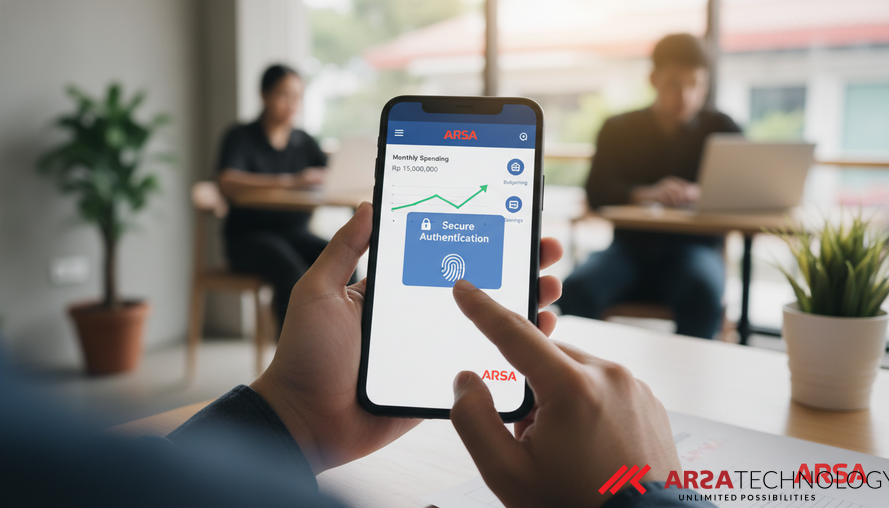
Mobile banking applications have fundamentally reshaped how individuals manage their finances, offering unparalleled convenience and accessibility. Yet, as technology rapidly advances, the focus must shift beyond mere functionality to creating truly intuitive and satisfying user experiences. A well-designed mobile banking app is not just about transactions; it's about fostering trust, simplifying complex financial tasks, and ensuring user satisfaction.
The Evolving Landscape of Digital Finance
The digital revolution has brought financial services directly to our smartphones and tablets, making mobile banking an indispensable tool for millions globally. With billions of smartphone users worldwide, the imperative to design effective and user-friendly mobile interactions is more critical than ever. Principles of Human-Computer Interaction (HCI) are paramount in this endeavor, ensuring that banking apps cater to diverse user groups, including the elderly, children, and individuals with disabilities. Neglecting HCI principles can lead to frustrating experiences, characterized by complex navigation, inconsistent interfaces, and inadequate personalization. By prioritizing a user-centric approach, financial institutions can significantly enhance user satisfaction, engagement, and ultimately, customer loyalty.
Uncovering Key User Challenges in Mobile Banking
Despite the widespread adoption of mobile banking, a significant portion of users encounter persistent problems. A study surveying 103 individuals revealed that while 81% regularly use mobile banking apps, a substantial 77% reported issues with their current applications. Furthermore, 44.7% expressed dissatisfaction, often resorting to third-party payment apps for daily transactions, indicating a critical gap in core banking app functionality. The identified pain points were varied but consistent: language barriers, frustratingly long loading times, ambiguous terminology, and complex navigational structures. These issues collectively hinder a seamless user experience.
The research also highlighted specific feature demands and concerns. An overwhelming 84% of users desired an integrated budgeting function to better manage their finances. On the security front, 46% expressed concerns or difficulties with existing biometric authentication methods, pointing to a need for more robust and user-friendly security features. Users are clearly asking for more personalized interfaces, improved customer support within the app, and enhanced security measures that don't compromise ease of use.
Strategic Methodologies for User-Centric Insights
To comprehensively understand user preferences and identify specific pain points, a multi-faceted methodological approach is crucial. The study employed several techniques to gather actionable insights from a target audience. Needs assessment surveys were foundational, directly querying users about their experiences and requirements. This quantitative data was complemented by qualitative methods, providing deeper context.
- Think Aloud Testing: This technique involved participants vocalizing their thoughts, feelings, and actions as they navigated the mobile banking app. This allowed researchers to understand real-time cognitive processes, uncover usability issues, and identify unexpected user behaviors.
- Heat Maps: By tracking where users tap, click, and scroll on app screens, heat maps visually represent areas of interest and friction. This data helps designers optimize layout and prioritize information based on actual user engagement.
- Remote Usability Testing: This method expanded the reach of testing, allowing participants to interact with the app in their natural environments. It provided valuable insights into how the app performs in diverse real-world contexts, outside a controlled lab setting.
- Guerrilla Usability Testing: Informal, quick feedback sessions with a wider, general audience were conducted to gather broad impressions and validate critical design decisions on the fly. This agile approach helps ensure that the app resonates with a larger demographic.
These methodologies collectively ensure that design improvements are directly informed by user behavior and feedback, leading to solutions that genuinely address customer needs.
Designing for Superior Mobile Banking Experiences
The insights gleaned from user research unequivocally highlight several key areas for improving mobile banking applications. Enhancing the overall customer experience hinges on a commitment to security, functionality, simplified navigation, and intuitive visual design.
- Prioritizing Security: While users demand convenience, robust security remains non-negotiable. Banks must implement advanced authentication methods that are both secure and easy to use. For instance, incorporating advanced active and passive liveness detection capabilities in biometric authentication, like those offered by the ARSA Face Recognition API, can prevent fraud such as photo or video spoofing, assuring users of their data's integrity. For organizations requiring full control over their biometric data, an on-premise solution like the ARSA Face Recognition SDK ensures data sovereignty and compliance.
- Expanding Core Functionality: Beyond basic transactions, integrating features like personalized budgeting tools, financial planning assistance, and spending analytics is critical. These additions transform banking apps from mere transaction portals into comprehensive financial management companions, meeting the expressed needs of users for more individualized insights.
- Simplifying Navigation and UI Consistency: Navigational complexity is a major deterrent. Apps should feature clear, intuitive pathways to common functions, reducing the cognitive load on users. Maintaining UI consistency across all screens and features ensures a predictable and pleasant user journey. Leveraging Gestalt psychology principles, such as "closeness" and "symmetry," can significantly enhance app grouping and layout, making interfaces feel more organized and easier to understand at a glance. For instance, grouping related financial tools visually or ensuring a balanced layout can guide users more effectively.
- Improving Visual Design: A clean, modern, and accessible visual design is essential. This includes clear typography, appropriate color schemes, and logical arrangement of elements. Visual clutter should be minimized, and interactive elements should be easily identifiable.
The Strategic Imperative for Financial Institutions
For banks and mobile application developers, the findings underscore a clear strategic imperative: invest in user-centric design to drive adoption, engagement, and loyalty. Organizations that fail to address user pain points risk losing customers to more agile competitors or even third-party financial service providers. By embracing a holistic approach to UI/UX, banks can not only improve existing services but also unlock new business value through enhanced customer satisfaction and prolonged engagement. The ability to deploy AI-driven solutions, whether through integrated hardware like the ARSA AI Box Series for edge video analytics or custom software solutions, positions institutions to lead in this competitive landscape. ARSA Technology has been experienced since 2018 in delivering practical AI and IoT solutions that address complex operational realities.
The integration of innovative features, driven by AI and IoT, extends beyond security. Predictive analytics can offer personalized financial insights, fraud detection can become more proactive, and customer service can be automated with intelligent chatbots, all contributing to a richer user experience. By continuously iterating based on user feedback and embracing cutting-edge technologies, mobile banking applications can move beyond mere utility to become indispensable tools that genuinely empower users in their financial lives. This proactive approach ensures relevance and sustained growth in the dynamic digital finance sector.
Source: Chitrakar, L., Panta, I., Paneru, B., Poudel, S., & Kansakar, L. (2024). User-Centric Design of UI for Mobile Banking Apps: Improving UI and Features for Better Customer Experience. arXiv preprint arXiv:2604.06175. Retrieved from https://arxiv.org/abs/2604.06175
Ready to transform your digital platforms with advanced AI and IoT solutions that prioritize user experience and security? Explore ARSA Technology's capabilities and contact ARSA for a free consultation.