Enhancing Robot Navigation: Lessons from the Fruit Fly Brain for Robust AI
Discover FLYNN, a neural network inspired by the fruit fly brain, offering unparalleled robustness for robot navigation in unpredictable environments and during sensory loss.

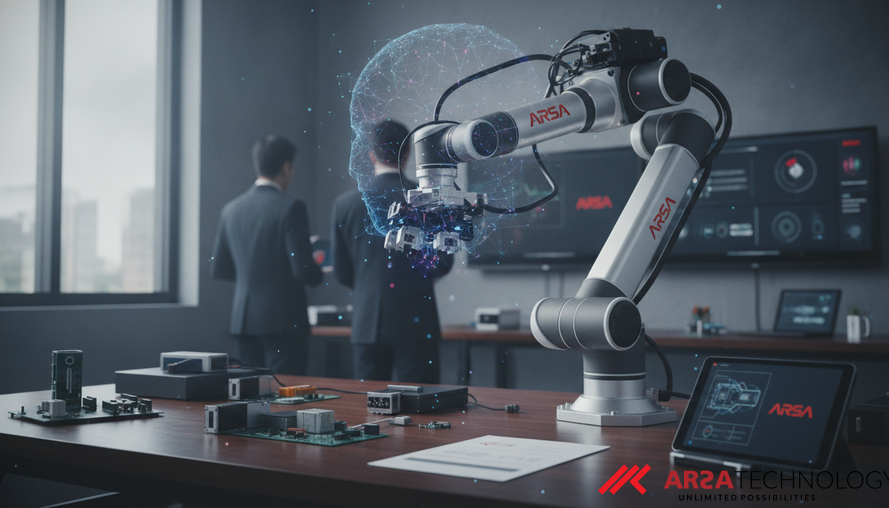
In the rapidly evolving landscape of artificial intelligence and robotics, the quest for truly autonomous systems capable of operating reliably in dynamic, unpredictable environments remains a paramount challenge. While modern deep learning models excel at specific tasks, their fragility when confronted with unfamiliar situations or sensor malfunctions can pose significant operational risks. This vulnerability stands in stark contrast to biological organisms, which exhibit remarkable adaptability and resilience. Recent research has taken a fascinating turn, looking to nature—specifically, the brain of a fruit fly—to engineer more robust artificial intelligence for robot navigation.
Learning from Biological Resilience: The Fruit Fly Connectome
Traditional Artificial Neural Networks (ANNs), though inspired by biological neurons, have largely been "hand-crafted" by engineers. Architectures like Convolutional Neural Networks (CNNs) and Recurrent Neural Networks (RNNs) have achieved state-of-the-art performance in areas like image classification and voice recognition. However, their reliance on continuous, high-quality data makes them susceptible to what is known as "out-of-distribution (OOD) data"—unexpected environments or scenarios they haven't been specifically trained for. In critical applications like autonomous driving, encountering such novel situations or experiencing a camera failure often necessitates immediate human intervention, highlighting a significant limitation in current AI systems.
Biological systems, on the other hand, possess an inherent robustness. An animal, for instance, can quickly adapt to a new habitat or continue to navigate effectively even after losing a sense like vision. This extraordinary resilience is deeply embedded in the intricate wiring and functional organization of biological brains. The fruit fly, Drosophila melanogaster, is a prime example. Its visual system and central complex are highly specialized for tasks such as calculating optical flow and determining heading direction, enabling stable spatial representations even in unknown surroundings or under sensory impairment.
Introducing FLYNN: A Biologically-Constrained Neural Network
Scientists have developed a novel recurrent neural network (RNN) called FLYNN, whose architecture is directly modeled after the synaptic-resolution brain connectome of the Drosophila melanogaster. A connectome is essentially a comprehensive "wiring diagram" of a brain, detailing all the neural connections. The recent availability of the complete fruit fly connectome, comprising 139,255 neurons and over 5.3 million connections, provided an unprecedented opportunity to translate this biological blueprint into a functional AI. By building an RNN with connectivity strictly constrained by this biological structure, researchers aimed to replicate the inherent functional redundancy and modularity observed in natural systems.
This approach marks a significant departure from standard hand-crafted network designs. Unlike conventional multi-layered networks, FLYNN operates with a single, evolving internal state dictated by a synaptic connectivity matrix derived directly from the fly’s brain. This matrix is exceptionally sparse, reflecting the efficient and specialized wiring of the biological brain. The innovation provides a new direction for designing more resilient artificial agents by leveraging the proven topological advantages of biological brains, a concept explored in broader brain-inspired navigation research as well (Chahine et al., 2023).
Unpacking the Performance and Robustness of FLYNN
Evaluations of FLYNN in simulated robotic navigation tasks yielded three pivotal findings:
- Feasibility: The research successfully demonstrated that a neural network architecture strictly adhering to biological connectivity can indeed be trained to perform complex, vision-based multi-sensory navigation tasks. This validates the potential of leveraging biological connectomes for functional AI design.
- Competitive Performance: Despite its biologically inspired structure, FLYNN achieved performance levels comparable to modern, hand-crafted neural networks with similar numbers of parameters. This suggests that bio-inspired designs can stand on equal footing with current state-of-the-art models in terms of task execution.
- Graceful Degradation: Most remarkably, FLYNN exhibited a unique robustness to both out-of-distribution (OOD) data and sensory loss—including complete vision loss—without any specific prior training for these challenging conditions. Traditional hand-crafted networks largely failed under such circumstances, even when specifically trained to handle camera dropout scenarios.
This superior resilience in FLYNN is hypothesized to stem from a high degree of "representational modularity" within its internal states. This means that different parts of the network might be specialized for processing different aspects of information, allowing the system to maintain overall functionality even if specific sensory inputs or processing pathways are compromised. Such modularity is a hallmark of biological brains, contributing to their impressive fault tolerance.
Business Implications: Driving Resilient Autonomous Operations
The implications of developing robust AI agents like FLYNN are profound for industries reliant on autonomous systems and real-time decision-making. Enhanced resilience to OOD data and sensory degradation translates directly into significant business advantages:
- Increased Operational Uptime: Robots and autonomous vehicles equipped with such brain-inspired AI could maintain operations even when faced with unexpected environmental changes or sensor malfunctions, reducing costly downtime and improving service continuity in manufacturing, logistics, and smart city applications. ARSA's AI Box Series, for instance, provides on-premise AI processing designed for operational reliability and low latency in diverse industrial settings.
- Reduced Training and Development Costs: The ability of AI to adapt to new environments without requiring extensive retraining on novel datasets means lower development costs and faster deployment cycles for new operational scenarios. Custom AI solutions, such as those provided by ARSA Technology, can integrate such advancements to deliver tailored, future-proof systems.
- Enhanced Safety and Compliance: In critical applications like industrial safety or defense, where human lives and high-value assets are at stake, AI systems that gracefully degrade rather than catastrophically fail are indispensable. This research supports the development of more reliable AI video analytics software that can continue to monitor and alert even under adverse conditions, assisting businesses in meeting stringent safety and regulatory requirements. Our AI Video Analytics Software is designed to convert CCTV streams into real-time operational intelligence for security and safety applications.
- Scalability and Adaptability: Deploying AI solutions that can function effectively across a wider range of conditions without constant recalibration makes them inherently more scalable. This flexibility is crucial for enterprises expanding operations into varied geographical or operational contexts.
- Competitive Advantage: Organizations that adopt AI with inherent robustness will gain a significant competitive edge through more reliable automation, improved decision intelligence, and reduced operational risks across the industries we serve.
This pioneering work using the fruit fly brain topology opens promising avenues for engineering the next generation of resilient artificial intelligence. By integrating lessons from biological systems, AI development can move towards solutions that are not only high-performing but also inherently robust and adaptable to the complexities of the real world. This foundational research by Benquan Wang and Jingdao Chen contributes significantly to the long-term viability and trustworthiness of autonomous systems, underscoring the potential of bio-inspired AI to solve some of the most pressing challenges in robotics.
To learn more about deploying practical, proven, and profitable AI solutions designed for real-world reliability, contact ARSA today.
Sources:
Wang, B., & Chen, J. (2026). FLYNN: Robust Neural Network for Robot Navigation using Fly Brain Topology. arXiv preprint arXiv:2607.00025*. https://arxiv.org/abs/2607.00025 Chahine, M., Hasani, R., Kao, P., Ray, A., Shubert, R., Lechner, M., Amini, A., & Rus, D. (2023). Robust flight navigation out of distribution with liquid neural networks. Science Robotics, 8*(77). https://www.science.org/doi/10.1126/scirobotics.adc8892