Hybrid AI Propels Additive Manufacturing: Real-Time Quality Control at Production Scale
Discover how hybrid AI solutions are revolutionizing Laser Powder Bed Fusion, enabling real-time melt pool monitoring with high accuracy and low latency for scalable industrial quality control.

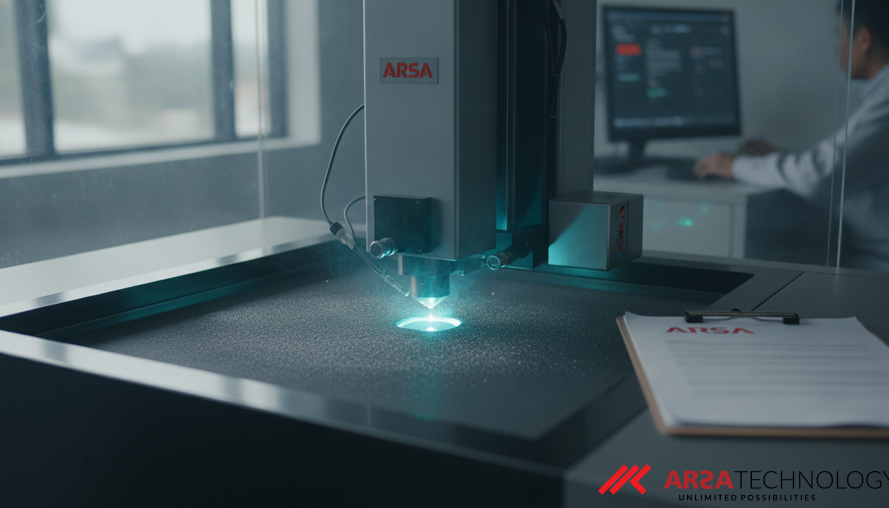
Additive manufacturing (AM), particularly Laser Powder Bed Fusion (LPBF), stands as a cornerstone of modern industrial production, enabling the creation of intricate, high-performance metal components for sectors like aerospace, medical, and automotive. This layer-by-layer fabrication process promises unparalleled design freedom and material efficiency. However, realizing AM's full potential at production scale has been consistently challenged by the need for stringent quality control, especially concerning subtle anomalies during the build process itself. Without robust, real-time monitoring, defects can compromise structural integrity and functional performance, leading to costly waste and rework.
The Criticality of Melt Pool Monitoring in LPBF
In LPBF, a high-power laser selectively melts layers of metal powder, forming a molten "melt pool" that solidifies to create the desired part. The stability and characteristics of this melt pool are direct indicators of final part quality. Deviations, known as melt pool anomalies, include issues like "keyholing" (an excessively deep melt pool that can trap gas and lead to porosity) or "lack of fusion" (insufficient melting that results in voids). These defects, if undetected, can lead to component failure, rendering the part unusable. Traditional quality assurance often relies on post-production inspection, which is time-consuming, expensive, and reactive, meaning defects are only identified after significant resources have been invested. The ability to detect these anomalies in real time—as they form—is therefore paramount for proactive quality control, minimizing waste, and ensuring the reliability of mission-critical parts.
However, integrating artificial intelligence (AI) into manufacturing workflows to achieve this real-time control faces significant hurdles. While AI and machine learning (ML) have shown immense promise in detecting anomalies, purely deep learning models, despite their accuracy, often demand computational resources and processing speeds that are incompatible with the rapid, millisecond-level decision-making required on a factory floor. Conversely, simpler machine learning methods, while computationally efficient, may lack the sophistication to extract subtle yet critical features directly from complex visual data such as melt pool images. This creates a critical "accuracy-speed trade-off" that has long hindered the widespread industrial deployment of AI for in-situ AM monitoring.
Overcoming the AI Speed-Accuracy Paradox for Industrial Scale
The challenge lies in developing AI solutions that are both highly accurate in identifying minute defects and exceptionally fast in processing data, allowing for immediate corrective actions. The goal is to move beyond AI as a tool for isolated optimization toward an integrated system that can inform and control the entire production lifecycle, as highlighted by industry discussions on AI's role in scaling additive manufacturing (TCT Magazine, "How additive manufacturing can realise the promise of AI at production scale," 2026, https://www.tctmagazine.com/how-additive-manufacturing-can-realise-the-promise-of-ai-at-production-scale/). Fragmented data from different machines and process steps, coupled with proprietary interfaces, often limits the effectiveness of AI models by depriving them of comprehensive, contextualized information. Solutions must provide real-time data flow and interoperable communication across diverse factory systems.
To address this, researchers are exploring "hybrid" AI approaches that combine the strengths of different machine learning paradigms. These approaches aim to leverage the superior feature extraction capabilities of deep learning models, particularly Convolutional Neural Networks (CNNs), while relying on the computational efficiency of classical machine learning algorithms for classification. This decoupling of feature learning from classification offers a pathway to achieving high accuracy without the prohibitive inference times often associated with end-to-end deep neural networks.
A Hybrid AI Approach for Rapid, Reliable Anomaly Detection
A recent study investigated the implementation of a hybrid AI/ML framework for real-time melt pool monitoring in LPBF, specifically focusing on nickel superalloy 625 (Emmanuel et al., "Machine Learning Modeling for Real-Time Melt Pool Monitoring in Laser Powder Bed Fusion Additive Manufacturing: A Hybrid Approach," 2026, https://arxiv.org/abs/2606.23851). This research developed a binary image classification system to distinguish between normal and abnormal melt pool images. The core of their innovation was benchmarking several transfer learning architectures (ResNet50, EfficientNetB0, and MobileNetV2) against two Random Forest approaches: one utilizing features extracted by EfficientNetB0 (the hybrid model) and another relying on raw pixel data (a baseline).
The results were compelling. The hybrid EfficientNetB0-plus-Random Forest approach demonstrated outstanding performance, achieving an F1 score of 0.9451, an accuracy of 0.9458, and an Area Under the Receiver Operating Characteristic Curve (AUC) of 0.9904. Crucially, this high performance was coupled with an impressive inference time of just 1.15 milliseconds per image. In stark contrast, purely deep learning models, while capable, exhibited significantly longer inference times—up to 156 times slower than the hybrid approach—often with lower overall accuracy. This highlights that combining sophisticated, pre-trained convolutional features with the speed of classical ensemble methods offers a robust and computationally efficient solution for real-time anomaly detection, particularly valuable in manufacturing environments where labeled data might be limited. This kind of nuanced AI implementation is precisely what powers advanced AI Video Analytics Software for industrial applications.
Business Outcomes: Enhancing Quality, Reducing Risk, and Driving ROI
The implications of such a hybrid AI approach for businesses are substantial. By enabling sub-millisecond anomaly detection, manufacturers can move from reactive quality checks to proactive, in-situ process correction. This translates directly into:
- Significant Cost Reduction and ROI: Early detection of melt pool anomalies means fewer defective parts, drastically reducing material waste, rework, and the need for costly post-production inspection and scrapping of high-value components. The efficiency gains contribute to a strong return on investment by optimizing material usage and streamlining production.
- Enhanced Product Quality and Reliability: Consistent, real-time monitoring ensures that every layer of an AM part meets specifications, leading to higher quality, more reliable products. This is critical for industries like aerospace and defense, where component integrity is directly linked to safety and operational success, and helps enterprises meet stringent regulatory and compliance reviews.
- Accelerated Process Optimization: With immediate feedback on melt pool dynamics, engineers can quickly identify and adjust process parameters to prevent defects, rapidly optimizing build strategies and reducing development cycles for new materials or designs.
- Scalability and Compliance: The computational efficiency of hybrid models, especially when deployed at the edge, removes a significant bottleneck for scaling AM operations. This approach supports on-premise processing, ensuring that sensitive production data remains within the factory's infrastructure, which is vital for data sovereignty and compliance in regulated industries. Solutions akin to ARSA's AI Box Series offer this capability by bringing powerful AI inference directly to the production line.
- Reduced Operational Risk: Minimizing defects during the manufacturing process inherently lowers the risk of product recalls, warranty claims, and reputational damage. This proactive quality assurance is a competitive differentiator.
By focusing on practical deployment realities, this research underscores the value of tailored AI solutions. For organizations looking to integrate advanced quality control into their additive manufacturing processes, leveraging flexible AI platforms and Custom AI Solutions from experienced providers like ARSA Technology, who have been building AI since 2018, can bridge the gap between academic innovation and industrial necessity.
In conclusion, the convergence of additive manufacturing and advanced AI offers a transformative path for industrial production. The development of hybrid AI models that balance high accuracy with real-time inference speed is a pivotal step toward achieving truly intelligent, autonomous, and high-quality AM processes. For businesses navigating the complexities of advanced manufacturing, embracing these sophisticated yet practical AI solutions is key to unlocking greater efficiency, reliability, and competitive advantage.
Ready to transform your manufacturing quality control with AI? Explore our cutting-edge AI and IoT solutions and discover how real-time intelligence can optimize your operations. Contact ARSA today to discuss your specific needs.
Sources:
Emmanuel, I., Yang, Z., Yeung, H., & Zhang, X. (2026). Machine Learning Modeling for Real-Time Melt Pool Monitoring in Laser Powder Bed Fusion Additive Manufacturing: A Hybrid Approach*. https://arxiv.org/abs/2606.23851 TCT Magazine. (2026, March 12). How additive manufacturing can realise the promise of AI at production scale*. https://www.tctmagazine.com/how-additive-manufacturing-can-realise-the-promise-of-ai-at-production-scale/