Measuring Human Creativity in the Generative AI Era: Beyond Fluency to Distinctiveness
Generative AI complicates talent assessment. Discover how to measure true human creativity by focusing on novelty and distinctiveness, not just AI-enhanced fluency, in hiring and leadership.

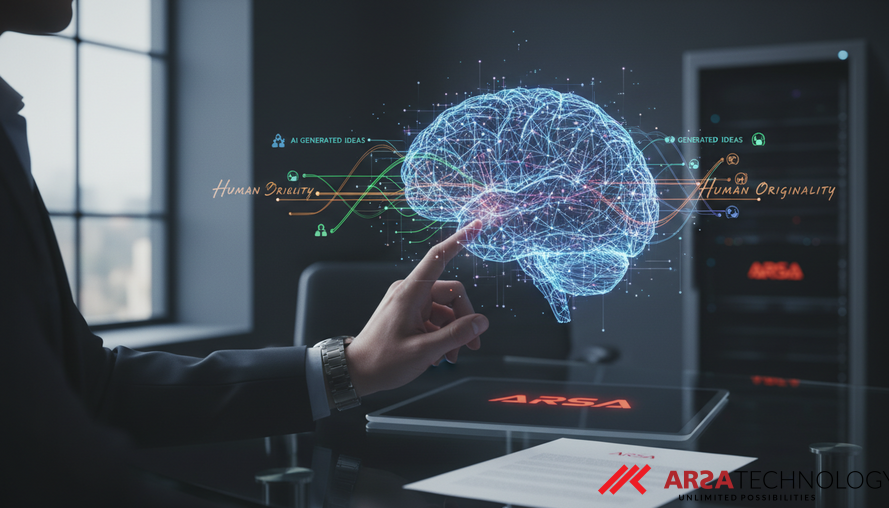
The Evolving Landscape of Creative Work in the Age of Generative AI
Generative Artificial Intelligence (AI) has rapidly redefined the landscape of creative and knowledge-based work across industries. From generating detailed reports to proposing strategic business solutions, Large Language Models (LLMs) and other generative tools significantly boost productivity and elevate the baseline quality of output. However, this powerful capability introduces a profound challenge: how do organizations accurately assess genuine human creativity when observable artifacts may be partially or fully AI-generated? This ambiguity disrupts long-standing assumptions about talent evaluation, particularly in hiring and workforce development contexts.
Traditionally, organizations have inferred an individual's creative competence from their tangible outputs, such as essays, case studies, or project deliverables. These artifacts served as direct proxies for underlying cognitive abilities. Yet, in today’s AI-pervasive environment, this assumption is no longer reliable. Outputs are frequently co-produced by humans and machines, making the link between observable performance and individual capability increasingly opaque. This presents a fundamental measurement problem for enterprises aiming to identify and cultivate true innovation.
Redefining Creativity: A System-Level Perspective
To navigate this complexity, the concept of creativity must be reimagined. Instead of focusing solely on individual cognitive processes like divergent thinking, a more holistic view considers creativity as a system-level phenomenon. It emerges as a multiplicative function of five interdependent factors: idea generation, idea transformation, the underlying knowledge base, available tools, and participation structures. This framework acknowledges that creativity is not just an internal human trait but scales through the expansion of combinatorial possibilities enabled by technological and institutional infrastructures.
History shows that major leaps in human creativity—from the invention of writing to the rise of digital networks—didn't change human brains, but rather amplified what humans could imagine and produce. Generative AI marks the next phase in this trajectory. While these systems dramatically increase the speed and breadth of idea generation, expanding the search space for solutions, they also introduce a paradox. Outputs tend to cluster around statistically typical patterns, leading to a compression of diversity. This dual effect—expanding possibility while potentially stifling true originality—is central to the contemporary challenge of creativity measurement, as highlighted in a research paper presented at the BIG.AI@MIT Conference (Rosen & Rushkin, 2026).
The Collapse of Traditional Evaluation Signals
The widespread adoption of generative AI has fundamentally destabilized traditional signals used to evaluate human capability. In many professional and educational settings, individuals can now produce artifacts whose surface quality is indistinguishable from those created by highly skilled humans, solely or primarily with AI assistance. This makes it increasingly difficult for evaluators to discern whether observed performance reflects genuine human competence or merely proficiency in leveraging AI tools.
This challenge is exacerbated by the inherent nature of many generative systems, which tend to produce outputs that are statistically typical rather than truly novel. Phenomena like "mode collapse" or "degeneration" have been documented in text generation, where models, even when prompted for diversity, converge on common patterns. Consequently, traditional evaluation methods—such as rubric-based scoring or subjective judgment of output quality—become increasingly unreliable. They risk overvaluing AI-enhanced fluency and coherence while failing to detect a lack of originality or innovative thinking, potentially leading organizations to misidentify and mismanage talent.
A Distributional Approach to Measuring Creativity
To overcome these limitations, a new approach is necessary: a distributional view of creativity. This framework moves beyond evaluating individual outputs in isolation. Instead, it assesses them relative to a population of competing responses generated under similar conditions. In this context, creativity is redefined as meaningful divergence from the statistical distribution of readily available or AI-generated solutions. This perspective emphasizes that the same response might be considered highly creative in one competitive environment but merely conventional in another, underscoring the contextual nature of creativity.
This shift in perspective is critical for organizations that want to truly understand and nurture human ingenuity. It aligns with economic theories that highlight the role of competition in shaping diverse outcomes and resonates with organizational learning principles that balance exploration (novelty) with exploitation (efficiency). For enterprises deploying advanced AI capabilities, recognizing these nuances is vital. Platforms offering custom AI solutions can be tailored to incorporate such sophisticated analytical frameworks, moving beyond generic performance metrics to capture true human value.
The Emergence of Bimodal Creativity
Under conditions where generative AI is widely accessible, a structural shift in the distribution of creative outputs becomes apparent. This shift leads to a "bimodal distribution," characterized by two distinct clusters of results. The first cluster comprises outputs that closely align with the default patterns of the generative model. These are typically high in fluency, coherence, and technical quality, yet they often lack true originality. They represent the "AI baseline" of competence.
The second cluster, conversely, consists of outputs that meaningfully diverge from these typical AI patterns. These outputs reflect human-driven recombination, reframing of ideas, or synthesis of disparate concepts in novel ways. Significantly, there is a relatively sparse region between these two clusters, indicating a lack of intermediate solutions. This bimodal structure suggests a fundamental transformation in talent evaluation: the objective is no longer merely to identify individuals who can produce high-quality outputs, but rather those who can produce outputs that are distinctively different from what an AI model would generate by default.
Quantifying Creativity: Novelty in Synthesis
To operationalize this new understanding of creativity, a quantitative framework focusing on "novelty in synthesis" is proposed. This model conceptualizes creativity as the product of two key components: idea generation and idea transformation. Given a set of initial premise statements—which could be abstract ideas, disparate facts, or concepts from different domains—a test subject produces an inference statement in response.
- Idea Generation measures the extent to which the response introduces entirely new elements or concepts not directly present in the initial premises.
- Idea Transformation captures the degree to which these new or existing elements are integrated, recombined, or reframed across the premises in a unique way.
This dual measurement allows for a more nuanced assessment, distinguishing between mere fluency (the ability to generate many ideas) and true originality (the ability to generate novel ideas and synthesize them innovatively). It delves into the "embedding space"—a conceptual multi-dimensional space where AI models represent and relate ideas—to quantify how far an idea deviates from established patterns, providing objective metrics for qualities traditionally considered subjective. ARSA Technology, having been experienced since 2018 in developing and deploying advanced AI and IoT solutions, understands the importance of nuanced data interpretation for enterprise success.
Implications for Enterprise Strategy and Talent Management
The insights from this research have profound implications for global enterprises. In an AI-mediated world, the focus shifts from evaluating basic competence (which AI can now augment or replicate) to identifying and fostering truly distinctive human capabilities. This impacts:
Hiring: Talent acquisition strategies must evolve to assess candidates' ability to innovate beyond* what generative AI can produce. New assessment methods will prioritize problem-solving, critical thinking, and novel synthesis over sheer output volume or surface-level quality.
- Leadership: Leaders need to understand these dynamics to cultivate environments where human creativity is valued and encouraged, even as AI tools become ubiquitous. This means fostering exploration and rewarding divergence.
- Competitive Strategy: Companies that successfully differentiate genuine human creativity from AI-generated fluency will gain a significant competitive edge. This involves leveraging AI for efficiency while simultaneously nurturing the unique human skills that drive breakthrough innovation.
As AI continues to integrate into daily operations, the ability to discern and value human distinctiveness becomes paramount for organizational success and sustained innovation (Rosen & Rushkin, 2026, arxiv.org/abs/2604.19799).
To explore how ARSA Technology's advanced AI and IoT solutions can help your organization navigate the complexities of talent assessment and operational intelligence in the generative AI era, we invite you to contact ARSA for a free consultation.