Navigating the Copyright Labyrinth: Generative AI in Music and Business Compliance
Explore the complex legal landscape of generative AI music, from lyric infringement to voice cloning. Understand U.S. copyright law and practical steps for businesses using AI in music creation.

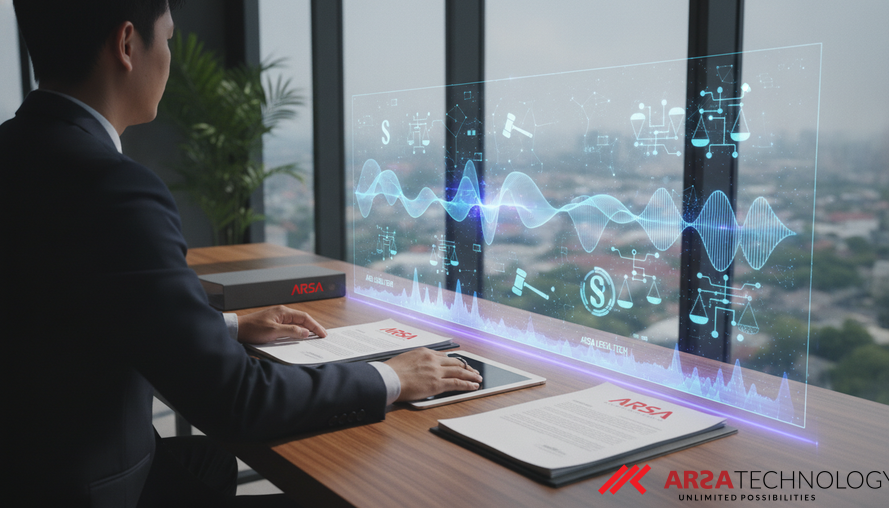
Generative Artificial Intelligence (GenAI) is revolutionizing creative industries, enabling unprecedented capabilities, from drafting code to synthesizing music. In the realm of music, GenAI tools empower users to create sophisticated compositions by combining elements like copyrighted lyrics, AI-generated melodies, and synthetic vocals designed to mimic established artists. This technological leap, however, introduces a complex web of legal questions, particularly regarding copyright infringement, which businesses leveraging these tools must meticulously navigate.
The Dual Nature of AI Music Copyright: Lyrics vs. Vocal Likeness
Understanding the legal implications of AI-generated music requires a clear distinction between two core components: musical compositions (which include lyrics and melody) and sound recordings (the actual performance captured and fixed on a medium). Under U.S. copyright law (17 U.S.C. Title 17), these are often treated separately. If a user feeds copyrighted lyrics into a GenAI system to produce a new song, the output carries a high risk of infringing the original musical composition. Lyrics are protected as literary works under Section 102(a)(2) of Title 17, meaning unauthorized reproduction or creation of a derivative work based on those lyrics constitutes a prima facie infringement, absent a valid defense like fair use. This protection is robust, designed to uphold the exclusive rights of composers and lyricists to reproduce, distribute, and adapt their original works.
Conversely, AI-generated "sound-alike" vocals present a different legal challenge. Current federal copyright law, specifically Section 114(b) of Title 17, offers narrow protection for sound recordings. It generally permits independent re-recordings or imitations of a vocal style, meaning that merely sounding like a famous artist without actually sampling their existing recorded material does not typically constitute federal copyright infringement. Recent court decisions, such as Richardson v. Kharbouch (7th Cir. 2025), have reinforced that vocal imitation, without direct sampling, falls outside the scope of sound recording protection. This legal asymmetry creates a "publicity gap" where federal law prioritizes the composition but provides limited recourse for performers whose vocal likeness is imitated without consent. For companies needing strict data control, solutions like an on-premise Face Recognition & Liveness SDK could offer advantages by keeping sensitive biometric data within their infrastructure, though this pertains more to identity verification than creative voice synthesis.
Technical Mechanisms and Legal Exposure
The sophisticated process of AI music generation involves several technical components, each potentially interacting with copyrighted material. When a user provides a text prompt containing lyrics and stylistic instructions ("in the style of [artist]"), the GenAI system initiates a multi-stage pipeline:
- Prompt Encoding: Natural language processing (NLP) models, often transformer-based, encode the text prompt (lyrics and style) into internal numerical representations, known as embeddings. If these models were trained on vast datasets containing copyrighted lyrics without proper authorization, this initial processing step could be implicated in claims of copyright infringement, particularly in the training layer.
- Melody and Harmony Generation: Subsequent AI modules, frequently utilizing music-trained transformers or diffusion networks, generate the instrumental aspects of the song. While a newly generated melody might avoid direct infringement if it's not substantially similar to an existing one, the generation of music based on copyrighted stylistic cues could still face legal scrutiny.
- Neural Vocoders and Speaker Embeddings: The final stage involves neural vocoders synthesizing the audio waveform. This is where a target vocalist’s characteristics are "injected" using speaker embeddings or voice-conversion algorithms (e.g., VALL-E, RVC). These technologies enable AI to produce vocals that sound remarkably similar to a known singer. From a technical standpoint, this is a distinct process from direct sampling, and as noted, federal copyright law has struggled to address it. For entities requiring advanced AI processing capabilities, regardless of the application, investing in Custom AI Solutions can ensure responsible and legally sound development.
When these AI-generated songs are published to platforms like YouTube or Spotify and monetized through ads or subscriptions, it creates clear evidence of commercial exploitation. This amplifies the potential remedies for copyright owners, who can seek statutory damages and profits if their works (especially lyrics and compositions) are timely registered.
Navigating the Evolving Legal Landscape: Case Law and Policy Trends
The legal landscape surrounding generative AI and copyright is rapidly evolving, marked by numerous lawsuits and ongoing policy discussions. As the Copyright Alliance notes, over 70 infringement lawsuits were filed against AI companies in 2025 alone, demonstrating the scale of the challenge [2].
Recent high-profile cases illustrate the legal distinctions in AI music:
Concord Music Group v. Anthropic* [1], where publishers sued over AI outputting their copyrighted lyrics, often favoring copyright owners on lyric copying claims. This highlights the federal law's strong protection for musical compositions. Cases like Lehrman v. Lovo* [1] involved AI voice clones for text-to-speech. Outcomes in these cases have generally favored defendants on "sound-alike" voice claims under federal copyright.
- Industry actions, such as Universal Music Group's (UMG) and Warner Music Group's (WMG) settlements with AI music generators Udio and Suno [2], demonstrate a growing trend toward licensing agreements. These settlements often involve compensatory damages and, crucially, future licensing deals for authorized training data, structured to give copyright owners control over their works.
The perceived "regulatory gap" between strong protection for lyrics and limited remedies for synthesized vocal likeness has led to calls for policy reforms. State-level initiatives, such as Tennessee’s 2024 "ELVIS Act," represent attempts to address this by recognizing control over one's voice and image against unauthorized use. These state-level "right of publicity" claims operate independently of federal copyright and may become a primary avenue for performers seeking protection against AI voice cloning. Broader policy suggestions include extending right of publicity protections nationwide or introducing a federal performer right to create clearer rules for AI music creation and licensing. Leveraging ARSA Technology's 7+ years of experience building AI since 2018 can help businesses navigate these complex legal and ethical considerations in their AI deployments.
Strategic Implications for Businesses
For businesses operating in or engaging with the generative AI music space, these legal dynamics carry significant strategic implications:
- Risk Mitigation: Companies developing or deploying AI music generation systems must prioritize ethical data sourcing and robust content filtering. Unauthorized use of copyrighted lyrics or compositions in training data or output can lead to substantial statutory damages (up to $150,000 per infringed work) and injunctions, particularly when outputs are monetized.
- Licensing and Partnerships: The trend toward settlements and licensing agreements, as seen with UMG, WMG, Udio, and Suno, signals a future where authorized, transparent licensing will be crucial. Proactive engagement with rights holders for training data and output usage can reduce legal exposure and foster collaborative innovation. For example, platforms could explore AI-driven content moderation similar to how AI Video Analytics Software can detect anomalies in real-time.
- Compliance and Governance: Implementing clear internal policies for AI development and usage, including checks for copyrighted material in prompts and outputs, is paramount. Businesses must also stay abreast of evolving state and federal legislation concerning AI and intellectual property. The ability to manage data securely, whether through cloud APIs or on-premise AI Box Series, is fundamental to compliance.
- Ethical AI Development: Beyond legal compliance, adopting an ethical framework for AI development that respects creators' rights and addresses societal concerns around synthetic media is crucial for long-term trust and market acceptance.
The convergence of generative AI and music presents both immense creative potential and significant legal challenges. While the technology continues to advance rapidly, the legal framework is still catching up. Businesses must remain vigilant, prioritize compliance, and consider responsible AI development strategies to harness the power of AI music responsibly and profitably.
To explore how ARSA Technology can help your enterprise develop and deploy practical, compliant AI and IoT solutions, contact ARSA today.
Sources:
1. Butt, Z. H. (2026). Generative AI and Copyright Infringement: A Legal-Technical Analysis of AI Music Generation Systems Under 17 U.S.C. Title 17. https://arxiv.org/abs/2606.26111
2. Madigan, K. (2026). AI Copyright Lawsuit Developments in 2025: A Year in Review. Copyright Alliance. https://copyrightalliance.org/ai-copyright-lawsuit-developments-2025/