PASTA: Revolutionizing Anomaly Detection with Weakly Supervised Vision Transformers
Discover PASTA, an innovative weakly supervised AI pipeline for precise target and anomaly segmentation in industrial and agricultural settings, leveraging Vision Transformers to reduce training time and enhance operational efficiency.

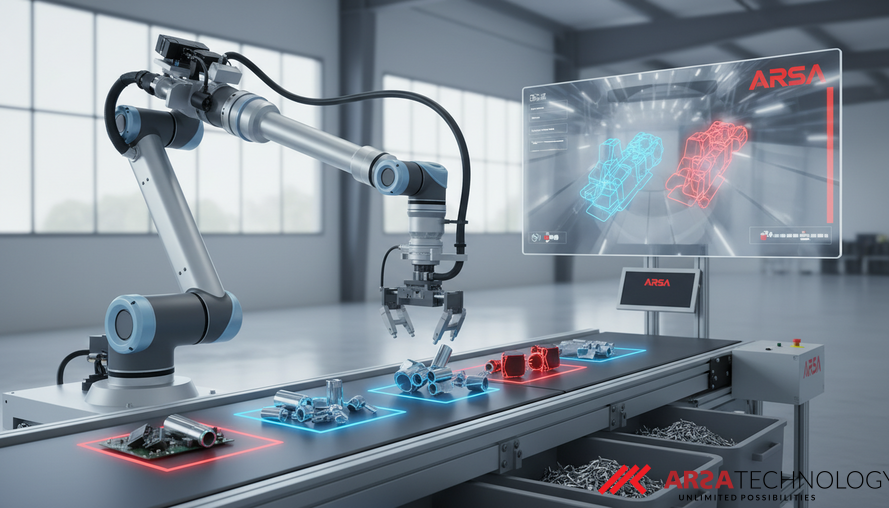
In complex industrial and agricultural environments, the ability to rapidly identify and differentiate between desired "target" objects and unexpected "anomalies" is paramount. Think of recycling plants needing to sort specific metals from mixed waste, or automated systems in precision agriculture tasked with distinguishing crops from weeds. Traditional AI vision systems often fall short here, primarily due to their heavy reliance on extensive, pixel-level annotated datasets and their struggle with recognizing entirely new, "unseen" objects. This labor-intensive annotation process is not only costly but often impossible when dealing with unknown anomalies.
A groundbreaking academic paper introduces PASTA: Patch Aggregation for Segmentation of Targets and Anomalies – a novel approach designed to overcome these limitations. PASTA employs a weakly supervised pipeline, harnessing the power of Vision Transformers (ViT) and sophisticated distribution analysis to perform precise object segmentation and classification with minimal data. This innovation promises significant reductions in training time and a leap forward in the robustness and accuracy of AI systems in dynamic, unstructured settings. You can find the original paper at arXiv:2604.09701.
The Challenge of Real-World AI Perception
Modern robotic applications, from industrial sorting to precision farming, demand exceptionally accurate segmentation masks. These masks guide robots in tasks like grasping specific items or applying targeted treatments. However, conventional supervised models, such as those used for bounding box detection or instance segmentation, are ill-suited for these dynamic environments. They require enormous datasets where every object of interest and every potential anomaly is meticulously labeled, pixel by pixel. This process is prohibitively expensive and time-consuming, and for truly novel anomalies, it’s simply not feasible. Imagine trying to pre-annotate every possible type of contaminant in a recycling stream or every rare plant mutation in a vast field.
Furthermore, these traditional models often struggle with "zero-shot generalization"—the ability to identify and segment objects they have never encountered during their training phase. In environments where new objects appear frequently, this limitation leads to unreliable performance. The need for AI systems that can learn from minimal supervision and adapt to unforeseen circumstances is urgent, paving the way for more flexible and economically viable automation solutions.
Introducing PASTA: A Weakly Supervised Breakthrough
PASTA addresses the limitations of traditional methods by introducing a weakly supervised pipeline. This means it requires far less manual annotation effort, often just image-level labels (knowing if an image contains an anomaly, not its exact location). The core innovation lies in comparing an "observed scene" (which might contain targets and anomalies) against a "nominal reference" (a dataset known to be free of anomalies or containing only targets). By analyzing the differences in these two scenarios, PASTA can identify and segment both desired targets and unexpected anomalies.
This comparison is not done directly on raw images but within a sophisticated "feature space" generated by self-supervised Vision Transformers (ViT). A Vision Transformer is an AI model that processes images by breaking them down into small patches and then understanding the relationships between these patches, much like a language model understands words in a sentence. This allows ViTs to capture rich, contextual information across an entire image. Within this feature space, similar objects cluster together, and anomalies, by definition, will exhibit distinct patterns or "mode discrepancies" compared to the nominal data. This approach significantly reduces the data annotation burden, making advanced AI deployment more practical for businesses.
How PASTA Works: AI Vision for Unseen Objects
The PASTA pipeline integrates several advanced AI components. It leverages self-supervised Vision Transformers like DINOv3 for dense feature extraction. This process extracts highly detailed and semantically consistent feature maps from images, essentially creating a rich, abstract representation of every pixel or patch. These dense embeddings are crucial because they exhibit inherent object localization properties without needing explicit supervision.
Next, PASTA utilizes the Segment Anything Model 3 (SAM 3), renowned for its robust zero-shot and class-agnostic object segmentation capabilities. While SAM 3 excels at delineating object boundaries, it lacks intrinsic semantic understanding. PASTA cleverly uses SAM 3 for its "objectness abstraction" – essentially, identifying "something" in the image that constitutes a distinct object. The semantic meaning or "what it is" comes from the distribution analysis in the ViT feature space, not from predefined text prompts for every anomaly. This means PASTA can identify objects that fall completely "out-of-distribution" or lack specific semantic definitions, a crucial advantage in dynamic environments. This combination allows the system to operate in a completely label-free manner for identifying specific target clusters and those distinct anomaly clusters. Solutions like ARSA's AI Video Analytics often employ similar multi-faceted approaches to achieve high accuracy in complex real-world scenarios.
Transforming Industries: Practical Applications and Impact
The practical implications of PASTA are profound, particularly for industries grappling with the operational challenges highlighted by the paper.
- Industrial Recycling: Automated systems can more accurately distinguish valuable materials from contaminants, significantly improving recycling efficiency and reducing waste.
- Precision Agriculture: Robots can identify and target specific weeds among crops, minimizing herbicide use and protecting desired plants.
- Manufacturing Quality Control: Detecting novel defects on a production line becomes achievable, even if those defects were not part of the original training data. This reduces product recalls and improves overall quality.
- Logistics and Supply Chain: Identifying misplaced or foreign objects in cargo can prevent damage and streamline operations.
The evaluations on a custom steel scrap recycling dataset and a plant dataset showcase remarkable results: PASTA achieved a 75.8% reduction in training time compared to domain-specific baselines. Crucially, it demonstrated superior segmentation performance, with up to 88.3% IoU (Intersection over Union) for target objects and up to 63.5% IoU for anomalies. This combination of reduced training effort and high accuracy, coupled with its domain-agnostic nature, makes PASTA a powerful tool for accelerating industrial automation. For enterprises seeking to deploy such advanced capabilities directly into their operations, turnkey systems like the ARSA AI Box Series offer pre-configured edge AI hardware for rapid on-site deployment, providing real-time insights without cloud dependency.
The ARSA Advantage: Bridging Innovation and Deployment
While PASTA represents academic innovation, its principles align perfectly with the real-world demands for robust, scalable, and privacy-conscious AI solutions. ARSA Technology, with expertise experienced since 2018 in AI and IoT, understands that the true value of such advancements lies in their practical deployment. We specialize in engineering intelligence into operations, providing enterprise-grade AI video analytics and edge AI systems that solve mission-critical challenges across various industries.
Our offerings, such as the ARSA AI Video Analytics Software, are designed for organizations that need full control over their data, desiring on-premise solutions that transform existing CCTV streams into actionable intelligence without hardware dependency or cloud lock-in. For specialized needs like industrial safety, our AI BOX - Basic Safety Guard module provides real-time PPE detection and restricted area monitoring, leveraging the very kind of advanced vision AI principles that PASTA exemplifies for tangible business outcomes.
The PASTA research paper highlights a critical shift in AI development: moving from data-hungry, exhaustively supervised models to more adaptable, weakly supervised systems. This approach unlocks new possibilities for automating tasks in complex, unstructured environments, ultimately leading to greater efficiency, reduced costs, and enhanced safety across sectors.
To explore how these cutting-edge AI capabilities can be tailored to your specific operational needs and to begin your strategic dialogue, we invite you to contact ARSA for a free consultation.
Source: Neubauer, M., Rueckert, E., & Rauch, C. (2026). PASTA: Vision Transformer Patch Aggregation for Weakly Supervised Target and Anomaly Segmentation. arXiv:2604.09701.