Revolutionizing Automotive HIL Validation: AI-Driven Fault Detection with Explainable Insights
Explore how advanced AI, including Denoising Autoencoders and Large Language Models, is transforming automotive Hardware-in-the-Loop (HIL) validation with accurate, explainable fault detection.

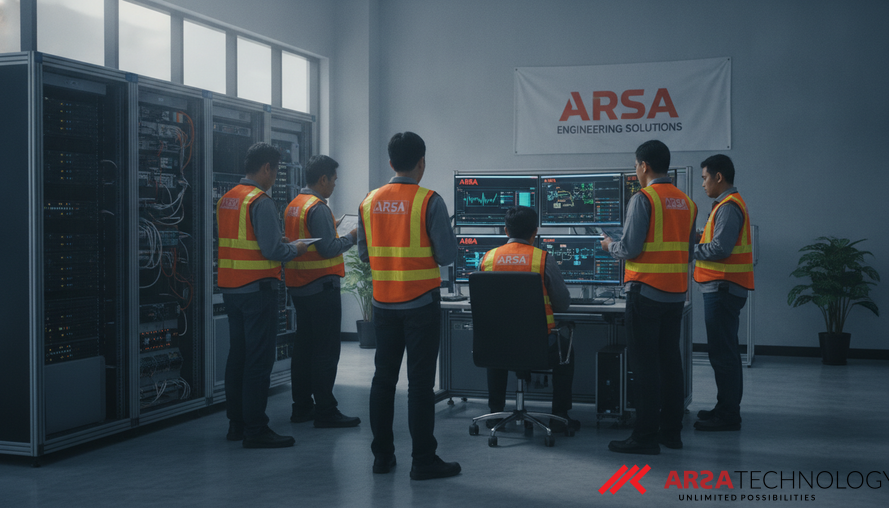
The automotive industry is in a perpetual state of evolution, driven by the relentless pursuit of higher autonomy, intelligence, and connectivity. Modern vehicles, with their intricate ecosystems of over 120 electronic control units (ECUs) exchanging millions of messages per minute, present a formidable challenge for software validation. As system complexity soars, so does the potential for failures—from subtle software glitches and sensor degradation to safety-critical incidents. Ensuring functional safety, a mandate often guided by standards like ISO 26262, necessitates robust and efficient validation processes.
Traditional validation approaches, often reliant on manual review and rule-based evaluations, are struggling to keep pace. These methods are labor-intensive, costly, and notoriously inefficient at detecting novel or unforeseen fault types that fall outside predefined rules or historical data. This critical gap highlights the urgent need for intelligent, automated solutions that can not only detect faults but also provide clear, actionable explanations for their occurrence.
The Evolving Landscape of Automotive Validation
At the heart of modern automotive software development lies Hardware-in-the-Loop (HIL) validation. HIL simulation is a powerful technique that integrates real ECUs and physical subsystems into a controlled, simulated environment. This allows engineers to rigorously test how hardware responds to diverse driving scenarios, sensor inputs, and potential fault conditions without the prohibitive costs and safety risks of using an actual vehicle on public roads. As highlighted by OPAL-RT, HIL testing is essential for "early detection of issues, safer testing of edge cases, and faster iteration during the design process" (OPAL-RT, 2025).
Despite its advantages, HIL validation generates immense volumes of multivariate data. This data is characterized by multimodality, nonlinearity, and high dimensionality, often containing rare but critical events. Analyzing these vast datasets manually is a monumental task, making it difficult to pinpoint root causes and trace fault propagation effectively. While machine learning and deep learning have shown promise in fault diagnosis, many supervised models demand extensive labeled datasets, struggle to generalize to new conditions, and frequently offer limited insight into their decisions. This is particularly problematic in safety-critical automotive applications where understanding why a fault occurred is as crucial as identifying that it occurred.
A Novel Two-Phase AI Framework for Explainable Fault Detection
A recent study from Mohammad Abboush and colleagues at Clausthal University of Technology presents a groundbreaking two-phase framework designed to address these challenges, offering a generalizable and explainable approach to fault detection and classification during real-time automotive validation (Abboush et al., 2026). This framework cleverly decouples the detection of anomalies from their subsequent classification and explanation, streamlining the process and making it more adaptable.
The first phase focuses on fault detection using Denoising Autoencoders (DAEs). A DAE is a type of neural network that is trained exclusively on "healthy" or normal system behavior. Imagine it as an expert learning only how a perfect system should function. When presented with new data, the DAE attempts to reconstruct it. If the incoming data deviates significantly from what it considers "normal," the DAE struggles to reconstruct it accurately, resulting in a high "reconstruction error." This error acts as a robust indicator of abnormal behavior. Crucially, this approach is unsupervised, meaning it doesn't require pre-labeled examples of various fault types. This eliminates a major hurdle for traditional supervised learning models, which often need vast, perfectly categorized datasets of faults, which are rare and expensive to obtain in real-world scenarios. This label-free detection significantly enhances efficiency in dynamic development environments.
The second phase involves explainable classification using In-Context Large Language Models (LLMs). Once the DAE identifies an abnormal window of data, this segment is translated into a compact, textual representation of "statistical evidence." This evidence describes deviations relative to a healthy reference, essentially summarizing the anomalous patterns in a human-readable format. This textual evidence is then fed into a frozen Large Language Model. LLMs, like the ones that power advanced conversational AI, are adept at logical reasoning and processing complex information. In this context, they are used under "few-shot prompting." Instead of requiring extensive retraining for each new fault type, the LLM is given a few examples of known faults and their explanations within the prompt itself. This "in-context learning" allows the LLM to classify the new abnormal behavior, predict the most likely fault class, offer ranked alternatives, provide a confidence score, pinpoint the fault location, and most importantly, generate a concise, evidence-based explanation for its decision. This capability to provide interpretable diagnostic reports is invaluable for test engineers, significantly reducing the manual effort required for root cause analysis.
Practical Benefits and Key Findings for Automotive Engineering
The research demonstrates compelling results. The DAE-based detector achieved impressive average F1-scores of 0.97 across different vehicle powertrains (gasoline and electric) and 0.98 across various driving regimes, with a mean error consistently below 0.03. These metrics indicate a highly accurate and reliable fault detection capability. For classification, the study found that "zero-shot prompting"—where the LLM receives no examples—was insufficient. However, with "few-shot prompting," the LLMs achieved near-perfect discrimination under stable driving regimes. A key finding was that the prompting strategy, rather than the raw parameter count of the LLM, was the dominant factor in classification quality. Even a nine-billion-parameter model, when properly prompted, outperformed larger, medium- and large-sized models used with zero-shot prompting.
This has profound implications for businesses:
- Increased Efficiency: Automated, label-free detection drastically reduces the need for manual review, freeing up highly skilled engineers to focus on more complex problem-solving.
- Faster Time-to-Market: Quicker fault identification and diagnosis accelerate validation cycles, enabling faster product development and deployment.
- Enhanced Safety and Reliability: The ability to detect novel faults and provide explainable insights improves the overall functional safety of automotive software systems, helping companies meet rigorous industry safety standards.
- Cost Reduction: Minimizing manual effort, reducing rework, and preventing late-stage fault discoveries translates into significant cost savings throughout the development lifecycle.
- Improved Decision Making: Interpretable diagnostic reports empower engineers with deeper understanding, facilitating more informed decisions and strategic refinements in design.
Solutions like these can be integrated into existing infrastructure. For instance, edge AI systems, such as the ARSA AI Box Series, can process video streams and sensor data locally to perform real-time anomaly detection similar to the DAE phase, without cloud dependency. For more comprehensive insights from diverse data sources, AI Video Analytics Software can transform raw CCTV feeds into operational intelligence. For specialized needs, Custom AI Solutions can be developed to tailor fault detection and diagnosis frameworks to unique system architectures and data characteristics. Even in identity verification, robust AI, such as the Face Recognition & Liveness SDK, demonstrates how advanced models can be deployed on-premise for high-security, regulated environments, offering full data control—a critical factor in automotive safety systems.
Implementing Advanced AI in Your Validation Strategy
The success of integrating AI-driven fault detection and classification into automotive HIL validation hinges on selecting robust and adaptable AI models. The study identifies Mistral Small 24B as a well-balanced model, offering a strong combination of accuracy, reliability, calibration, and efficient inference cost. Its ability to provide engineers with interpretable diagnostic reports marks a significant leap forward from opaque "black box" AI solutions.
For enterprises aiming to enhance their automotive validation processes, adopting such advanced AI frameworks translates into tangible business advantages. It moves beyond theoretical exploration to deliver practical, deployable intelligence that safeguards product quality, accelerates development, and optimizes resource allocation. Companies are increasingly seeking partners who can engineer systems that work in the real world, today, at scale, and under real industrial constraints—a principle ARSA Technology has been building AI since 2018.
Are you ready to transform your automotive validation processes with cutting-edge AI? Explore how intelligent fault detection and explainable classification can enhance your operational efficiency and ensure the highest levels of safety and reliability for your automotive software systems.
Sources
Abboush, M., Ouarrad, H., & Rausch, A. (2026). Fault Detection and Explainable Classification in Automotive HIL Validation via Denoising Autoencoders and In-Context Large Language Models*. arXiv. https://arxiv.org/abs/2607.03734 OPAL-RT. (2025, March 4). Methods and applications for exploring HIL testing in automotive*. https://www.opal-rt.com/blog/methods-and-applications-for-exploring-hil-testing-in-automotive/ Contact ARSA today to discuss how our AI and IoT solutions can be tailored to meet your unique automotive industry challenges.