Revolutionizing Material Inspection: How Synthetic Images Drive AI for Surface Roughness Classification
Discover how generative AI and synthetic images are transforming surface roughness classification, reducing costs, and accelerating development in materials engineering for industries.

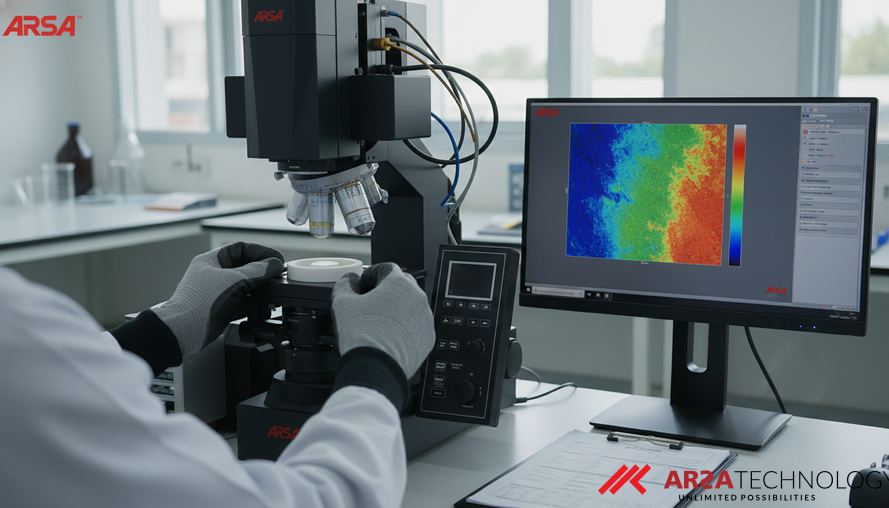
The precise evaluation of surface roughness is paramount across a multitude of industrial sectors. Hard coatings, particularly those made from ceramic materials like aluminum oxide (Al₂O₃), are essential for applications demanding exceptional mechanical performance, including those requiring superior hardness, thermal stability, and corrosion resistance. The surface quality of these materials directly impacts their tribological behavior, fatigue life, and overall adhesion. However, implementing artificial intelligence (AI) for accurate surface roughness classification has traditionally faced significant hurdles, primarily due to the substantial need for extensive, meticulously labeled datasets and the high cost associated with acquiring high-resolution imaging equipment.
A recent academic study explores an innovative approach to overcome these data and cost limitations by leveraging synthetic images. This research investigates the use of AI-generated images, specifically those created with advanced generative models like Stable Diffusion XL, as a viable alternative or complement to experimentally collected data for classifying the surface roughness of ceramic materials. The findings demonstrate that augmenting authentic datasets with these generative images can yield classification accuracies comparable to models trained solely on experimental data. This suggests that synthetic images can effectively replicate the crucial structural features required for accurate classification, paving the way for more efficient and cost-effective AI deployments in materials engineering. You can read the full academic findings on this topic in the source paper.
The Challenge of Data in Materials Engineering
In industrial settings, the demand for robust hard coatings underscores the critical need for precise surface roughness assessment. Aluminum oxide (Al₂O₃), known for its exceptional properties, is a preferred material for high-performance components, even in extreme environments such as aerospace applications, where it functions as a thermal shield. The ability to precisely form intricate ceramic geometries through advanced 3D printing techniques further highlights its suitability for modern manufacturing. Despite these advantages, maintaining accurate and scalable surface roughness assessment remains a significant challenge.
Traditional high-quality surface characterization often requires costly and time-consuming high-resolution imaging, particularly when dealing with large volumes of samples or integrating into industrial inspection lines. For AI-driven classifiers, the challenge is compounded by the need for vast, well-labeled datasets that capture every nuance of surface morphology, process variations, and potential defects. This exhaustive data collection is often a bottleneck for many laboratories and manufacturers, limiting the widespread adoption of AI in quality control. Moreover, inconsistencies in imaging modalities, lighting conditions, and sample preparation can introduce "domain shifts," degrading classifier performance if not adequately accounted for in the training data.
Leveraging Generative AI for Enhanced Data Efficiency
Generative AI, exemplified by models such as Stable Diffusion XL, represents a paradigm shift in visual content creation. By employing sophisticated algorithms, these models can produce high-quality synthetic images that remarkably resemble real-world visuals. This capability extends beyond artistic creation, offering significant advantages for scientific research and industrial applications. In material engineering, where limitations in sample size frequently impede comprehensive analysis and image classification, synthetic images hold immense promise as substitutes or augmentations for existing datasets.
By expanding the available training data through generative AI, industries can build more robust machine learning models, improving classification accuracy and the overall reliability of image-recognition systems. This translates directly into more efficient quality assessment processes, potentially reducing the reliance on ultra-high-resolution imaging and, consequently, lowering measurement costs and complexity. This approach allows for systematic investigation into whether generative images truly retain task-relevant structural information, rather than merely superficial visual appearance, ensuring their efficacy in critical classification tasks. For example, ARSA Technology leverages advanced AI in its AI Video Analytics solutions, which can be adapted for precise material inspection in manufacturing and industrial settings.
Methodology: Fabricating Samples and Generating Synthetic Data
The study’s methodology involved creating aluminum oxide (Al₂O₃) samples using advanced 3D printing techniques and subsequently capturing their surface features. The 3D printing was performed on a lithography-based ceramic manufacturing (LCM) system, utilizing a digital light projection (DLP) exposure mechanism. This process allowed for the precise fabrication of ceramic parts from a specialized alumina slurry, maintaining strict control over layer thickness and temperature. After printing, the "green bodies" underwent rigorous thermal debinding and high-temperature sintering cycles to achieve the final ceramic material. These intricate steps ensure the integrity and specific surface properties of the samples, crucial for evaluating roughness.
Authentic images of the Al₂O₃ samples were acquired using a 3D measuring laser scanning confocal microscope (LSCM), providing high-resolution images of the material surfaces. These samples were then categorized into three distinct surface roughness levels based on their Sa values: Low Roughness (Sa < 1 μm), Normal Roughness (1 μm ≤ Sa ≤ 3 μm), and High Roughness (Sa > 3 μm). This precise categorization, where surface roughness is visually represented by color, forms the ground truth for training and evaluating the AI classification models. This comprehensive approach ensures that both the physical samples and their digital representations are rigorously prepared for the subsequent AI analysis.
The Power of Synthetic Image Generation and Robustness Testing
To generate synthetic images, the study employed Stable Diffusion XL through an image-to-image diffusion pipeline. Existing authentic images served as inputs, guiding the generative AI to produce new synthetic images that maintained key visual and structural characteristics while introducing controlled variations. This process was applied independently to each roughness category (High, Normal, Low), creating synthetic datasets that corresponded to the authentic training samples. This meticulous approach ensured that the generative images preserved the crucial, task-relevant structural information necessary for accurate classification.
All classification experiments were conducted using TensorFlow on Google's Teachable Machine Platform. Models were trained from scratch using a combination of authentic and synthetic images, then rigorously evaluated against a fixed test set composed exclusively of previously unseen authentic images. This design is critical for ensuring that the models’ performance is truly reflective of their ability to generalize to real-world data, rather than simply memorizing synthetic patterns. To further validate the reliability of the classification framework, key training hyperparameters—including epoch count (number of full training cycles), batch size (number of samples processed before updating model parameters), and learning rate (the step size taken during optimization)—were systematically varied. The results demonstrated that even with adjustments to these parameters, the method maintained its robust performance. Such robust models can be deployed effectively on edge devices, like ARSA's AI Box Series, providing real-time insights in diverse operational environments.
Key Findings and Their Industrial Impact
The study delivered a groundbreaking finding: augmenting authentic datasets with generative images resulted in test accuracies that were comparable to those achieved using solely experimental images. This unequivocally demonstrates that synthetic images can effectively reproduce the structural features necessary for accurate surface roughness classification. Furthermore, the systematic assessment of hyperparameter variations confirmed the robustness of the methodology, identifying configurations that maintained high performance while significantly reducing the dependency on large quantities of costly experimental data.
The implications for materials engineering are profound. Generative AI can substantially enhance data efficiency and reliability in materials-image classification workflows. This innovation offers a practical pathway to significantly lower experimental costs, accelerate model development cycles, and broaden the applicability of AI in critical areas like quality control and material characterization. For enterprises across various industries, this means faster development of specialized AI models, reduced operational expenses, and improved consistency in product quality, leading to tangible business outcomes and a stronger competitive edge.
ARSA Technology's Role in Practical AI Deployment
ARSA Technology has been experienced since 2018 in translating advanced AI research into practical, production-ready systems for enterprises and governments. The findings from this study align perfectly with ARSA's mission to deliver AI solutions that are not only innovative but also cost-effective and reliable in real-world industrial constraints. By harnessing the power of edge AI and vision analytics, ARSA helps organizations deploy intelligent systems that streamline operations, enhance security, and drive measurable ROI.
The ability to use synthetic data for training AI models in material inspection means that companies can adopt AI solutions more quickly and affordably. Instead of investing heavily in collecting vast, custom datasets, they can leverage a blend of real and synthetically generated images to train robust classification models. This approach reduces data acquisition bottlenecks, accelerates the transition from manual inspection to automated, AI-powered quality control, and ensures high accuracy even in complex material analysis tasks.
Ready to explore how advanced AI and IoT solutions can transform your operations, reduce costs, and accelerate your digital transformation? Discover ARSA Technology's capabilities and how we engineer intelligence into operations. Request a free consultation today.