Revolutionizing VR: Human-AI Co-Design Unleashes New Era for 3D Asset Creation
Explore how agentic human-AI co-design pipelines are democratizing 3D asset generation for Virtual Reality, addressing challenges in cost, skill, and scaling immersive experiences.

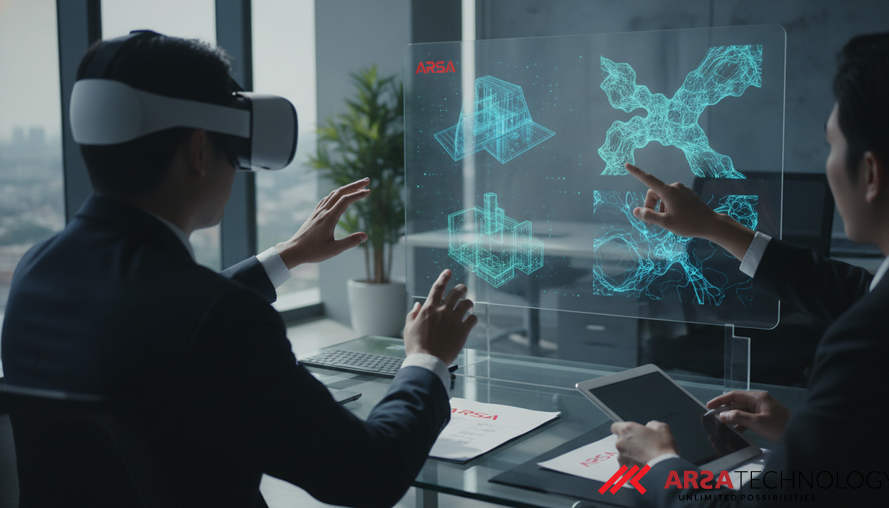
The burgeoning landscape of Virtual Reality (VR) promises transformative experiences across industries, from advanced manufacturing simulations to immersive training and innovative retail environments. However, a significant bottleneck has long hampered its widespread adoption and the richness of its content: the complex, time-consuming, and highly specialized process of creating high-quality 3D assets. Traditional 3D modeling demands extensive expertise, specialized software, and substantial manual effort, effectively limiting who can create and personalize immersive worlds. This barrier restricts authorship to a select group of experts and complicates effective communication between end-users and VR developers, leading to prolonged development cycles and reduced accessibility of immersive content (Jiang et al., 2026).
This challenge is echoed across the industry, particularly for businesses seeking to leverage VR. High initial costs for specialized equipment and software, a persistent shortage of skilled VR content creation professionals, and the rapidly evolving technological landscape present formidable hurdles. Furthermore, distributing VR content can be complex due to platform compatibility issues and the need for high-performance devices, all contributing to slower user adoption (Kumar, 2023). Addressing these challenges is crucial for unlocking the full potential of VR.
The Rise of Human-AI Co-Design in 3D Content Creation
Recent advancements in Artificial Intelligence (AI), particularly in generative AI, are beginning to dismantle these barriers. These technologies are enabling new paradigms in content creation, moving beyond passive, command-driven prompting towards more interactive and collaborative approaches. One such innovative approach is an "agentic human-AI co-design pipeline" named CoGen3D, developed by researchers from institutions including Nanjing University of Information Science and Technology and The University of Sydney (Jiang et al., 2026). This system redefines how non-expert users can engage in the complex task of generating 3D content for VR.
Unlike previous generative AI tools that rely on unconstrained text prompts, co-design pipelines introduce a structured, conversational framework. This scaffolding allows users to articulate their design intent more clearly and validate design concepts before engaging in computationally intensive 3D rendering. The core idea is to shift the immersive content creation process from a purely technical execution task to a more collaborative and intuitive spatial design endeavor. This significantly expands the pool of potential content creators, offering a pathway to democratize VR authoring and foster a wider array of engaging virtual experiences. Businesses can leverage these tools to rapidly prototype and iterate on VR environments, reducing reliance on expensive external studios and accelerating time-to-market for new immersive products or services.
A Staged Approach to Intent-Based Design
The effectiveness of these agentic human-AI co-design pipelines lies in their multi-stage, intent-driven approach. Instead of a single, complex command, the process guides users through deliberate steps:
1. Conversational Intent Elicitation: An AI-powered conversational agent, often driven by a large language model (LLM), actively interacts with the user. It prompts for preferences regarding the object's meaning (semantics), visual style, and how it should blend with the virtual environment. This interaction helps to establish a shared understanding of the desired 3D asset, much like a design brief.
2. Concept Image Confirmation: Based on the elicited intent, the system generates a 2D concept image. This visual representation serves as a critical "confirmation gate," allowing users to review, provide feedback, and refine the design iteratively. This rapid 2D ideation phase is crucial because it allows for quick adjustments before committing to the resource-intensive 3D modeling process, saving significant time and computational costs.
3. Image-to-3D Generation and Deployment: Once the user confirms the 2D concept, the system performs the computationally demanding conversion from the confirmed 2D image into a textured 3D mesh. This final asset is then directly deployed into the VR environment, ready for immediate use.
This staged architecture prioritizes human judgment at critical junctures, particularly during the swift 2D concept phase, ensuring the creative direction is firmly established before heavy computational resources are engaged. Such systems enhance efficiency and give users greater control over the final output, improving satisfaction and reducing rework. For enterprises, this means more efficient use of resources and quicker deployment of tailor-made immersive experiences.
Impact and Business Implications for Immersive Experiences
User studies evaluating co-design pipelines like CoGen3D have demonstrated compelling results. Participants who co-created 3D assets reported higher levels of engagement within the virtual scenes and exhibited noticeable shifts in their emotional responses when interacting with these AI-generated objects (Jiang et al., 2026). This suggests that allowing users to personalize their virtual environments, even through AI-assisted tools, fosters a deeper sense of ownership and connection, ultimately enhancing the immersive experience. Furthermore, analysis revealed that the emotional context of the target VR environment influenced users' conversational patterns, highlighting the nuanced interplay between human creativity and AI guidance.
The practical implications for businesses are substantial:
- Cost Reduction: By enabling non-expert personnel to generate 3D assets, organizations can significantly reduce expenses associated with hiring specialized 3D artists or outsourcing content creation. The ability to iterate quickly in 2D before costly 3D rendering further optimizes budgets.
- Accelerated Development: The simplified, conversational design process dramatically speeds up the creation of VR content. This agility allows businesses to respond faster to market demands, prototype new applications, and deploy immersive experiences more rapidly.
- Enhanced Personalization and Engagement: Tools that empower users to customize their virtual environments lead to more unique and engaging experiences. This is particularly valuable in sectors like education, training, and customer experience, where tailored content can drive better outcomes.
- Democratization of Content Creation: By lowering the technical barrier, these pipelines unlock creativity across an organization. Designers, marketers, and even end-users can contribute to VR content, fostering innovation and diversity in virtual spaces.
- Scalability: With AI handling much of the technical execution, the creation of 3D assets can be scaled more efficiently, supporting large-scale VR projects and deployments across multiple sites or applications.
Technologies that offer similar capabilities, such as advanced video analytics and intelligent systems, are also transforming how businesses manage and interact with their physical and virtual environments. For instance, an AI Video Analytics Software can interpret real-world scenes for safety compliance or traffic flow, providing data that could inform the design of functional virtual replicas. Similarly, businesses might use an AI Box Series for edge processing to gather data that helps in defining the physical characteristics of objects that need to be replicated or designed for VR. Such integrated AI systems provide a comprehensive approach to both real-world data collection and virtual world creation.
Towards a Future of Collaborative Spatial Design
The findings from studies on human-AI co-design pipelines underscore the transformative potential of such systems. They not only make VR authoring more accessible but also reframe the entire content creation process. Instead of focusing solely on the technical challenges of 3D modeling, the emphasis shifts to "collaborative spatial design" – enabling users to shape their virtual worlds with intuitive, agentic AI assistance. This development is crucial for expanding the reach and impact of VR, allowing a broader range of businesses and individuals to harness its power.
As AI continues to evolve, the integration of tools that facilitate intuitive and iterative design will be key to unlocking new levels of creativity and efficiency in the immersive technology space. Companies are increasingly seeking solutions that provide full control over data, ensuring privacy and compliance, while enabling rapid deployment. This is especially vital in sensitive sectors such as government, defense, and enterprises with strict data handling policies. ARSA Technology, for instance, has been building AI since 2018, focusing on delivering production-ready systems that prioritize accuracy, scalability, privacy, and operational reliability for various industries we serve. Whether through Custom AI Solutions or on-premise deployments, the goal remains to empower organizations to realize measurable impact with AI-driven innovation.
To learn more about how advanced AI and IoT solutions can transform your operational challenges into intelligent advantages and streamline your immersive content creation processes, contact ARSA today.
Sources:
Jiang, W., He, W., Tan, Z., Kuang, Z., Yu, D., Hasegawa, S., Mayer, S., & Sarsenbayeva, Z. (2026). CoGen3D: An Agentic Human-AI Co-Design Pipeline for 3D Asset Generation for Virtual Reality. arXiv preprint arXiv:2607.03731*. Kumar, R. (2023, December 4). VR Content Creation Challenges and Solutions for Startups. Industry Wired*.