The AI Paradox: Navigating the Surge in Supercharged Cyber Scams
Explore how AI supercharges cybercrime, from advanced phishing to deepfakes, and how enterprises can leverage AI-powered defenses to protect against evolving threats.

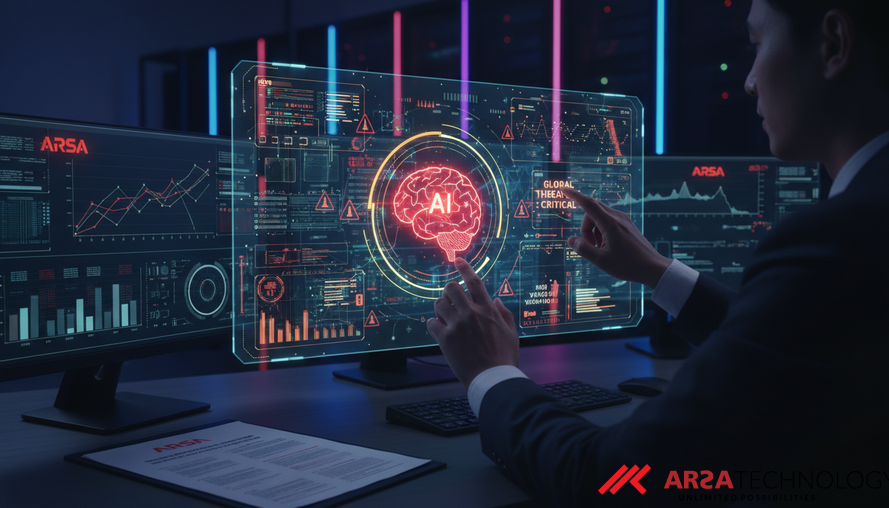
The New Era of AI-Powered Cybercrime
The public release of generative AI tools, exemplified by ChatGPT in late 2022, marked a pivotal moment in technology, demonstrating the unprecedented ease with which human-like text could be produced from simple prompts. This groundbreaking capability quickly drew the attention of malicious actors, ushering in a new era of cybercrime. Criminals rapidly adopted large language models (LLMs) to craft vast quantities of deceptive communications, ranging from widespread spam campaigns to highly personalized and sophisticated phishing attacks. These AI-enhanced efforts are specifically designed to infiltrate organizations, steal sensitive financial data, and compromise confidential information.
The immediate impact of these tools has been a dramatic increase in the volume and apparent legitimacy of fraudulent messages. Unlike previous generations of cyberattacks that often relied on poor grammar or obvious irregularities, AI-generated content can be virtually indistinguishable from legitimate communications. This makes it increasingly difficult for individuals and even seasoned security personnel to identify and thwart incoming threats, significantly raising the stakes for digital security across all sectors.
Expanding the Attacker's Arsenal with AI
Beyond just composing convincing text, cybercriminals are integrating AI tools across their entire operational spectrum, supercharging various aspects of their illicit activities. AI is now being leveraged for everything from developing hyperrealistic deepfake clips that can mimic voices and appearances, to subtly modifying malicious software (malware) to evade detection by conventional security systems. These advancements make it harder for organizations to trust digital interactions and rely on traditional perimeter defenses.
Furthermore, AI automates critical stages of an attack lifecycle that were once time-consuming and resource-intensive. Attackers can now use AI to rapidly scan vast networks and computer systems for vulnerabilities, quickly generate custom ransom notes, and analyze massive troves of stolen data to identify the most valuable assets for exploitation or sale. This dramatically lowers the barrier to entry for aspiring attackers and provides experienced criminals with an ever-evolving arsenal of capabilities, making it faster, cheaper, and easier to infiltrate targets.
The Escalating Scale of AI-Driven Attacks
The adoption of AI by cybercriminals is not just about sophistication; it's also about scale and reach. Global organizations, including Interpol, have issued warnings about the proliferation of AI-enabled scam centers, particularly in regions like Southeast Asia. These centers are now utilizing inexpensive AI tools to quickly target an exponentially larger number of potential victims, demonstrating an alarming agility to shift tactics and target new geographies. This ability to rapidly adapt and deploy large-scale, yet low-cost, attacks poses a significant challenge for global cybersecurity.
The sheer volume of these "scattergun" attacks means they don't necessarily need to be highly sophisticated to be effective. Instead, they rely on probability – needing only to be lucky enough to reach an undefended system or an unsuspecting individual at a vulnerable moment. This massive output overwhelms many organizations already struggling with the sheer number of cyberattacks. The problem is poised to worsen as more criminals embrace AI, and as generative AI technologies continue to improve in capabilities and accessibility, pushing the boundaries of what is possible in digital offense, as discussed in a report by MIT Technology Review.
The Double-Edged Sword: AI for Both Offense and Defense
The same transformative power of AI that fuels cybercrime also offers robust avenues for defense. While the increasing sophistication of attacks presents formidable challenges, the cybersecurity community is actively developing AI-driven countermeasures. This duality means that AI is not solely a threat; it is also our most promising tool for protection. Leading AI companies are at the forefront of this effort. For instance, Anthropic recently revealed that its experimental model, Mythos, uncovered thousands of critical vulnerabilities across major operating systems and web browsers. While all identified vulnerabilities were patched, Anthropic has strategically delayed the model’s public release and initiated Project Glasswing—a consortium aimed at leveraging these advanced AI capabilities for defensive cybersecurity applications.
On the front lines of digital defense, industry giants like Microsoft demonstrate the profound impact of AI. Their systems process over 100 trillion potential threat signals daily, identified by AI as malicious or suspicious. This constant, real-time analysis allows for unparalleled vigilance against evolving threats. Microsoft reported blocking an estimated $4 billion worth of scams and fraudulent transactions between April 2024 and April 2025, many of which were likely facilitated by AI-generated content. These figures underscore the critical role AI plays in safeguarding digital ecosystems at scale, highlighting that AI-powered defense can meet the challenge posed by AI-powered offense.
Building Robust Defenses in an AI-Threatened Landscape
In this rapidly evolving threat landscape, fundamental cybersecurity practices remain paramount, yet require augmentation with intelligent systems. Cybersecurity researchers emphasize that many of the "sloppier" AI-generated attacks can still be thwarted through basic, yet rigorously maintained, defenses. This includes consistent software updates, adherence to robust network security protocols, and comprehensive employee training on identifying phishing attempts. However, the efficacy of these traditional methods against more sophisticated, future AI-driven attacks remains a significant concern, necessitating a proactive approach to security innovation.
Enterprises must invest in dynamic, AI-powered security solutions that can adapt to new threats in real-time. For instance, advanced AI Video Analytics can monitor for unusual activities, unauthorized access, and even detect anomalies in human behavior that might indicate an impending cyber or physical security breach. Such systems, often deployed at the edge with solutions like the ARSA AI Box Series, ensure low latency and localized processing, crucial for critical infrastructure and privacy-sensitive environments. Integrating these intelligent solutions into existing security frameworks allows organizations to move from reactive incident response to proactive threat intelligence. ARSA Technology has been experienced since 2018 in developing such cutting-edge AI and IoT solutions, helping enterprises build resilient defenses.
To effectively counter the AI paradox, where technology is both weapon and shield, businesses need to embrace a multi-layered security strategy that prioritizes intelligence and automation. This involves not only deploying advanced technological solutions but also fostering a culture of cybersecurity awareness throughout the organization. By continuously updating security protocols, leveraging AI for threat detection and response, and partnering with expert solution providers, enterprises can fortify their defenses against the escalating tide of supercharged scams.
Explore ARSA Technology's enterprise-grade AI and IoT solutions designed to protect your assets and operations in the age of AI-driven threats. For a strategic discussion on bolstering your cybersecurity posture, we invite you to contact ARSA today.