The Evolving Landscape of Autonomous Vehicle Regulation: Multi-Sensor Mandates and the Future of AI in Transport
New Jersey's proposed robotaxi law highlights the critical debate over autonomous vehicle sensor requirements. Explore the roles of LiDAR, radar, and cameras in ensuring AV safety.

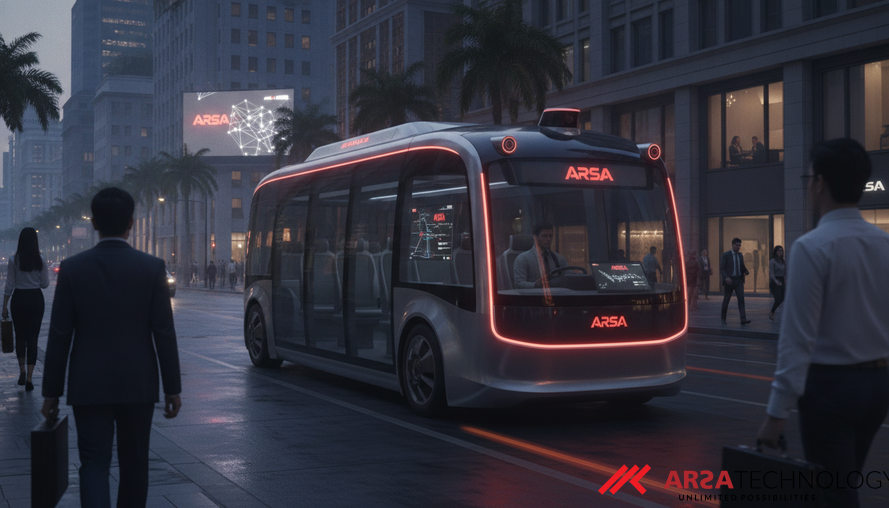
The development of autonomous vehicles (AVs) has been defined by a fundamental debate: can AI and camera-only systems achieve safe, fully driverless operation, or is a comprehensive suite of redundant sensors like LiDAR and radar indispensable? This question, long confined to engineering labs and executive boardrooms, is now entering the legislative arena, exemplified by a recent proposal in New Jersey that could reshape the operational guidelines for robotaxis.
The Sensor Suite: A Foundation for Autonomous Perception
At the core of autonomous capability lies perception—the vehicle’s ability to accurately detect objects, comprehend spatial relationships, track movement, and predict environmental changes. This complex task is rarely accomplished by a single technology, but rather through a harmonized suite of sensors working together, a process known as sensor fusion (Robotics & Automation News). Cameras offer high-resolution visual data, excelling at semantic understanding like reading traffic signs, identifying lane markings, and classifying objects based on color and texture. However, their performance can be significantly hampered by adverse conditions such as low light, glare, fog, or heavy rain, making their certainty fragile in critical scenarios.
LiDAR (Light Detection and Ranging) systems overcome many camera limitations by emitting laser pulses to create precise three-dimensional maps of the environment. This geometric accuracy is invaluable for object separation, free-space detection, and precise localization, providing consistent depth information independent of lighting or texture. While LiDAR units have historically been more expensive, their costs have decreased, making them increasingly viable for integration. Radar, operating at radio frequencies, offers robust performance in challenging weather conditions and is particularly adept at measuring range and relative velocity, crucial for tracking fast-moving objects. Each sensor compensates for the others' weaknesses, with sensor fusion combining their data to build a more accurate and reliable understanding of the world, bolstering the perception stack with redundancy and resilience. Solutions providers like ARSA Technology leverage these diverse data streams for robust AI Video Analytics Software to create real-time operational intelligence.
Legislating Autonomy: New Jersey’s Multi-Sensor Approach
New Jersey is at the forefront of this regulatory shift, with proposed legislation that mandates the use of cameras alongside at least two other sensing technologies, typically LiDAR and radar, for any company seeking to operate fully autonomous vehicles within the state. This move, currently pending a vote, would establish New Jersey as the first U.S. state to legally codify such a hardware requirement, setting a precedent that could influence broader regulatory frameworks. The legislation is driven by a focus on public safety and a cautious approach to deploying advanced technology in a densely populated region.
State Senator Andrew Zwicker, the bill’s primary sponsor and a physicist, articulated the view that current camera-only systems may not yet be robust enough to handle the full spectrum of real-world driving conditions with the necessary certainty. This perspective directly challenges the strategy adopted by some AV developers who argue that advanced artificial intelligence can compensate for a lack of redundant sensors. The proposed law would also initiate a three-year pilot program, demanding extensive supervised testing within New Jersey and comprehensive incident reporting before commercial driverless services can be authorized. This emphasis on stringent testing and multi-sensor integration aligns with broader industry calls for responsible AI deployment and robust safety protocols.
The Business Case for Redundancy and Reliability
For enterprises considering the integration of autonomous technology, the debate over sensor suites translates directly into critical business outcomes, including risk management, compliance, and long-term operational efficiency. Relying on a single sensor modality, even with sophisticated AI, introduces inherent vulnerabilities. For example, a camera-only system might struggle with object detection in heavy rain or fog, potentially leading to incidents that could severely impact public trust, incur significant liability, and delay widespread adoption. The business implication is clear: robust, multi-sensor perception systems offer a higher degree of reliability and safety, which is paramount for mission-critical applications.
The initial hardware cost of incorporating LiDAR and radar might be higher, but this investment can be offset by reduced operational risks, enhanced safety records, and accelerated regulatory approvals, ultimately leading to a stronger return on investment. Furthermore, for industries like logistics, manufacturing, or public safety, where operational uptime and flawless execution are non-negotiable, the ability of a multi-sensor system to perform reliably under diverse conditions is a significant advantage. This approach mitigates common-mode failures, ensuring that if one sensor type is impaired, others can still provide critical data, allowing for graceful degradation or system intervention. ARSA Technology, for example, offers AI Box Series, edge AI systems that integrate various sensors for robust on-premise processing, designed for environments demanding high reliability.
Beyond Regulation: The Future of AI in Transportation
The New Jersey proposal underscores a growing recognition that while AI is transformative, its application in safety-critical domains like autonomous driving requires rigorous, multi-layered validation. Experts like Carnegie Mellon professor Philip Koopman emphasize that human perception, with its innate understanding and adaptability, still surpasses current camera-only AI in many complex scenarios. While camera-only systems may eventually evolve, their current limitations, particularly in adverse conditions or unfamiliar "edge cases," make a compelling argument for sensor redundancy in achieving widespread, safe robotaxi operations.
This regulatory push reflects a broader industry movement towards more comprehensive and secure autonomous systems. Developers and operators must not only innovate with AI but also prioritize the foundational elements of perception and safety. For businesses looking to implement AI and IoT solutions, whether in autonomous transport, smart city management, or industrial automation, the lesson is universal: robust perception, supported by diverse data inputs and intelligent sensor fusion, is essential for unlocking the full, safe potential of AI. Engaging with experienced providers who understand these complexities and offer Custom AI Solutions built for reliability and real-world constraints can be crucial for successful deployment.
The ongoing debate in New Jersey is more than a regional legislative effort; it is a microcosm of the global challenge in integrating advanced AI into our physical world. As companies continue to push the boundaries of AI, the imperative to build systems that perceive the world with unwavering certainty and safety remains paramount.
Sources:
Molla, R. (2026, July 8). The robotaxi law that could ban Tesla*. The Verge. https://www.theverge.com/transportation/962309/new-jersey-robotaxi-bill-lidar-tesla Francis, S. (2026, January 29). The sensor suite for autonomous vehicles: LiDAR, radar, cameras and sensor fusion*. Robotics & Automation News. https://roboticsandautomationnews.com/2026/01/29/the-sensor-suite-for-autonomous-vehicles-lidar-radar-cameras-and-sensor-fusion/98371/
Discover how comprehensive AI and IoT solutions can enhance safety, optimize operations, and ensure compliance for your enterprise. To discuss your specific needs, contact ARSA today.