The Future of Driving: Mercedes-Benz Introduces Steer-by-Wire and Steering Yoke in the EQS
Mercedes-Benz takes a bold step with steer-by-wire technology and a unique steering yoke in the refreshed EQS sedan. Explore the technical innovation, safety implications, and impact on future driver experience.

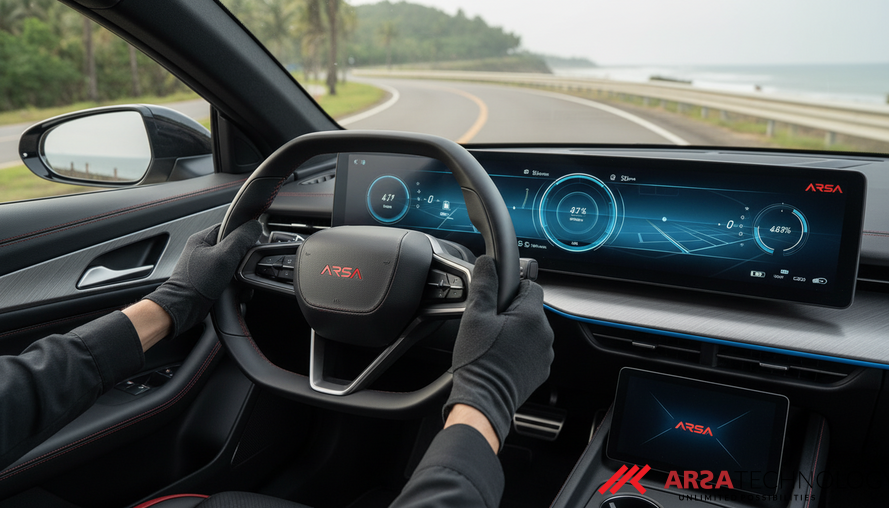
Mercedes-Benz is embarking on a significant technological advancement by integrating steer-by-wire systems into its refreshed EQS sedan. This marks the luxury automaker's inaugural deployment of this sophisticated electronic steering technology, a move that could redefine the driving experience. The introduction of steer-by-wire, alongside a distinctive steering yoke, signals a clear intent to push the boundaries of automotive engineering and driver interaction.
Understanding Steer-by-Wire Technology
Steer-by-wire fundamentally transforms how a vehicle's steering wheel interacts with its wheels. Unlike conventional mechanical steering systems that rely on physical connections like racks and pinions, steer-by-wire replaces these components with electronically controlled servos. In such a setup, driver inputs from the steering wheel are converted into electronic signals, which are then transmitted to actuators that precisely control the direction of the car's wheels. This approach, while new to Mercedes-Benz, has long been a staple in aeronautics, where fly-by-wire systems are standard for aircraft control, demonstrating its inherent precision and reliability.
Mercedes-Benz emphasizes that this introduction does not signify a complete abandonment of traditional electromechanical steering. The company plans to offer versions of the EQS with both conventional steering and the new steer-by-wire system, allowing for a phased transition and market evaluation. Prior to its production approval, the steer-by-wire system underwent rigorous testing, accumulating over a million kilometers (more than 621,000 miles) in real-world conditions. To meet stringent safety standards, the system incorporates redundant architecture, high-precision sensors, and powerful control units, ensuring continuous steering capability even in the event of a component failure.
The Introduction of the Steering Yoke
Complementing the steer-by-wire technology, the EQS will feature a new steering yoke, an element poised to spark considerable discussion among automotive enthusiasts. This design, reminiscent of those found in high-performance race cars or aircraft cockpits, offers a distinctly modern aesthetic. Mercedes-Benz posits that the flatter profile of the yoke provides drivers with an unobstructed view of the instrument cluster and facilitates easier entry and exit from the vehicle.
The automotive industry has seen several attempts to popularize steering yokes, with manufacturers like Tesla, Lexus, and Toyota experimenting with similar designs. While some concepts, such as Hyundai's Ioniq 5 with wheels capable of sideways movement demonstrated at CES, showcase innovative possibilities, many automakers have faced backlash from owners and safety advocates, leading to a retraction of the design. The reception to Mercedes' new yoke in the EQS remains a critical point of interest, balancing design innovation with practical ergonomics and driver preference. For instance, the absence of a full circular grip can be a concern for drivers seeking tactile feedback during dynamic maneuvers or for comfort during extended journeys, where traditional steering wheel padding often eases pressure.
Safety and Performance: A Dual Perspective
The core steer-by-wire system itself has been engineered with safety as a paramount concern. The redundant system architecture, coupled with advanced sensors and control units, underscores Mercedes-Benz’s commitment to reliability. This ensures that the electronic steering pathways are continuously monitored, providing fail-safe mechanisms that maintain steering control under various conditions. Such advanced electronic control systems can benefit from robust AI and IoT infrastructure for real-time diagnostics and predictive maintenance. For enterprises managing large fleets or critical operational infrastructure, deploying technologies like AI Video Analytics or AI BOX - Basic Safety Guard can help monitor system health and driver behavior, further enhancing overall safety and operational efficiency.
The integration of steer-by-wire also opens doors for advanced vehicle dynamics and customization. Without a direct mechanical link, the steering ratio can be dynamically adjusted based on speed, driving mode, or even driver preference, allowing for a more responsive feel at low speeds and greater stability at high speeds. Initial industry reactions to the EQS's steer-by-wire system have been highly favorable, with "The Drive" praising the accompanying yoke as "a steering yoke that actually works" and "InsideEVs" hailing the steer-by-wire system as "the best one out there," though reserving individual judgment on the yoke itself. This suggests that the underlying technology is performing well, even if the user interface choice generates debate.
Implications for Automotive Innovation and Driver Experience
The adoption of steer-by-wire is a foundational step toward more advanced autonomous driving capabilities. By decoupling the physical steering from the mechanical wheels, engineers gain unprecedented flexibility in vehicle design and control. This allows for new cabin layouts, dynamic steering responses, and easier integration with AI-driven assistance systems. For example, AI algorithms can process various inputs—from road conditions to driver fatigue—to dynamically adjust steering characteristics, making the drive safer and more comfortable. ARSA Technology specializes in providing Custom AI Solutions for complex industrial and enterprise challenges, which could include developing intelligent modules for advanced driver assistance or optimizing operational flows in vehicle manufacturing processes across various industries.
Furthermore, the electronic nature of steer-by-wire systems contributes to a digital ecosystem within the vehicle. This digital integration facilitates seamless updates, personalized driver profiles, and potential for future functionalities that are not possible with purely mechanical systems. The transition marks a broader industry trend towards software-defined vehicles, where computational power and data analytics play an increasingly central role in performance, safety, and user experience.
The Road Ahead for Automotive Steering
Mercedes-Benz’s move with the EQS represents a significant leap in automotive innovation. While the steer-by-wire technology offers tangible benefits in terms of precision, safety, and integration with future AI-powered systems, the accompanying steering yoke highlights the ongoing tension between futuristic design and established driver ergonomics. The success of this dual introduction will likely influence future design choices across the automotive industry, particularly as vehicles become more software-centric and autonomous capabilities evolve. As manufacturers continue to explore these advanced technologies, the balance between cutting-edge features and intuitive user experience will remain a crucial determinant of market acceptance.
Source: The Verge
To explore how AI and IoT solutions can transform your operations with precision, scalability, and measurable ROI, contact ARSA for a consultation.