Unleashing Desktop AI Power: OpenAI's Codex Now Accessible Via ChatGPT Mobile App
Explore how OpenAI's Codex, a powerful desktop AI tool, is now manageable through the ChatGPT mobile app, enabling remote code generation and application control. Discover the implications for enterprise productivity, data security, and the evolving AI landscape.

The landscape of Artificial Intelligence (AI) continues to evolve at a rapid pace, bringing increasingly sophisticated tools closer to everyday operations. A significant development in this area is OpenAI's integration of its advanced desktop AI tool, Codex, into the ChatGPT mobile application. This strategic move allows users to seamlessly command and interact with the desktop-based AI from their iOS or Android smartphones, marking a pivotal step towards more flexible and powerful AI deployment, as reported by The Verge. This capability promises to redefine how enterprises leverage AI for tasks ranging from code generation to complex application control, enhancing productivity and operational agility without being tethered to a physical workstation.
Bridging the Gap: Mobile Control for Desktop AI
The essence of this innovation lies in empowering users to extend their control over powerful AI systems beyond the traditional desktop environment. With Codex now accessible via the ChatGPT mobile app, developers, engineers, and IT professionals can initiate, monitor, and manage intricate AI-driven tasks directly from their mobile devices. This includes working across various threads, reviewing AI-generated outputs, approving critical commands, switching between different AI models, or even starting entirely new projects. The convenience of managing such sophisticated operations on the go introduces a new paradigm for remote management and responsiveness, ensuring that critical AI workflows can be maintained and adjusted from virtually anywhere.
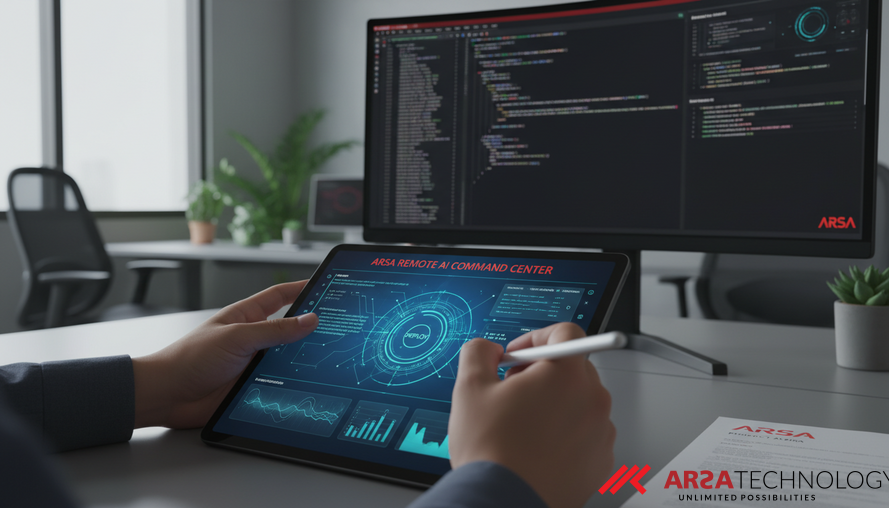
This convergence transforms the mobile device into a remote command center for high-performance AI. It means that an AI solution deployed on a powerful desktop machine, capable of handling complex computational tasks like sophisticated code generation or intricate application manipulation, can now be orchestrated with the flick of a finger. For businesses seeking to maximize their investments in advanced AI infrastructure, this mobile integration translates into higher utilization rates and greater operational flexibility.
Driving Enterprise Efficiency and Innovation
For enterprises, the ability to control desktop AI tools remotely via a mobile app is more than just a convenience; it's a catalyst for significant operational efficiency and innovation. Imagine a scenario where a software development team needs to generate large blocks of code, run complex simulations, or automate repetitive software tasks. Instead of requiring developers to be physically present at their workstations, they can now deploy and oversee these processes remotely. This flexibility is particularly valuable for global teams, remote work models, and scenarios requiring immediate intervention or monitoring outside of standard office hours.
This capability significantly streamlines workflows, allowing decision-makers and technical leads to maintain oversight and provide approvals on critical AI operations without delay. For instance, in manufacturing, an AI-powered quality control system might require human approval for certain adjustments; with mobile access, these approvals can be given instantly, preventing bottlenecks on the production line. Similarly, in logistics, an AI optimizing route planning can be fine-tuned or re-calibrated by a manager en route, leading to continuous improvement and cost savings. ARSA Technology, with its focus on practical AI deployment, understands the importance of such integrations, offering custom AI solutions tailored to specific enterprise needs, ensuring that AI serves as a true extension of human capability.
Addressing Data Security and Deployment Realities
A crucial aspect of this mobile-to-desktop AI interaction, and a primary concern for any enterprise deploying advanced AI, is data security and privacy. OpenAI addresses this by ensuring that "Your files, credentials, permissions, and local setup stay on the machine where Codex is operating, while updates flow back to your phone in real time, including screenshots, terminal output, diffs, test results, and approvals." This architecture emphasizes a commitment to data sovereignty, a vital consideration for industries with stringent regulatory compliance requirements such as finance, healthcare, and government.
By keeping sensitive data and operational logic on the local machine, organizations can maintain full control over their proprietary information and adhere to privacy regulations like GDPR or HIPAA. This approach aligns perfectly with the growing demand for on-premise and edge AI solutions, where processing occurs closer to the data source, reducing latency and enhancing security. ARSA Technology has been experienced since 2018 in delivering such secure, on-premise AI capabilities. For example, the ARSA AI Box Series and ARSA AI Video Analytics Software are designed for local processing without cloud dependency, providing enterprises with complete data ownership and control, similar to the operational model emphasized by this new integration.
The Broader AI Landscape and Future Outlook
OpenAI's move reflects the intense competition and rapid evolution within the AI industry. Following the rising popularity of competitors’ offerings, such as Anthropic’s Claude Code, OpenAI has strategically refocused its efforts on core enterprise functionalities and ambitious projects like developing a desktop "superapp." This initiative to provide mobile access to Codex's desktop capabilities is a significant stride towards realizing that "superapp" vision, where AI tools seamlessly integrate across various platforms and applications.
The trend towards making powerful AI tools more accessible and integrated across different devices is indicative of the industry's direction. It underscores the shift from experimental AI to practical, deployable, and profitable solutions that can be managed intuitively. As AI continues to mature, we can expect further innovations that bridge the gap between complex backend AI models and user-friendly interfaces, driving deeper integration into enterprise workflows and daily operations.
This new mobile access feature is currently rolling out as a preview on both iOS and Android for all ChatGPT plans, including the free tier and the more affordable Go plan, making advanced AI control available to a wider audience. This democratizes access to sophisticated AI tools, potentially fostering even more rapid innovation and adoption across various sectors.
Ready to harness the power of practical, secure, and scalable AI solutions for your enterprise? Explore ARSA Technology's range of AI and IoT offerings and contact ARSA today for a free consultation.
Source: "OpenAI’s Codex is now in the ChatGPT mobile app" by Jay Peters, The Verge, May 14, 2026. (https://www.theverge.com/ai-artificial-intelligence/930763/openai-codex-chatgpt-ios-android-app-preview)