Unlocking Emotional Intelligence in VR: Introducing the WARM-VR Dataset for Wearable Affect Recognition
Explore WARM-VR, a pioneering dataset for multimodal wearable affect recognition in Virtual Reality. Discover how AI and physiological signals are enhancing immersive experiences.

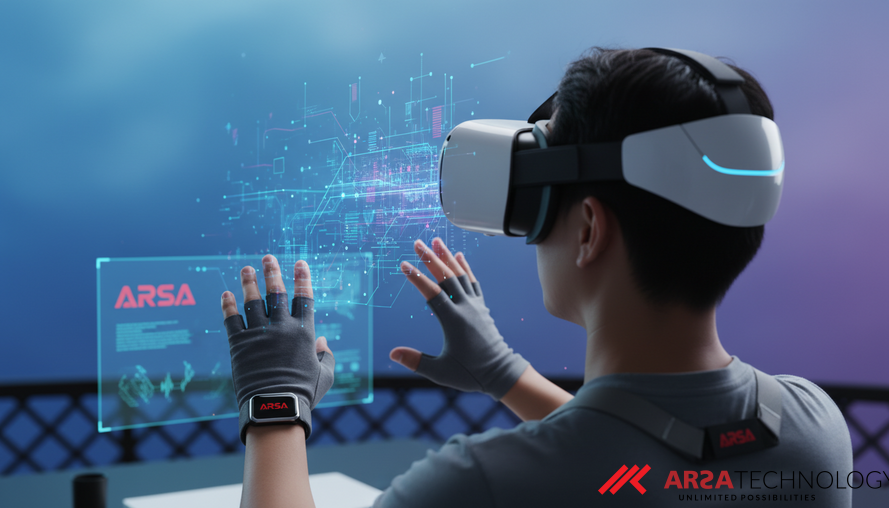
Human-computer interaction (HCI) is rapidly evolving, moving beyond simple commands to more intuitive, human-like experiences. A significant leap in this evolution is affective computing – the field dedicated to enabling systems to recognize, interpret, and respond to human emotions. As virtual reality (VR) technologies become increasingly sophisticated, the ability for VR environments to understand and react to a user's emotional state promises a new era of truly immersive and personalized experiences.
While the concept of emotional AI is not new, its application in immersive multimedia contexts like VR has faced limitations, primarily due to a lack of relevant data. Traditional datasets for affect recognition often rely on static environments or non-wearable laboratory equipment, which doesn't accurately reflect real-world immersive scenarios. This gap is precisely what recent innovations aim to address, paving the way for VR systems that are genuinely aware of a user's feelings.
The Evolving Landscape of Affective Computing
Affective computing seeks to bridge the emotional divide between humans and machines, allowing systems to perceive and respond to users' internal states. This capability is crucial for enhancing interaction quality, leading to more natural and empathetic digital experiences. A key aspect of this field involves recognizing emotional responses (affect) triggered by various stimuli, particularly in multimedia. The emergence of wearable devices has become a game-changer, offering a continuous and non-intrusive source of physiological signals—such as blood volume pulse (BVP), electrodermal activity (EDA), and electrocardiogram (ECG)—which are invaluable for inferring emotional states.
Unlike more easily masked indicators like facial expressions or vocal tone, physiological signals provide objective and reliable insights into a person's true emotional state. These biological markers are less susceptible to social masking, making them powerful tools for accurate affect recognition. However, until recently, most datasets used to train these systems were collected in controlled, non-immersive lab settings, often using stationary equipment. This disconnect from real-world, dynamic environments, especially immersive ones, has hindered the development of truly practical and scalable emotional AI for new technologies.
WARM-VR: A New Frontier in Immersive Emotional AI Data
Addressing these limitations, a groundbreaking initiative introduced WARM-VR (Wearable Affect Recognition from Multisensory stimuli in Virtual Reality), a novel publicly available multimodal dataset. This dataset is specifically engineered to support affect recognition within fully immersive, multisensory VR environments, leveraging data from wearable sensors. Researchers collected data from 31 participants, ranging from 19 to 37 years old, using a combination of wearable sensors to capture a rich array of physiological and motion data.
The wearable instrumentation included a wristband that measured Blood Volume Pulse (BVP), Electrodermal Activity (EDA), skin Temperature (TEMP), and three-axis Acceleration (ACC). Additionally, a chest strap recorded Electrocardiogram (ECG) signals, providing detailed heart activity data. Participants underwent a structured experimental protocol: first, a stress induction phase involving an arithmetic task, followed by an immersive VR experience designed to elicit relaxation through a calming beach environment. Crucially, these VR sessions integrated synchronized multimedia stimuli, encompassing visual, auditory, and olfactory elements. The olfactory stimuli, such as calming essential oils, were integrated to explore their potential in modulating mood and enhancing emotional well-being, similar to aromatherapy. Affective states were rigorously assessed through both subjective self-report questionnaires and objective analysis of the collected physiological measurements, providing a comprehensive view of emotional responses. This innovative approach makes WARM-VR, to the best of our knowledge, the first dataset to combine wearable sensing with fully immersive VR and olfactory stimulation. (Source: arXiv:2605.00184, 2024).
Unlocking Deeper Immersion: The Role of Multimodal Stimuli
The power of WARM-VR lies in its comprehensive integration of multisensory stimuli. While visual and auditory elements have long been staples of VR, the inclusion of olfactory input represents a significant step forward in creating truly immersive and emotionally resonant experiences. Scents, known for their direct link to memory and emotion, can profoundly impact mood and psychological states. By precisely synchronizing visual, auditory, and olfactory cues within the VR environment, the dataset captures a more holistic picture of how users react to and are influenced by their virtual surroundings.
Statistical analysis of participant questionnaires corroborated the impact of these stimuli, confirming that the VR relaxation experience significantly reduced negative affect. This effect was notably enhanced with the addition of olfactory stimuli, underscoring the potential of scent to deepen immersion and promote therapeutic outcomes. Such multimodal data is invaluable for developing AI models that can better predict and respond to human emotional states, offering a pathway to VR applications that are not just visually engaging but also emotionally intelligent. For enterprises, understanding these complex interactions can inform the development of highly effective custom AI solutions tailored for specific user experiences.
Benchmarking Performance: AI Models in Action
To demonstrate the utility of the WARM-VR dataset, researchers established benchmark results using various machine learning algorithms. The goal was to evaluate how effectively different AI models could classify emotional states (valence and arousal) and recognize relaxation from the physiological data. For binary classification of valence (the pleasantness or unpleasantness of an emotion) from BVP data, both a Convolutional Neural Network (CNN) and a CNN–Bi-directional Gated Recurrent Unit (Bi-GRU) model achieved strong performance, with an average F1-score of 0.63 and an Area Under the Curve (AUC) of 0.69. A CNN is a type of neural network particularly effective at identifying patterns in data, while a Bi-GRU is well-suited for processing sequential data, like time-series physiological signals.
For classifying arousal (the intensity or activation level of an emotion), a lightweight Transformer architecture delivered the most balanced results, achieving F1-scores of 0.54 and 0.63 for different arousal levels, outperforming recurrent neural network hybrids. Transformers are advanced neural network models known for their ability to process complex sequential data by focusing on relationships between elements. In the overall relaxation task, the CNN–Bi-GRU model again demonstrated high performance, with an average F1-score of 0.64 and an AUC of 0.69, while the Transformer variant achieved comparable accuracy. These benchmark results provide a crucial baseline for future research and development in affective computing within immersive VR, guiding the selection and optimization of AI models for real-time emotional analysis.
Practical Implications for Enterprise and Industry
The insights derived from the WARM-VR dataset and similar research have profound implications across various industries, enabling the creation of more adaptive and human-centric systems.
- Healthcare and Wellness: Imagine VR therapy sessions that dynamically adjust content based on a patient's stress levels, identified through wearable physiological data. This could lead to personalized mental health treatments or chronic pain management programs. Solutions like ARSA's Self-Check Health Kiosk demonstrate the practical application of AI and IoT for health monitoring, capable of integrating such advanced affect recognition for preventive care or rehabilitation.
- Corporate Training and Education: VR training simulations could become far more effective by adapting to a user's emotional state. If a trainee shows signs of frustration or disengagement, the VR environment could offer guided assistance or modify the difficulty. This ensures optimal learning outcomes and higher retention rates, creating a more responsive and supportive educational experience.
- Retail and Marketing: Brands could utilize VR to test product prototypes or advertising campaigns, measuring real-time emotional responses to visual, auditory, and even olfactory cues. This provides deeper consumer insights than traditional surveys, allowing for data-driven product development and targeted marketing strategies.
- Public Safety and Smart Cities: While not directly VR-related, the principles of multimodal physiological sensing can extend to understanding crowd dynamics and public sentiment in smart city applications. ARSA’s AI Video Analytics, for example, processes real-time CCTV footage to detect objects, people, and behaviors, which could potentially be combined with physiological insights for comprehensive public safety and urban planning.
- Gaming and Entertainment: Future gaming experiences could respond to a player's fear, excitement, or boredom, creating dynamically evolving narratives and challenges that are perfectly attuned to their emotional journey.
The ability to deploy such AI systems flexibly—whether on-premise, at the edge, or in the cloud—is crucial for enterprises handling sensitive data or requiring low-latency operations. Companies like ARSA Technology, with expertise since 2018 in developing and deploying practical AI and IoT solutions across various industries, are well-positioned to transform these research findings into robust, real-world applications. This includes providing the infrastructure for powerful edge AI systems that process data locally, ensuring privacy and compliance, particularly for sensitive emotional data.
The WARM-VR dataset marks a significant milestone in advancing our understanding of human affect in immersive environments. By providing a rich, multimodal data source and benchmarks for wearable affect recognition in VR, it accelerates the development of more emotionally intelligent AI systems. This research paves the way for VR experiences that are not only visually stunning but also deeply empathetic and responsive to our inner states, opening up new avenues for innovation across numerous sectors.
To explore how advanced AI and IoT solutions can transform your operations with emotional intelligence and immersive technologies, contact ARSA for a free consultation.
Source: Alghoul, K., Faisal, M., Laamarti, F., Al Osman, H., & El Saddik, A. (2024). Introducing WARM-VR: A Benchmark Dataset for Multimodal Wearable Affect Recognition in Virtual Reality. arXiv preprint arXiv:2605.00184.