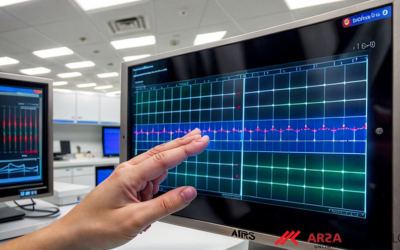
Introduction: Overcoming Modernizing legacy IT systems in the government industry
Government agencies worldwide are under increasing pressure to deliver more efficient, transparent, and accessible services to their constituents. Yet, many are hindered by the very foundation of their operations: outdated, legacy IT systems. These systems, while once state-of-the-art, now represent a significant barrier to innovation, often leading to inefficiencies, high maintenance costs, and an inability to meet modern demands for digital accessibility. One critical area where this challenge is acutely felt is in transcription services, particularly for automated subtitle and closed caption generation.
The manual or semi-automated processes traditionally used for transcribing public meetings, educational content, emergency broadcasts, and internal communications are slow, expensive, and prone to human error. More importantly, they often fall short of stringent accessibility compliance standards, leaving segments of the population underserved. Modernizing these systems is not merely an upgrade; it’s a strategic imperative for enhanced public service, operational agility, and compliance.
ARSA Technology offers a powerful solution: a high-performance Speech-to-Text API designed to seamlessly integrate with existing government infrastructures. This article outlines a strategic, step-by-step migration plan for government agencies to transition from legacy transcription methods to ARSA’s advanced Speech-to-Text API, unlocking unprecedented levels of accuracy, efficiency, and accessibility.
The Imperative for Modern Speech-to-Text in Government
Government agencies operate in an environment where clear, timely, and accessible communication is paramount. From legislative proceedings and public announcements to educational programs and citizen helplines, spoken information needs to be accurately captured and distributed. Legacy transcription systems often present several critical drawbacks:
- High Costs and Resource Drain: Manual transcription is labor-intensive, requiring significant staffing and budget allocations that could be redirected to other vital public services.
- Slow Turnaround Times: The delay between an event and the availability of its transcribed content can impede timely information dissemination and public engagement.
- Inconsistent Accuracy: Human transcription, especially for complex or specialized terminology, can vary in quality and introduce errors.
- Accessibility Gaps: Failing to provide accurate and timely subtitles and closed captions for audio and video content creates significant barriers for individuals with hearing impairments, violating accessibility mandates like WCAG 2.1.
- Scalability Challenges: Legacy systems struggle to cope with the ever-increasing volume of audio and video content generated by modern government operations.
ARSA Technology’s Speech-to-Text API directly addresses these pain points. By leveraging advanced AI and machine learning, it offers a robust, scalable, and highly accurate solution for converting spoken language into text, making it ideal for automated subtitle and closed caption generation. This modernization not only streamlines operations but fundamentally improves how government communicates with and serves its citizens.
Understanding ARSA Technology’s Speech-to-Text API Capabilities
ARSA Technology’s Speech-to-Text API is engineered for enterprise-grade performance, delivering exceptional accuracy across diverse audio inputs and languages. It transforms spoken words into written text, enabling a multitude of applications crucial for government operations. Imagine automatically generating precise subtitles for public information videos, creating searchable transcripts of town hall meetings, or providing closed captions for educational broadcasts – all with minimal human intervention.
Our API is designed to handle various audio qualities and accents, ensuring reliable transcription even in challenging environments. It supports multiple languages, a critical feature for diverse populations and international government interactions. This capability is especially beneficial for agencies needing to serve multilingual communities or engage in global diplomacy. To see the API in action, demo the Speech-to-Text API. This interactive demonstration allows you to experience firsthand the speed and accuracy of our solution.
Furthermore, our API is built for seamless integration, allowing government IT teams to incorporate our highly accurate transcription API into existing content management systems, communication platforms, and archival solutions without extensive re-engineering. This focus on interoperability is key to a smooth migration and long-term success.
Phase 1: Strategic Planning and Assessment for Migration
A successful migration begins with meticulous planning. For government agencies, this phase is critical to ensure compliance, security, and a clear return on investment.
- Define Clear Objectives and KPIs: What specific outcomes does the agency aim to achieve? Examples include a target transcription accuracy rate (e.g., 95%+), a reduction in manual transcription costs (e.g., 30% savings), compliance with specific accessibility standards (e.g., WCAG 2.1 A/AA), or a measurable improvement in content availability speed. These metrics will guide the entire migration process and evaluate its success.
- Conduct a Comprehensive Legacy System Audit: Identify all existing transcription tools, workflows, and data sources. Document the types of audio and video content being processed, their formats, storage locations, and current integration points. Understand the limitations and bottlenecks of the current system.
- Assess Data Characteristics and Requirements: Analyze the typical audio data encountered: types of speakers (single, multiple), background noise levels, speech pace, and the range of languages spoken. This assessment informs the configuration of the ARSA Speech-to-Text API for optimal performance. Consider data sensitivity and security requirements, which are paramount in government contexts.
- Engage Key Stakeholders: Involve representatives from IT, legal, compliance, communications, and end-user departments. Their input is invaluable for identifying specific needs, potential challenges, and ensuring broad adoption post-migration. Legal and compliance teams, in particular, will ensure the migration adheres to all relevant government regulations.
- Perform a Thorough Risk Assessment: Identify potential technical, operational, and compliance risks associated with the migration. Develop mitigation strategies for data security, system downtime during transition, and potential integration complexities.
- Allocate Budget and Resources: Secure the necessary financial and human resources for the project. This includes licensing for the API, potential integration development, and staff training. A clear budget demonstrates commitment and facilitates a smoother process.
Phase 2: Pilot Implementation and Proof of Concept
With a solid plan in place, the next step is to validate the solution with a controlled pilot project. This phase minimizes risk and provides concrete evidence of the ARSA API’s value.
- Select a Targeted Pilot Use Case: Choose a specific, manageable area within the agency that can benefit immediately from automated transcription, such as transcribing a specific type of internal meeting, a series of public announcements, or a small archive of educational videos. This allows for focused evaluation without disrupting critical operations.
- Develop a Minimal Viable Integration: Without writing complex code, conceptualize how the ARSA Speech-to-Text API will connect with the chosen legacy system or workflow. This might involve setting up a simple data flow where audio files are routed to the API for processing, and the resulting text is then ingested back into the legacy system for subtitle generation or archival. The focus is on demonstrating functionality.
- Establish Clear Performance Metrics for the Pilot: Based on the objectives defined in Phase 1, set specific targets for the pilot. This could include achieving a certain accuracy rate for the pilot content, reducing transcription time by a specific percentage, or demonstrating compliance with accessibility guidelines for the pilot content.
- Gather and Analyze Feedback: Actively collect feedback from pilot users and stakeholders. Evaluate the API’s performance against the established metrics. Identify any areas for improvement in the integration process, transcription accuracy, or workflow efficiency. This iterative feedback loop is crucial for refining the solution before broader deployment.
Phase 3: Scaled Deployment and Optimization
Upon successful completion of the pilot, the agency can proceed with a phased rollout and continuous optimization.
- Execute a Phased Rollout Strategy: Based on the insights from the pilot, gradually expand the deployment of the ARSA Speech-to-Text API to more departments, content types, or use cases. This approach allows for continuous learning and adaptation, ensuring a smooth transition across the entire organization.
- Develop Comprehensive Training and Documentation: Provide thorough training for all relevant staff on how to utilize the new transcription workflows powered by the ARSA API. Create clear documentation that outlines best practices, troubleshooting steps, and guidelines for maximizing the API’s benefits.
- Implement Robust Performance Monitoring: Continuously monitor the API’s performance, transcription accuracy, and system health. Establish alerts for any deviations from expected performance. This proactive approach ensures the system operates optimally and allows for immediate identification and resolution of any issues.
- Embrace Continuous Improvement: Leverage ARSA Technology’s ongoing API updates and support to ensure the agency always benefits from the latest advancements in speech recognition. Regularly review usage patterns and feedback to identify opportunities for further optimization and efficiency gains.
- Reinforce Data Security and Compliance: Throughout the scaled deployment, maintain a rigorous focus on data security and compliance. ARSA Technology is committed to enterprise-grade security protocols, ensuring that sensitive government data remains protected in accordance with all relevant regulations.
Beyond Transcription: Expanding Value with AI APIs
Migrating to ARSA Technology’s Speech-to-Text API is a significant step towards modernizing government IT infrastructure. However, the journey doesn’t have to end there. The foundation laid by integrating one of ARSA’s high-performance AI APIs can open doors to a broader digital transformation.
Consider the synergistic potential of combining speech-to-text with other AI capabilities. For instance, after transcribing public inquiries or citizen feedback, agencies could use natural language processing (NLP) tools to analyze sentiment or identify common themes, providing actionable insights for policy-making. Furthermore, to enhance interactive citizen services, agencies could leverage generate natural voice responses with our TTS API, creating more engaging and accessible automated communication channels. This allows for the creation of sophisticated AI-powered virtual assistants or interactive voice response (IVR) systems that can understand spoken queries and respond with natural-sounding speech.
ARSA Technology’s comprehensive API portfolio offers government agencies the tools to build truly intelligent systems that improve citizen engagement, streamline administrative processes, and enhance overall operational effectiveness.
Conclusion: Your Next Step Towards a Solution
The modernization of legacy IT systems is no longer optional for government agencies; it is essential for delivering effective, accessible, and transparent public services in the digital age. Migrating to ARSA Technology’s Speech-to-Text API for automated subtitle and closed caption generation represents a strategic investment in efficiency, compliance, and citizen satisfaction.
By following a structured migration plan—from meticulous planning and a focused pilot to scaled deployment and continuous optimization—government agencies can confidently transition to a state-of-the-art transcription solution. This not only solves the immediate pain point of outdated systems but also positions the agency for future innovation and greater public value. ARSA Technology is a trusted partner in this journey, providing the robust API solutions and expert support needed to navigate the complexities of digital transformation.
To explore how ARSA Technology can empower your agency’s modernization efforts and to discuss a tailored migration strategy, we invite you to Contact Us.
Ready to Solve Your Challenges with AI?
Discover how ARSA Technology can help you overcome your toughest business challenges. Get in touch with our team for a personalized demo and a free API trial.