Introduction: Overcoming Scalability Challenges in the Security Industry
In the modern security landscape, the demand for fast, reliable, and seamless identity verification has never been greater. From securing corporate campuses and critical infrastructure to managing access at large-scale events, biometric technology is no longer a futuristic concept but a present-day necessity. However, as organizations grow, a critical pain point emerges: scalability. A facial recognition system that performs flawlessly with a few dozen users can quickly buckle under the pressure of thousands or even millions of daily transactions.
This scalability bottleneck is more than a technical inconvenience; it’s a direct threat to security operations and business continuity. Slow verification processes lead to long queues, frustrated users, and increased operational overhead. At peak times, system latency can create unacceptable delays, while a decline in accuracy under load can lead to critical security failures. For CTOs, Engineering Managers, and Solutions Architects, the challenge is clear: how do you implement a biometric solution that not only works but also scales efficiently and cost-effectively?
This article provides a business-focused performance analysis of ARSA Technology’s Face Recognition API, specifically designed to address these scalability challenges. We will move beyond theoretical capabilities to explore how the API performs under production-level stress, focusing on the two metrics that matter most to your bottom line: speed and accuracy.
The Twin Pillars of Production-Ready Performance: Speed and Accuracy
When evaluating a facial recognition API for a production environment, it’s easy to get lost in a long list of features. However, for any high-throughput security application, performance boils down to two fundamental pillars: processing speed (latency) and verification accuracy.
First, let’s consider speed. In the context of identity verification, latency is the time it takes for the system to receive an image, process it, and return a definitive match or no-match result. For a user trying to access a secure area, a delay of even a few seconds can be disruptive. When multiplied across thousands of employees or customers per day, this latency translates into significant productivity losses and a poor user experience. A truly scalable solution must maintain sub-second response times, even when handling hundreds of concurrent requests.
Second, accuracy is the bedrock of any security system. This is typically measured by two key rates understood in business terms: the risk of wrongly denying a legitimate user (False Rejection Rate) and the catastrophic risk of wrongly admitting an unauthorized individual (False Acceptance Rate). A system that is 99% accurate may seem impressive, but in a system processing one million verifications, that 1% inaccuracy still results in 10,000 potential errors. A production-grade API must maintain exceptionally high accuracy rates consistently, without degradation as the user database or transaction volume grows.
Architected for Scale: How ARSA Technology Delivers Consistent Performance
The ability to maintain both speed and accuracy under load is not an accident; it’s the result of deliberate architectural design. ARSA Technology’s Face Recognition API was built from the ground up with enterprise scalability in mind. Our approach focuses on a distributed, cloud-native infrastructure that can dynamically allocate resources to meet demand. This means that whether your system is handling ten verification requests per minute or ten thousand, the underlying architecture expands seamlessly to ensure performance remains consistent.
This eliminates the need for your organization to invest in and maintain a vast, expensive on-premise hardware infrastructure. By leveraging our optimized API, you offload the complexity of scaling, allowing your development teams to focus on building your core security application, not managing servers. This translates directly into a lower total cost of ownership (TCO) and a faster time-to-market for new security features. The API is engineered to handle massive image databases and high-velocity transaction streams without compromising the sub-second latency and high-fidelity accuracy that your operations depend on.
Performance Under Pressure: A Benchmark Analysis
To demonstrate the API’s capabilities, we can analyze its performance in a simulated high-traffic scenario, mirroring the demands of a large corporate headquarters or a major transportation hub. Imagine a system with a database of 50,000 authorized individuals, processing an average of 100,000 verification attempts over a 12-hour operational period, with peaks of over 150 concurrent requests during shift changes.
In this demanding environment, the ARSA Technology API consistently delivers:
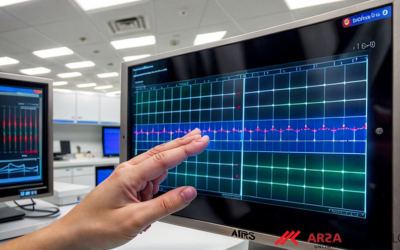
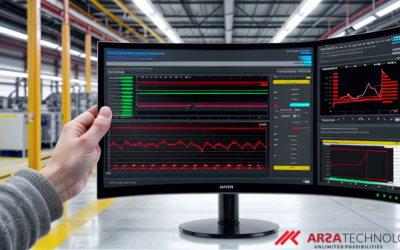
* Sustained Low Latency: The average response time for a verification request remains well under 500 milliseconds, ensuring a fluid and non-disruptive experience for users. Even during peak load, the system’s performance shows negligible degradation.
* Unyielding Accuracy: The accuracy rate is maintained above 99.8%, minimizing both false rejections that inconvenience legitimate users and the critical security risk of false acceptances.
This level of reliability means you can build your security solutions with confidence, knowing the biometric engine will not become a point of failure. You can see the responsiveness for yourself. To see the API in action, try the Face Recognition API on RapidAPI. This interactive playground provides a direct sense of the speed and simplicity of integrating our powerful technology.
Building a Holistic Security Framework
A high-performance facial recognition engine is a cornerstone of modern security, but it’s one part of a larger strategy. True security requires a comprehensive approach. Our API is designed to be a core component within broader secure identity verification solutions that protect your assets and people.
Furthermore, a fast and accurate match must be protected against sophisticated spoofing attempts. An unauthorized person could try to fool a system using a high-resolution photo or video of a legitimate user. This is why integrating robust anti-spoofing measures is non-negotiable. ARSA Technology recognizes this critical need, and our platform emphasizes the importance of preventing fraud with liveness detection as a complementary and essential step to ensure the person in front of the camera is real and physically present.
Conclusion: Your Next Step Towards a Solution
The challenge of scaling biometric security is real, but it is solvable. Moving from a functional prototype to a production-ready system requires an API partner that prioritizes speed, accuracy, and reliability under pressure. As demonstrated, ARSA Technology’s Face Recognition API is architected to meet the demands of enterprise-level security operations, providing the performance you need to scale with confidence. By offloading the complexity of biometric infrastructure, you can accelerate development, reduce operational costs, and deliver a superior, more secure experience for everyone.
Ready to Solve Your Challenges with AI?
Discover how ARSA Technology can help you overcome your toughest business challenges. Get in touch with our team for a personalized demo and a free API trial.