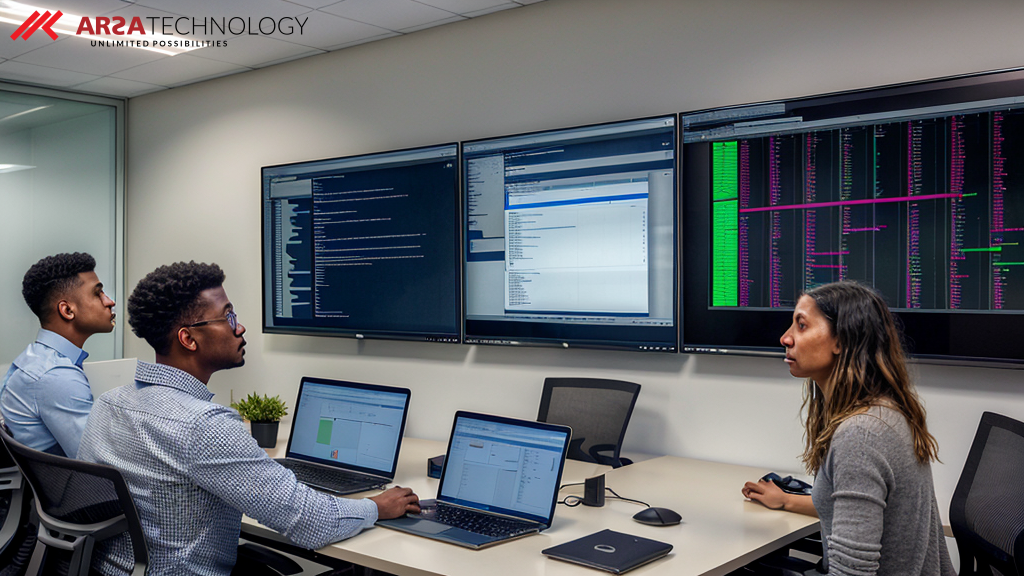
Introduction: Overcoming Lack of Multilingual Support for Global Teams in Corporate Student Attendance
In today’s interconnected world, corporate institutions often operate across diverse geographies, serving a global student body and managing international teams. A critical challenge for these organizations is maintaining efficient and inclusive student attendance tracking systems that can seamlessly support multiple languages and cultural contexts. Legacy systems, while once sufficient, frequently fall short in providing the robust, multilingual capabilities required for modern global operations. This deficiency can lead to operational inefficiencies, communication breakdowns, and a fragmented user experience for both students and administrators.
ARSA Technology understands these complex challenges. Our advanced Face Recognition API offers a powerful, language-agnostic solution designed to modernize attendance systems, ensuring universal accessibility and streamlined operations regardless of geographical location or linguistic background. This article outlines a strategic, step-by-step migration plan for corporate entities looking to upgrade their existing student attendance infrastructure to leverage the full potential of ARSA’s Face Recognition API, transforming a pain point into a competitive advantage.
The Imperative for Modernization: Why Legacy Systems Fall Short
Traditional student attendance systems, whether manual or based on outdated digital platforms, often struggle with the demands of a global corporate environment. The “lack of multilingual support for global teams” isn’t merely a convenience; it’s a significant operational bottleneck. Imagine an attendance system that requires administrators to navigate complex interfaces in a non-native language, or students struggling to register their presence due to language barriers within the application. This leads to:
- Reduced Efficiency: More time spent on manual adjustments, translations, and error correction.
- Increased Administrative Burden: Staff dedicated to managing language-specific issues rather than core tasks.
- Poor User Experience: Frustration for students and staff, impacting engagement and compliance.
- Data Inconsistencies: Errors arising from misinterpretations or difficulties in data entry across different language interfaces.
- Limited Scalability: Inability to easily expand operations into new regions without extensive, costly localization efforts for the core attendance mechanism.
ARSA’s Face Recognition API provides a foundational biometric layer that is inherently language-agnostic. By focusing on universal facial features, it transcends linguistic barriers, enabling the development of attendance applications that can be localized at the user interface level without impacting the core biometric accuracy or reliability. This allows corporate institutions to build truly global student attendance solutions. To see the API in action, try the Face Recognition API on RapidAPI.
Phase 1: Comprehensive Assessment and Strategic Planning
The first step in any successful migration is a thorough understanding of your current landscape and a clear vision for the future.
- Evaluate Your Existing System: Document the architecture, data structures, and current limitations of your legacy student attendance system. Identify specific areas where multilingual support is lacking and quantify the impact on your global teams and student body.
- Define Migration Objectives: Clearly articulate what success looks like. Beyond solving multilingual challenges, consider goals such as improved accuracy, enhanced security, reduced operational costs, and a more seamless user experience.
- Stakeholder Alignment: Engage all relevant departments—IT, administration, student services, and even a representative student body—to gather requirements and ensure buy-in. This collaborative approach ensures the new system addresses diverse needs.
- Resource Allocation and Timeline: Assign a dedicated project team, allocate necessary budget, and establish a realistic timeline for each phase of the migration.
This foundational phase ensures that the subsequent technical implementation is aligned with your corporate institution’s strategic goals, particularly in fostering an inclusive and efficient global learning environment.
Phase 2: Designing the ARSA Face Recognition Integration Strategy
With a clear plan in place, the next step involves conceptualizing how ARSA’s Face Recognition API will integrate with your existing or new attendance application. The focus here is on architectural design and data flow, not on writing code.
- API-First Approach: Design your attendance application to communicate with ARSA’s API for all facial recognition tasks. This modular approach ensures flexibility and future-proofing.
- Data Mapping and Schema: Plan how student identification data (e.g., student ID, name) will be associated with their unique facial biometrics. ARSA’s API handles the complex biometric processing, allowing your system to focus on managing the associated metadata.
- Security and Privacy Considerations: Design the integration with robust security protocols from the outset. ARSA Technology prioritizes data protection, and your integration strategy should reflect this commitment. This is crucial for maintaining trust, especially when dealing with sensitive biometric data. For enhanced security, consider how to integrate with preventing fraud with liveness detection to ensure real-time presence.
- Scalability Planning: Anticipate future growth. ARSA’s API is built for high performance and scalability, ensuring your attendance system can accommodate an expanding global student population without performance degradation.
This phase lays the groundwork for a robust and secure integration, ensuring that the new attendance system is not only functionally superior but also compliant with data privacy standards.
Phase 3: Data Migration and Enrollment for Global Accessibility
The transition of existing student data and the enrollment of new users are critical steps. This phase must be executed meticulously to ensure data integrity and a smooth user experience across all linguistic groups.
- Phased Data Migration: Consider a phased approach for migrating existing student records. This could involve migrating data for a pilot group first, then gradually expanding.
- Streamlined Enrollment Process: Design an intuitive, perhaps web-based or mobile-based, enrollment process for students to register their facial biometrics. This process should be designed with multilingual support in mind, allowing students to easily understand instructions in their preferred language. ARSA’s API simplifies the backend processing, making the frontend experience seamless.
- Data Validation and Reconciliation: Implement checks to ensure that migrated data is accurate and correctly linked to new biometric profiles. This is vital for maintaining the integrity of attendance records.
- User Training and Communication: Prepare clear, multilingual guides and training materials for both students and administrators on how to use the new attendance system. Effective communication is key to user adoption and minimizing disruption.
By focusing on a user-centric enrollment and migration process, you ensure that the transition is smooth and that the benefits of the new system are immediately apparent to your diverse global community.
Phase 4: Rigorous Testing and Performance Validation
Before full deployment, comprehensive testing is non-negotiable. This phase ensures the system is robust, accurate, and performs optimally across all intended environments and user demographics.
- Functional Testing: Verify that all core attendance tracking functionalities work as expected, from student check-in to report generation.
- Performance Testing: Assess the system’s speed and responsiveness under various loads, ensuring it can handle peak attendance times without latency, especially important for large global institutions.
- Accuracy and Reliability Testing: Critically evaluate the accuracy of the facial recognition in diverse lighting conditions, with various facial expressions, and across different demographics. ARSA’s API is designed for high accuracy, but thorough testing in your specific environment is crucial.
- User Acceptance Testing (UAT): Involve a diverse group of students and administrators from different linguistic backgrounds in UAT. Their feedback is invaluable for identifying any remaining usability issues or areas for improvement, particularly concerning multilingual interfaces.
- Security Audits: Conduct security audits to ensure the system is protected against vulnerabilities and complies with all relevant data protection regulations.
This rigorous testing phase guarantees that your new attendance system is not only technologically advanced but also reliable and user-friendly for your entire global community.
Phase 5: Phased Deployment and Continuous Monitoring
A controlled rollout minimizes risk and allows for real-time adjustments.
- Pilot Program: Begin with a pilot deployment in a controlled environment or with a smaller group of students and staff. This allows for fine-tuning and addressing any unforeseen issues before a wider launch.
- Full Deployment Strategy: Plan the full rollout, considering geographical locations and student cohorts. A phased approach can help manage the transition smoothly.
- Real-time Monitoring: Implement robust monitoring tools to track system performance, API usage, and identify any anomalies. This proactive approach ensures continuous uptime and optimal operation.
- Feedback Mechanisms: Establish clear channels for users to provide feedback. This continuous loop is essential for ongoing improvement and user satisfaction.
By carefully managing the deployment and maintaining vigilant oversight, your corporate institution can ensure a successful and sustainable transition to the new attendance system powered by ARSA’s Face Recognition API. For more insights into our offerings, explore our secure identity verification solutions.
Phase 6: Optimization, Scalability, and Future Enhancements
The migration is not the end; it’s the beginning of a more efficient and scalable future.
- Performance Optimization: Continuously analyze performance data to identify areas for optimization, ensuring the system remains responsive and efficient as your institution grows.
- Scalability Review: Regularly assess the system’s ability to scale with increasing student numbers and expanding global operations. ARSA’s API is designed to grow with your needs.
- Feature Enhancements: Explore opportunities to integrate additional ARSA Technology APIs or other complementary services to further enhance your attendance system. For example, integrating with our test the Liveness Detection API can add an extra layer of fraud prevention to your attendance verification process.
- Stay Updated: Keep abreast of updates and new features from ARSA Technology to ensure your system always benefits from the latest advancements in AI and biometric technology.
This ongoing commitment to optimization and enhancement ensures that your investment in ARSA’s Face Recognition API continues to deliver maximum value, keeping your corporate institution at the forefront of technological innovation in student management.
Conclusion: Your Next Step Towards a Solution
Migrating from a legacy attendance system to ARSA Technology’s Face Recognition API represents a strategic move for corporate institutions aiming to overcome the critical challenge of “lack of multilingual support for global teams.” This comprehensive, step-by-step plan ensures a smooth transition, delivering a modern, secure, and highly efficient student attendance tracking solution that is inherently language-agnostic at its core biometric layer. By embracing this advanced technology, you empower your global teams, enhance the student experience, and position your institution for sustained growth and operational excellence.
Ready to transform your student attendance tracking and empower your global operations? Contact Us today to discuss your specific migration needs and discover how ARSA Technology can help you build a future-proof, inclusive, and highly efficient system.
Ready to Solve Your Challenges with AI?
Discover how ARSA Technology can help you overcome your toughest business challenges. Get in touch with our team for a personalized demo and a free API trial.