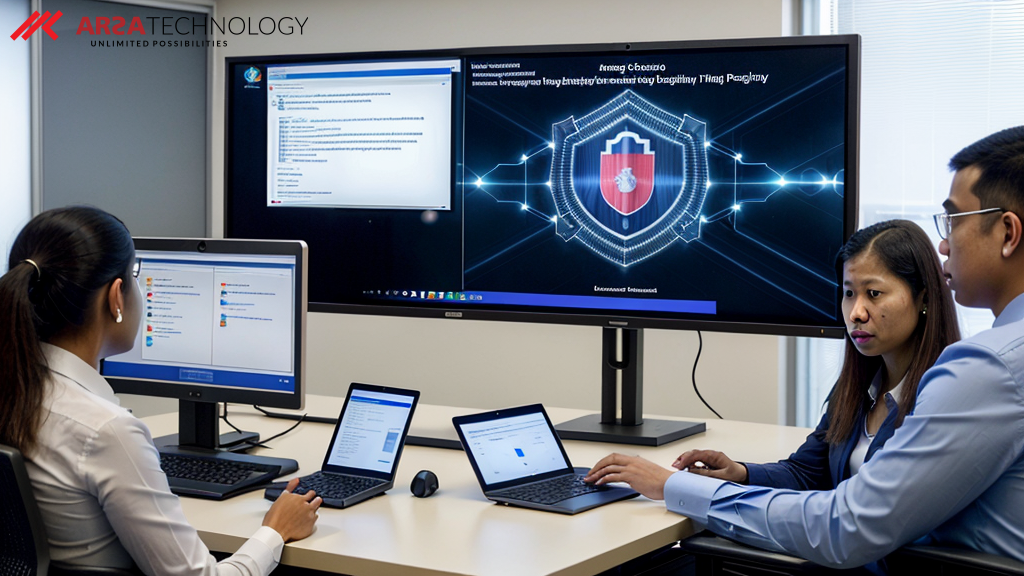
Introduction: Overcoming Modernizing Legacy IT Systems in the Government
Government agencies worldwide face the monumental challenge of modernizing entrenched legacy IT systems. These outdated infrastructures often hinder efficiency, increase operational costs, and, critically, pose significant security vulnerabilities in an increasingly digital landscape. The demand for enhanced public services, greater transparency, and improved internal productivity necessitates a strategic shift towards agile, secure, and innovative technological solutions. Among these, the integration of advanced Artificial Intelligence (AI) APIs, such as Speech-to-Text (STT) technology, offers a transformative pathway, particularly for applications like voice note transcription in productivity apps.
However, the very promise of modernization through APIs introduces a new frontier of security considerations, especially for the sensitive data handled by government entities. Deploying a powerful tool like a Speech-to-Text API for tasks ranging from transcribing meeting minutes to documenting field observations requires an unyielding commitment to data protection, compliance, and system integrity. This article serves as a comprehensive guide for developers, solutions architects, and IT leaders within government to navigate the complexities of securing their Speech-to-Text API integrations, ensuring that innovation does not come at the expense of trust or security.
The Imperative of Modernization: Enhancing Government Productivity with STT
For government agencies, the transition from manual, paper-based processes or cumbersome legacy digital systems to modern, voice-enabled workflows represents a significant leap in productivity. Imagine field agents quickly dictating reports directly into their devices, administrators transcribing public queries in real-time, or policymakers converting lengthy discussions into searchable text. This is precisely where a robust Speech-to-Text API, like our highly accurate transcription API, provides immense value.
Voice note transcription for productivity applications can drastically reduce the time spent on data entry, minimize transcription errors, and free up valuable human resources for more critical tasks. It enhances accessibility for employees with diverse needs and creates a searchable, auditable record of spoken information, which is invaluable for compliance and record-keeping in the public sector. The ability to process and analyze spoken language in multiple languages further expands the reach and utility of such systems, catering to diverse populations and international collaborations. To see the API in action, demo the Speech-to-Text API.
Yet, the very nature of government operations means that the data processed—whether citizen information, classified discussions, or administrative details—is often highly sensitive. Integrating an STT API, therefore, is not merely a technical exercise but a strategic decision that demands a proactive and comprehensive approach to security from the outset.
Understanding the Security Landscape for Government APIs
Government APIs, by their very nature, are attractive targets for malicious actors. The data they handle can be of immense value, ranging from personal identifiable information (PII) of citizens to national security intelligence. The consequences of a security breach in a government system can be catastrophic, leading to a loss of public trust, severe financial penalties, operational disruptions, and even national security implications.
The threats are multifaceted:
* Data Breaches: Unauthorized access to sensitive transcribed data.
* Unauthorized Access: Malicious actors gaining control over API functionalities.
* Denial of Service (DoS/DDoS) Attacks: Overwhelming API infrastructure to disrupt services.
* Injection Attacks: Manipulating API inputs to execute unintended commands or extract data.
* Compliance Violations: Failing to meet strict regulatory requirements (e.g., GDPR, local data protection laws, specific government mandates).
For government agencies, adhering to stringent regulatory frameworks is non-negotiable. Any API integration must demonstrate robust security controls that align with these mandates, ensuring data privacy, integrity, and availability. This necessitates a deep understanding of potential vulnerabilities and the implementation of best practices to mitigate them effectively.
Key Pillars of API Security for ARSA’s Speech-to-Text API
Building a secure Speech-to-Text integration for government applications requires a multi-layered defense strategy. Here are the critical pillars:
Robust Authentication and Authorization Mechanisms
The first line of defense is ensuring that only authorized users and applications can access your Speech-to-Text API. This goes beyond simple API keys. Government applications should consider:
* Strong Identity Verification: Implementing robust authentication protocols to verify the identity of every user and application attempting to interact with the API.
* Role-Based Access Control (RBAC): Defining granular permissions based on roles, ensuring users can only perform actions and access data relevant to their specific responsibilities. For instance, a field agent might have different STT access privileges than a data analyst.
* Secure Key Management: If API keys are used, they must be treated as highly sensitive credentials, stored securely, rotated regularly, and never hardcoded into applications. Consider using environment variables or secure vault services.
Comprehensive Data Encryption
Protecting data both as it travels across networks and when it is stored is paramount.
* Encryption in Transit: All communication with the Speech-to-Text API must occur over encrypted channels using HTTPS/TLS. This safeguards audio streams and transcribed text from eavesdropping and tampering as it moves between your application and the API.
* Encryption at Rest: While ARSA Technology’s API processes data in real-time, any transcribed data stored within your government applications or databases must also be encrypted. This ensures that even if storage is compromised, the data remains unreadable without the proper decryption keys.
Rigorous Input Validation and Sanitization
APIs are often the entry point for data into a system. Malicious input can lead to vulnerabilities like injection attacks.
* Preventing Malicious Payloads: Implement strict input validation on all data sent to the Speech-to-Text API. This involves checking data types, formats, and lengths to ensure that only expected and safe inputs are processed.
* Sanitization: While the STT API itself handles audio, if your application processes or stores the transcribed text, ensure it is sanitized before display or further processing to prevent cross-site scripting (XSS) or other content-based attacks.
Strategic Rate Limiting and Throttling
To protect against abuse, resource exhaustion, and denial-of-service attacks, implementing rate limits is crucial.
* Controlling Usage: Define limits on how many requests a user or application can make within a specific timeframe. This prevents a single entity from overwhelming the API, ensuring fair access and service availability for all legitimate users.
* Anomaly Detection: Monitor for unusual patterns in API usage that might indicate a security incident or an attempted attack.
Proactive Monitoring, Logging, and Auditing
Visibility into API activity is essential for detecting and responding to security incidents.
* Comprehensive Logging: Maintain detailed logs of all API requests, responses, authentication attempts, and errors. These logs are invaluable for forensic analysis in the event of a breach.
* Real-time Monitoring: Implement monitoring tools that can alert security teams to suspicious activities, sudden spikes in traffic, or unusual error rates.
* Regular Auditing: Conduct periodic security audits and penetration testing of your API integrations to identify and address vulnerabilities before they can be exploited.
Compliance and Regulatory Adherence
For government agencies, adherence to specific national and international data privacy and security regulations is non-negotiable.
* Understanding Mandates: Ensure your integration strategy aligns with all relevant government-specific compliance standards.
* Vendor Due Diligence: Partner with API providers like ARSA Technology that demonstrate a strong commitment to security best practices, data privacy, and compliance frameworks. Inquire about their security certifications and data handling policies.
Implementing Secure STT: A Strategic Approach for Government Agencies
Integrating ARSA Technology’s Speech-to-Text API into government productivity applications requires a holistic security strategy that spans the entire software development lifecycle. Begin with a thorough security assessment of your existing infrastructure and identify potential points of vulnerability. Design your integration with security as a core principle, rather than an afterthought.
Consider the data flow: from the moment a voice note is captured, through its transmission to our highly accurate transcription API, to the storage and display of the transcribed text within your application. At each stage, security controls must be in place. This includes secure coding practices, regular security testing, and continuous monitoring.
Furthermore, integrating Speech-to-Text can be part of a broader voice-enabled strategy. For instance, combining STT with the ability to generate natural voice responses with our TTS API can create highly interactive and efficient government services, from automated citizen information lines to internal training modules. Each component, however, must be secured with the same rigor.
ARSA Technology’s Commitment to Secure Innovation
ARSA Technology is dedicated to empowering global enterprises and developers with high-performance AI API products that are not only powerful but also inherently secure. We understand the unique and stringent security requirements of government agencies and strive to provide a platform that supports your modernization initiatives with confidence. Our focus on robust infrastructure, continuous security enhancements, and adherence to industry best practices ensures that our Speech-to-Text API offers a reliable and secure foundation for your critical applications.
By choosing ARSA Technology, you gain a partner committed to helping you navigate the complexities of digital transformation while upholding the highest standards of data security and privacy. We enable you to leverage the power of AI to enhance productivity, streamline operations, and deliver superior public services, all within a secure framework.
Conclusion: Your Next Step Towards a Solution
Modernizing legacy IT systems in government is an ongoing journey, and the integration of secure Speech-to-Text capabilities is a pivotal step towards greater efficiency and responsiveness. By prioritizing robust API security—from stringent authentication and comprehensive encryption to proactive monitoring and unwavering compliance—government agencies can confidently harness the power of AI to transform their operations. This strategic approach not only protects sensitive data but also builds public trust and fosters a more agile, productive public sector. Embrace the future of government services with secure, high-performance AI APIs.
Ready to Solve Your Challenges with AI?
Discover how ARSA Technology can help you overcome your toughest business challenges. Get in touch with our team for a personalized demo and a free API trial.