Introduction: Overcoming Complex System Integration Needs in the Education Industry
The digital transformation of education has brought immense opportunities, from remote learning to personalized student experiences. However, it has also introduced significant challenges, particularly when it comes to integrating new, powerful technologies into existing, often disparate, institutional systems. For educational institutions striving to enhance accessibility, improve learning outcomes, and streamline administrative processes, automated meeting transcription stands out as a critical innovation. Yet, the journey to implement such solutions is frequently hampered by complex system integration needs, demanding extensive development resources and specialized expertise.
ARSA Technology understands these challenges. Our mission is to empower developers and organizations with high-performance AI APIs that are not only cutting-edge but also remarkably easy to integrate. This article will explore how ARSA Technology’s Speech-to-Text API provides a robust, developer-friendly solution for building automated meeting transcription systems in the education sector, specifically designed to bypass the common pitfalls of complex system integration. By focusing on simplicity, scalability, and accuracy, we offer a pathway for educational institutions to unlock the full potential of voice AI without getting bogged down in intricate technical hurdles.
The Growing Demand for Automated Transcription in Education
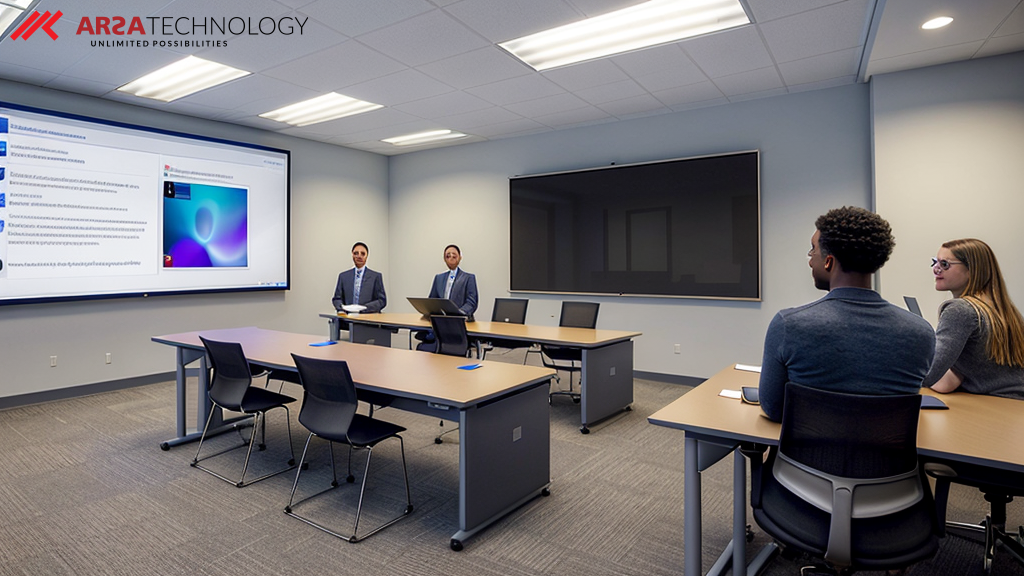
In today’s dynamic educational landscape, the spoken word is a cornerstone of learning and communication. From lectures and seminars to administrative meetings and student support sessions, verbal interactions generate a wealth of information. Capturing and making this information accessible and searchable offers profound benefits:
- Enhanced Accessibility: Providing transcripts for students with hearing impairments or those who prefer to read, ensuring equitable access to content.
- Improved Learning Outcomes: Allowing students to review lectures, search for specific topics, and reinforce their understanding at their own pace.
- Administrative Efficiency: Automating the transcription of faculty meetings, board discussions, and departmental planning sessions, saving countless hours of manual effort.
- Content Repurposing: Transforming spoken content into written materials for study guides, course summaries, or online learning modules.
The need for efficient, accurate, and scalable transcription solutions is no longer a luxury but a necessity for modern educational institutions aiming to foster inclusive and effective learning environments.
Understanding the Core Challenge: Complex System Integration
While the benefits of automated transcription are clear, the path to implementation is often fraught with obstacles. Educational institutions typically operate with a mosaic of legacy systems, learning management platforms (LMS), student information systems (SIS), and various communication tools. Integrating a new, sophisticated AI service like a Speech-to-Text API into this complex ecosystem presents several formidable challenges:
- Diverse Data Sources: Audio and video content can originate from various platforms—Zoom, Microsoft Teams, in-person recordings, lecture capture systems—each with its own data formats and access protocols.
- API Compatibility: Ensuring the new API can communicate effectively with existing infrastructure without requiring extensive re-architecting or custom middleware development.
- Resource Constraints: IT departments in education often have limited budgets and personnel, making large-scale, custom integration projects difficult to justify and execute.
- Security and Compliance: Handling sensitive student and faculty data requires strict adherence to privacy regulations (e.g., FERPA, GDPR), adding layers of complexity to data flow and storage.
- Maintenance Overhead: Custom-built integrations can be brittle, requiring continuous maintenance and updates as underlying systems or APIs evolve.
These factors often lead to project delays, cost overruns, or even the abandonment of innovative initiatives, leaving educational institutions unable to capitalize on the transformative power of AI.
ARSA Technology’s Speech-to-Text API: Simplifying Integration for Education
ARSA Technology’s Speech-to-Text API is engineered from the ground up to address these integration complexities head-on. We provide a robust, cloud-based solution that abstracts away the underlying AI complexities, offering a straightforward interface for developers to integrate powerful transcription capabilities into their applications. Our focus is on delivering a high-performance, reliable service that minimizes development effort and accelerates time-to-market for new educational tools.
Our API is designed with flexibility in mind, allowing it to seamlessly connect with various audio sources and output formats. This means developers can spend less time wrestling with integration challenges and more time building innovative features that directly benefit students and educators. For a deeper dive into its capabilities, you can explore our highly accurate transcription API.
Key Features Driving Value for Educational Institutions
The effectiveness of an automated transcription solution in education hinges on several critical features:
- High Accuracy and Multilingual Support: Academic content often contains specialized terminology, diverse accents, and multiple languages. ARSA’s Speech-to-Text API boasts industry-leading accuracy, capable of handling complex vocabulary and distinguishing between various speakers. Its multilingual capabilities are crucial for diverse student bodies and international collaborations, ensuring that content is accurately transcribed regardless of the language spoken.
- Speaker Diarization: In multi-participant settings like classroom discussions or faculty meetings, knowing “who said what” is paramount. Our API includes advanced speaker diarization, automatically identifying and separating individual speakers, making transcripts far more readable and useful for review.
- Real-time vs. Batch Processing: Educational use cases vary. Live lectures or interactive online classes benefit from real-time transcription, providing immediate captions and accessibility. For recorded lectures, podcasts, or archived meetings, batch processing allows for efficient, high-volume transcription. ARSA’s API supports both modes, offering the flexibility needed for any scenario.
- Scalability and Reliability: Educational institutions experience fluctuating demands, from peak enrollment periods to large-scale virtual events. Our API is built on a highly scalable infrastructure, ensuring consistent performance and reliability, even under heavy load. This means institutions can trust the service to deliver accurate transcripts whenever and wherever needed, without worrying about system bottlenecks.
To see the API in action and understand its straightforward interface, you can demo the Speech-to-Text API. This interactive playground allows developers to quickly grasp the API’s functionality and potential without needing to write any code.
Building an Automated Meeting Transcription Solution: A Strategic Approach
Implementing an automated meeting transcription solution with ARSA’s Speech-to-Text API involves a strategic, modular approach that prioritizes ease of integration and business value:
1. Audio Source Integration: The first step involves connecting your audio sources (e.g., lecture capture systems, video conferencing platforms, digital recorders) to your application. This might involve setting up webhooks, file storage integrations, or direct audio streaming. The goal is to get the audio data to your system in a format ready for processing.
2. API Connection and Data Submission: Your application then sends the audio data to ARSA’s Speech-to-Text API. This is handled through a simple, well-documented API interface, where you specify parameters like language, real-time or batch processing, and speaker diarization preferences. The API handles the complex machine learning models, converting the audio into text.
3. Transcription Retrieval and Processing: Once the transcription is complete, your application retrieves the text output from the API. This output can include timestamps, speaker labels, and confidence scores. You can then process this data further, perhaps by storing it in a database, integrating it with an LMS, or preparing it for display.
4. Output Management and User Interface: The final step involves presenting the transcribed text to users. This could be in the form of searchable transcripts within a learning portal, automatically generated captions for video content, or meeting minutes distributed to participants. The flexibility of the API’s output allows for diverse applications tailored to specific educational needs.
This streamlined process significantly reduces the complexity typically associated with integrating advanced AI functionalities, allowing developers to focus on creating impactful user experiences rather than intricate backend logic.
Beyond Transcription: Enhancing the Educational Experience
The value of an automated transcription solution extends far beyond simply converting speech to text. The rich, structured data generated by ARSA’s API opens doors to a multitude of enhancements for the educational experience:
- Searchable Knowledge Bases: Transcripts can form the foundation of searchable archives for lectures, seminars, and research discussions, allowing students and faculty to quickly find specific information.
- Personalized Learning Tools: By analyzing transcribed interactions, educators can gain insights into student engagement, common questions, and areas of confusion, enabling more targeted instruction.
- Accessibility Features: Beyond standard transcripts, the text can be used to generate closed captions for video content, supporting students with diverse learning needs and complying with accessibility standards.
- Integration with Learning Management Systems (LMS): Transcripts can be seamlessly integrated into platforms like Canvas, Moodle, or Blackboard, appearing alongside video content or as downloadable resources.
- Interactive Learning Modules: Transcripts can serve as input for other AI services, for instance, to generate natural voice responses with our TTS API, creating dynamic Q&A systems or interactive study guides based on lecture content. This transforms passive consumption into active engagement.
Realizing Tangible Benefits and ROI
For educational institutions, investing in ARSA Technology’s Speech-to-Text API translates into clear, measurable benefits and a strong return on investment:
- Significant Cost Reduction: Automating transcription eliminates the need for expensive manual transcription services, freeing up budget for other critical initiatives.
- Increased Accessibility and Inclusivity: By providing accurate and timely transcripts, institutions can better serve students with disabilities and cater to diverse learning preferences, fostering a more inclusive environment.
- Improved Learning Outcomes: Students benefit from enhanced review capabilities, better comprehension, and flexible access to educational content, leading to higher academic achievement.
- Operational Efficiency: Streamlining the creation of meeting minutes, research documentation, and content summaries saves valuable administrative and faculty time.
- Competitive Advantage: Offering cutting-edge technological resources positions institutions as leaders in educational innovation, attracting and retaining students and faculty.
Addressing Security and Compliance in Education
Data security and privacy are paramount in the education sector. ARSA Technology is committed to providing a secure and compliant API environment. Our infrastructure adheres to stringent security protocols, ensuring that sensitive audio data and transcribed text are protected throughout the processing lifecycle. We understand the importance of regulations like FERPA and GDPR, and our services are designed to support institutions in meeting their compliance obligations, giving you peace of mind as you integrate our solutions.
Conclusion: Your Next Step Towards a Solution
The journey to digital transformation in education doesn’t have to be hindered by complex system integration. ARSA Technology’s Speech-to-Text API offers a powerful, yet remarkably simple, solution for building automated meeting transcription systems. By choosing an API designed for ease of integration, high accuracy, and scalable performance, educational institutions can overcome technical hurdles and unlock significant value—enhancing accessibility, improving learning outcomes, and driving operational efficiency.
It’s time to move beyond the complexities and embrace a future where valuable spoken content is effortlessly transformed into accessible, actionable text. Explore the possibilities with ARSA Technology and empower your institution to lead the way in educational innovation.
Ready to Solve Your Challenges with AI?
Discover how ARSA Technology can help you overcome your toughest business challenges. Get in touch with our team for a personalized demo and a free API trial.