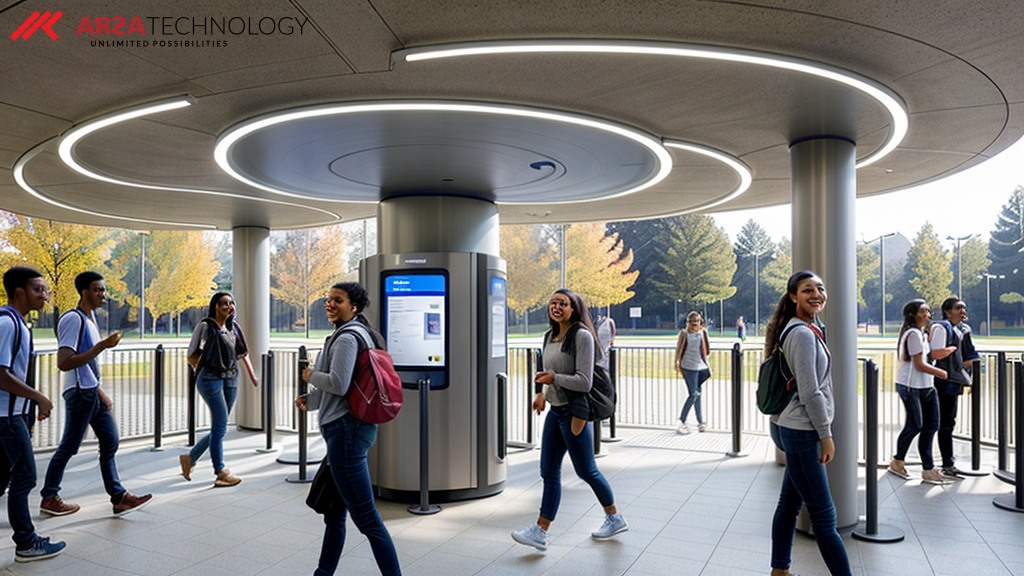
Introduction: Overcoming Manual Student Attendance Tracking in the Education Industry
The rhythm of academic life, from lectures to labs, is often disrupted by a surprisingly persistent challenge: manual student attendance tracking. For educational institutions globally, this traditional method is a significant drain on resources, prone to errors, and a bottleneck to efficient campus operations. From the time-consuming process of roll calls to the administrative burden of data entry and reconciliation, the impact on faculty, staff, and student experience is considerable. This inefficiency not only diverts valuable time from core educational activities but also introduces inaccuracies that can affect funding, compliance, and student progress monitoring.
ARSA Technology understands these challenges. Our advanced Face Recognition API offers a powerful, modern solution, transforming the cumbersome process of manual attendance into a streamlined, secure, and highly accurate system for physical access control management. This article serves as an essential guide for software developers, solutions architects, CTOs, and product managers in the education sector, addressing frequently asked questions and offering practical insights for successful implementation. We will explore how our Face Recognition API can revolutionize campus operations, enhance security, and free up resources, all while ensuring a smooth and reliable experience for students and staff.
The Strategic Imperative: Why Face Recognition for Education?
The shift from manual to automated attendance isn’t just about convenience; it’s a strategic move towards a more secure, efficient, and data-driven educational environment. Manual attendance systems are not only inefficient but also susceptible to proxy attendance, where one student signs in for another, undermining data integrity. Implementing a robust biometric solution like ARSA Technology’s Face Recognition API addresses these vulnerabilities head-on. By automating attendance through facial recognition at entry points, classrooms, or during specific events, institutions can achieve unparalleled accuracy and accountability. This not only ensures that attendance records are precise but also provides a foundation for better resource allocation, improved student engagement analytics, and enhanced campus security. The integration of such technology signifies an institution’s commitment to innovation and operational excellence, setting a new standard for student management.
Understanding the Core Functionality of ARSA Technology’s Face Recognition API
ARSA Technology’s Face Recognition API is engineered for precision and reliability, making it an ideal choice for the demanding environment of educational institutions. At its core, the API performs two critical functions: face detection and face verification. Face detection identifies the presence and location of faces within an image or video stream, while face verification compares a detected face against a known database of enrolled faces to confirm identity. This allows for rapid and accurate identification of individuals, which is crucial for high-traffic areas like campus entrances or large lecture halls.
For instance, when a student approaches a designated access point, the system captures their image, detects their face, and then verifies it against the institution’s secure database of registered students. If a match is found, access is granted, and attendance is automatically logged. This entire process occurs in mere milliseconds, ensuring a seamless flow of students without queues or delays. To see the API in action and understand its capabilities firsthand, you can try our interactive demo on RapidAPI. This playground allows you to experiment with the API’s core functions and observe its accuracy in real-time, providing a tangible understanding of its power.
Common Implementation FAQs for Educational Institutions
As institutions consider integrating a Face Recognition API, several questions frequently arise. Addressing these proactively can smooth the path to adoption and ensure a successful deployment.
- How does the API handle student privacy and data security?
- Data privacy is paramount, especially in an educational context. ARSA Technology’s API is designed with robust security protocols. We emphasize that facial data is processed securely, often converted into numerical templates rather than storing raw images, minimizing privacy risks. Institutions maintain full control over their data, defining retention policies and access permissions. Compliance with relevant data protection regulations (e.g., GDPR, FERPA) is a key consideration during implementation, and our solutions are built to support these requirements. This commitment to security extends to all our secure identity verification solutions.
- What are the hardware requirements for deploying this system?
- The beauty of an API-based solution is its flexibility. While the API itself is cloud-based, requiring only an internet connection, the on-site hardware typically involves standard cameras (e.g., IP cameras, webcams) at access points or classrooms, and a system to run the client application that interacts with the API. This could be a dedicated terminal, a tablet, or even existing smart devices. The specific requirements depend on the scale and complexity of the deployment, but generally, off-the-shelf components can be utilized, making it a cost-effective solution.
- How accurate is the Face Recognition API, especially with diverse student populations or varying conditions?
- Accuracy is a cornerstone of ARSA Technology’s offerings. Our Face Recognition API leverages advanced AI algorithms trained on vast, diverse datasets, ensuring high performance across various demographics, lighting conditions, and angles. While no system is 100% infallible, our API consistently achieves industry-leading accuracy rates, significantly outperforming manual methods. Continuous improvements are made to enhance its robustness against factors like partial obstructions (e.g., glasses, masks), ensuring reliable performance in real-world educational settings.
- Can the API integrate with existing campus management systems?
- Yes, seamless integration is a key design principle. Our Face Recognition API is built with developer-friendly interfaces, allowing it to be easily integrated into existing student information systems (SIS), learning management systems (LMS), or physical access control systems. This ensures that attendance data automatically flows into your current infrastructure, minimizing disruption and maximizing the value of your existing investments. Our developer resources provide comprehensive documentation to facilitate this integration process.
Troubleshooting Common Implementation Challenges (Conceptual Guidance)
Even with robust technology, implementation can present challenges. Here’s a conceptual guide to common issues and how to approach them, without delving into code specifics.
- Issue: Inaccurate or Failed Recognition
- * Consideration: Image quality is paramount. Ensure cameras are positioned correctly, providing clear, well-lit images of faces. Poor lighting, blurriness, or extreme angles can impact recognition.
- * Consideration: Database integrity. Verify that student enrollment photos are of high quality and accurately represent the individual. Outdated or poor-quality enrollment images can lead to mismatches. Regular updates to student photos can significantly improve performance.
- * Consideration: Environmental factors. Glare from windows, direct sunlight, or shadows can interfere. Adjust camera placement or lighting to mitigate these issues.
- Issue: Slow Recognition or System Lag
- * Consideration: Network latency. The API relies on internet connectivity. Ensure a stable and fast network connection between your on-site system and the ARSA Technology API servers. High latency can delay response times.
- * Consideration: System resource allocation. The client-side application capturing images and sending them to the API should have sufficient processing power and memory to function optimally. Overburdened local systems can cause delays.
- * Consideration: API call volume. While our API is built for high performance, extremely high concurrent call volumes might require scaling considerations on your end, or consultation with ARSA Technology for optimized deployment strategies.
- Issue: False Positives or False Negatives
- * Consideration: Threshold adjustments. Facial recognition systems often use a confidence threshold for making a match. If false positives (incorrect matches) occur, the threshold might need to be slightly increased. If false negatives (correct matches missed) are prevalent, it might need to be slightly decreased. This is a fine-tuning process.
- * Consideration: Liveness detection. To prevent spoofing attempts (e.g., using a photo to impersonate someone), integrate preventing fraud with liveness detection. This ensures that the person presenting their face is a real, live individual, significantly reducing false positives from fraudulent attempts.
- * Consideration: Database management. Regularly review and clean your enrolled face database. Duplicate entries or outdated records can contribute to recognition errors.
- Issue: Integration Difficulties with Existing Systems
- * Consideration: API documentation review. Thoroughly consult ARSA Technology’s API documentation. It provides detailed explanations of how to interact with the API, expected data formats, and error codes.
- * Consideration: Incremental integration. Instead of attempting a full-scale integration at once, start with smaller, manageable modules. Test each component of the integration independently before combining them.
- * Consideration: Support channels. If you encounter persistent integration challenges, leverage ARSA Technology’s support resources. Our team can provide guidance and best practices for seamless integration.
Beyond Attendance: Expanding the Value Proposition
While solving manual attendance tracking is a primary benefit, the ARSA Technology Face Recognition API offers broader applications within the education sector. It can be extended to enhance overall campus security, managing access to restricted areas like laboratories, dormitories, or administrative offices. This creates a unified biometric access control system that improves safety for students and staff. Furthermore, it can facilitate secure examination proctoring, ensuring that only registered students take tests, and even personalize student experiences by enabling secure access to digital resources or personalized information kiosks. The potential for innovation is vast, transforming the educational environment into a more secure, efficient, and student-centric ecosystem.
Conclusion: Your Next Step Towards a Solution
The era of inefficient, manual student attendance tracking is drawing to a close. ARSA Technology’s Face Recognition API provides a robust, scalable, and secure solution that directly addresses the core pain points faced by educational institutions. By embracing this advanced technology, you can significantly enhance operational efficiency, ensure accurate record-keeping, bolster campus security, and free up valuable resources for educational pursuits. This guide has offered a glimpse into the API’s capabilities, answered critical implementation questions, and provided conceptual troubleshooting insights to pave the way for a successful deployment. The journey to a smarter, more secure campus begins with innovative solutions. To explore how ARSA Technology can empower your institution and to discuss your specific needs, we encourage you to Contact Us today. Our team is ready to help you unlock the full potential of biometric identity verification in education.
Ready to Solve Your Challenges with AI?
Discover how ARSA Technology can help you overcome your toughest business challenges. Get in touch with our team for a personalized demo and a free API trial.