Advancing Industrial Port Safety and Operations with Weakly Labeled Audio AI
Explore how weakly labeled audio datasets like Soroll-IA are revolutionizing industrial port monitoring for enhanced safety and operational efficiency through AI.

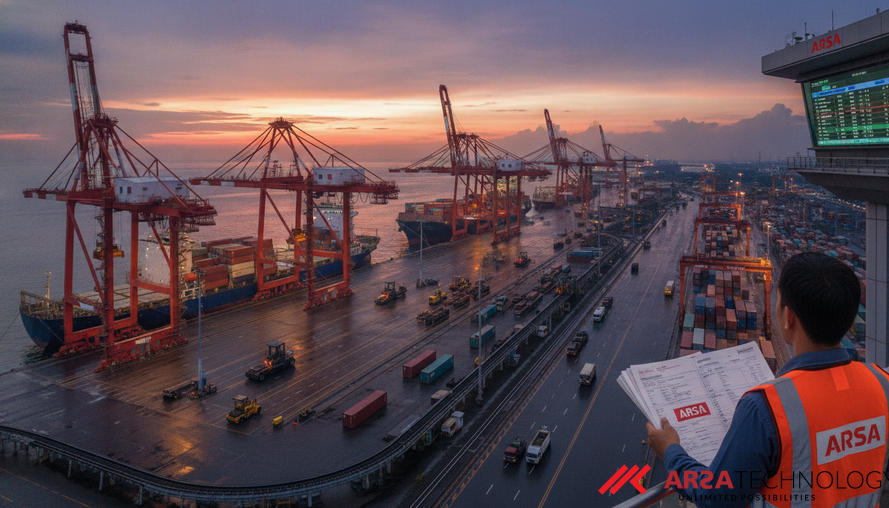
Industrial ports are vital arteries of global trade, operating around the clock with a symphony of machinery, vehicles, and human activity. This constant hum, while indicative of productivity, also presents a complex acoustic landscape ripe for intelligent analysis. Advanced environmental sound monitoring, powered by artificial intelligence (AI), is emerging as a critical tool for enhancing both operational efficiency and safety within these dynamic environments. By understanding the distinct sounds of a port, businesses can move beyond reactive measures to proactive, data-driven decision-making.
The Complexities of Real-World Port Acoustics
Monitoring noise pollution and identifying specific events in a busy maritime environment presents significant challenges. Port operations are inherently complex and dynamic, characterized by a diverse array of noise sources that fluctuate with operational cycles, weather conditions, and vessel movements Source 2. This leads to what data scientists refer to as "data complexity," where heterogeneous information from various sensors needs elaborate integration. Furthermore, the demand for "real-time analysis" necessitates high-performance IT infrastructure capable of processing continuous data streams with minimal latency, while "environmental variability" like changing weather adds layers of interpretive difficulty.
Traditional audio datasets often fall short in addressing these unique conditions. Many existing resources focus on urban street scenes or controlled indoor machine operations, lacking the specific, often overlapping, and noisy soundscapes found in outdoor industrial ports. This gap underscores the need for specialized data to train AI models effectively, pushing the boundaries of what is possible in environmental sound analysis.
Introducing Soroll-IA: A Groundbreaking Dataset for Port Environments
To address the unique demands of industrial port environments, researchers have developed Soroll-IA, a weakly labeled environmental audio dataset specifically recorded in a real-world industrial port in Valencia, Spain Source 1. This dataset is a crucial step forward for machine learning applications in this domain. It comprises approximately 22 hours of audio, segmented into nearly 7,400 clips, and covers 26 distinct sound event classes commonly found in ports, such as crane sirens, train movements, heavy traffic, reversing beeps, and various logistical and industrial sounds.
What makes Soroll-IA particularly valuable is its "weakly labeled" nature. Unlike "strongly labeled" data, which requires precise temporal markers for the beginning and end of each sound event, weak labeling simply indicates the presence of a sound within a given audio clip. This approach significantly reduces the time and cost associated with manual annotation, making it a more practical strategy for creating large-scale datasets in complex environments. Despite the inherent imprecision, this method, when coupled with expert annotations and robust validation strategies, provides reliable labels that are critical for developing effective audio tagging models. The recordings themselves were captured under highly challenging conditions, including strong background noise, long-distance sources, and frequent event overlap, mirroring the actual complexity of a functioning port.
From Raw Audio to Actionable Intelligence: Practical Applications
The availability of specialized datasets like Soroll-IA enables the development of AI models that can transform raw audio feeds into actionable intelligence. By processing continuous sound streams, these AI systems can generate:
- Real-time alerts and notifications for critical events.
- Operational and safety metrics for performance analysis.
- Historical analytics and reporting for long-term trend identification.
- Business and performance insights to optimize workflows.
For instance, detecting an unusual equipment noise might trigger a maintenance alert, preventing costly downtime or a potential safety hazard. Monitoring train movements or traffic flow through sound analysis can optimize logistics and reduce congestion. These capabilities directly contribute to improving workplace safety by identifying dangerous situations, enhancing operational efficiency through automated monitoring, and aiding compliance with noise regulations. Businesses can leverage comprehensive AI Video Analytics Software to correlate visual data with audio intelligence, creating a more holistic understanding of events and supporting quicker, more informed responses. For environments demanding immediate, on-site processing, compact systems like ARSA’s AI Box Series can deliver low-latency insights directly at the edge, ensuring critical decisions are made without delay.
Engineering AI for Demanding Environments
Developing AI solutions for demanding environments like industrial ports requires robust machine learning architectures. The researchers behind Soroll-IA provided benchmark results using two complementary architectures: CNN14 (a high-capacity convolutional model suitable for comprehensive audio tagging) and MobileNetV2 (chosen for its efficiency in real-time classification on low-resource edge devices) Source 1. This highlights the flexibility needed in deploying AI, from powerful central processing units to compact edge devices. The ability to deploy AI models on edge devices, where data is processed locally, is particularly beneficial for industrial settings, ensuring privacy by keeping sensitive data within the local network and minimizing latency for real-time applications.
The goal is to foster advances in robust environmental sound analysis that are tailored for safety-critical and operational monitoring applications. This includes developing algorithms that can effectively manage label noise and ambiguity inherent in weakly supervised learning. For organizations with unique operational challenges, Custom AI Solutions can be engineered to precisely fit their infrastructure and data requirements, ensuring tailored intelligence for their specific needs across the diverse industries we serve. Such bespoke systems are essential for bridging advanced AI research with practical, real-world operational realities.
In conclusion, specialized, weakly labeled audio datasets like Soroll-IA are fundamental in pushing the boundaries of AI for industrial applications. By providing a realistic training ground for machine learning models, they enable businesses to develop sophisticated environmental sound analysis systems that improve safety, optimize operations, and drive compliance in complex industrial settings. The future of industrial monitoring lies in harnessing every available data stream, including sound, to create safer, smarter, and more efficient workplaces.
Discover how AI-powered audio and video analytics can transform your industrial operations. Contact ARSA to discuss tailored solutions for your business.
Sources:
1. Javier Naranjo-Alcazar, Jordi Grau-Haro, Ruben Ribes-Serrano, Marta Garcia-Ballesteros, and Pedro Zuccarello. Soroll-IA: A Weakly Labeled Audio Dataset for Real-World Industrial Port Monitoring. arXiv preprint arXiv:2606.26195, 2026. https://arxiv.org/abs/2606.26195
2. DataCalculus. Noise Pollution Monitoring in Maritime Transportation. https://datacalculus.com/en/blog/maritime-transportation/port-engineer/noise-pollution-monitoring-in-maritime-transportation