AI-Powered Precision: Integrating LLMs for Optimal Transportation Hub Capacity Planning
Unlock smarter transportation logistics. Discover how Large Language Models (LLMs) interpret qualitative business inputs to optimize hub capacity planning.

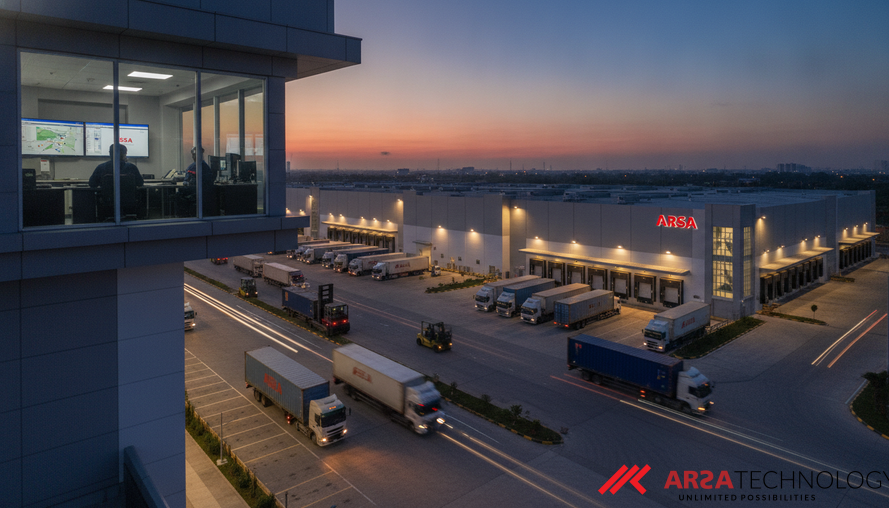
In the complex world of modern logistics, efficiently managing transportation hubs is paramount to supply chain success. Traditional capacity planning models, while robust in handling quantitative data, often struggle to incorporate the nuanced, qualitative business insights that truly drive real-world decision-making. These insights, ranging from sudden regulatory changes to shifts in labor market dynamics, are frequently expressed in natural language and have historically required error-prone manual translation into numerical parameters. The challenge lies in integrating these invaluable textual inputs into rigorous optimization processes to achieve truly optimal outcomes.
Bridging the Gap: LLMs in Capacity Planning
A groundbreaking approach leverages the advanced reasoning capabilities of Large Language Models (LLMs) to bridge this critical gap. This novel framework enables an LLM agent to iteratively propose transportation hub capacity decisions, directly guided by natural-language business context descriptions. The core of this mechanism is a "chain-of-thought" reasoning protocol. Here, the LLM constructs a structured decision table, meticulously mapping each contextual item—such as "The greater Atlanta metropolitan area is experiencing a logistics boom. Freight demand in the region has grown by about 50%"—to specific capacity adjustments. These adjustments consider both the implied direction and magnitude of the necessary changes, moving beyond simple data points to understand the underlying business implications. This process effectively transforms unstructured information into actionable insights for hub planning, ensuring decisions are grounded in the most current and comprehensive understanding of operational realities.
The Iterative Feedback Loop: Optimization as an Oracle
Once the LLM agent proposes a new capacity decision, it enters a critical validation phase: a feedback loop with a mathematical optimization model. This model serves as an "oracle," evaluating the proposed first-stage capacity solution by simulating the second-stage routing problem. Crucially, the optimization model’s direct cost outputs are suppressed. Instead, it provides routing-based performance metrics, such as per-hub utilization percentages, identification of excess units or bottlenecks, and overall routing patterns. This design is paramount because the original cost parameters might not reflect the dynamic business context introduced by the LLM. By focusing on network behavior and capacity mismatches, the feedback loop guides the LLM agent’s refinement process without being misled by potentially outdated financial signals, supporting compliant operations and efficient resource allocation. For enterprises seeking to integrate such intelligent systems, a custom AI solution can be engineered to fit specific network complexities and operational demands.
Real-World Impact and Business Outcomes
The practical significance of this LLM-guided approach is substantial. On a real-world 13-hub freight network, the framework achieved a mere 2.8% optimality gap compared to a hidden ground-truth model. This represents a significant improvement over the 11.0% gap observed when using traditional optimization models that do not incorporate textual business inputs. This outcome unequivocally demonstrates that LLMs can act as a powerful contextual bridge, seamlessly integrating qualitative business insights directly into established Operations Research workflows. For businesses, this translates into tangible benefits: reduced operational costs by minimizing both costly overflow penalties and wasted resources from unused capacity, enhanced agility in responding to market shifts, and improved overall profitability. Solutions like the ARSA AI Box - Traffic Monitor exemplify how edge AI systems can enable real-time traffic and vehicle analytics, which are crucial components in such integrated planning systems. Furthermore, advanced AI Video Analytics Software can transform raw video streams from existing infrastructure into critical operational intelligence for proactive decision-making.
Future-Proofing Logistics with AI Agents
The integration of LLMs with network optimization extends beyond just capacity planning. It marks a broader trend towards AI agents transforming supply chain management by making complex decision-making tools more accessible and explainable to business stakeholders. These integrated frameworks can generate natural language summaries, contextual visualizations, and tailored Key Performance Indicators (KPIs), thus bridging the communication gap between intricate operations research outputs and business leadership. This interactivity and explainability are vital for fostering trust in AI-driven decisions and ensuring that solutions are adaptable to evolving business needs. Such advancements underscore the value of platforms that allow for real-time interaction, configuration updates, and simulation-based insights, much like how ARSA Technology has been building AI since 2018 for various industries we serve, delivering production-ready systems that solve mission-critical challenges.
The ability to process and act upon qualitative information provides a significant competitive advantage, enabling companies to optimize logistics, reduce costs, and adapt more swiftly to unforeseen circumstances. As AI continues to evolve, the synergy between LLMs and mathematical optimization will undoubtedly lead to even more sophisticated and resilient supply chain operations, driving measurable ROI and mitigating risks in an increasingly dynamic global marketplace.
To explore how AI and IoT solutions can enhance your transportation hub capacity planning and overall supply chain efficiency, contact ARSA today.
Sources
Liu, X., & Dong, Z. (2026). LLM-Guided Transportation Hub Capacity Planning with Textual Business Inputs. Proceedings of the 43rd International Conference on Machine Learning*. Venkatachalam, S. (2025). Integrating Large Language Models with Network Optimization for Interactive and Explainable Supply Chain Planning: A Real-World Case Study. arXiv preprint arXiv:2508.21622*.