Empowering Educators: The Crucial Role of AI Literacy for University Faculty
Discover the FALCON-AI Scale, a validated tool for assessing and enhancing AI literacy and competency among university faculty across teaching, research, and administration.

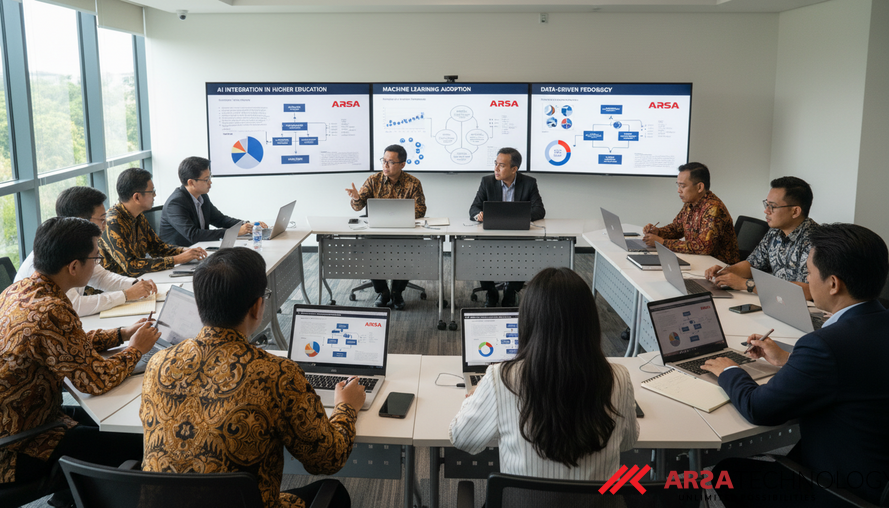
Artificial Intelligence (AI) is rapidly redefining the landscape of higher education, impacting everything from classroom instruction to groundbreaking research and institutional administration. This paradigm shift necessitates a commensurate evolution in the skills and understanding of university faculty. However, effectively gauging and fostering AI readiness among educators has historically been a challenge due to a lack of specialized assessment tools. A new study addresses this gap by introducing the Faculty Artificial Intelligence Literacy and Competency (FALCON-AI) Scale, a rigorously developed and validated instrument designed specifically for higher education contexts (Song et al., 2026). This scale provides a much-needed framework for institutions to understand, measure, and enhance faculty AI literacy.
The Evolving Role of AI in Academia
AI's presence in higher education is no longer a futuristic concept; it is an active force transforming core academic functions. In teaching, AI is enabling personalized learning pathways, automating routine grading tasks, and enhancing overall instructional efficiency, thereby elevating students' digital competencies. For example, AI algorithms can analyze student performance data to recommend tailored learning resources or adaptive quizzes, freeing up educators to focus on deeper engagement and critical thinking development.
Beyond the classroom, AI is revolutionizing research methodologies. Faculty members are leveraging AI for tasks ranging from automated literature reviews and complex data analysis to assisting with academic writing and editing, accelerating discovery and insight generation. AI also holds significant potential to streamline administrative workflows, allowing faculty to automate repetitive tasks and optimize productivity, from scheduling to managing research grants. This broad integration means that faculty need to view AI not as a replacement for their expertise, but as a powerful collaborator that augments human intelligence. Leading technology providers, like ARSA Technology, specialize in developing custom AI solutions that can be tailored to support these evolving academic and administrative needs.
Bridging the AI Literacy Gap in Higher Education
While the integration of AI is pervasive, there has been a notable absence of standardized tools to assess the AI literacy of university faculty. Existing AI literacy instruments have primarily targeted the general public, K-12 students, or K-12 teachers. These general scales, while valuable for their intended audiences, often lack the specific, role-embedded indicators required to accurately measure the diverse competencies university faculty need across their teaching, research, and service domains.
The absence of a validated, faculty-specific AI literacy scale presents several challenges. Institutions struggle to identify specific professional development needs, evaluate the effectiveness of AI training initiatives, or establish data-driven policies for AI integration. Without such a tool, fostering widespread and effective AI literacy among faculty largely depends on individual initiative, leading to inconsistent adoption and potential disparities in AI-readiness across departments.
Introducing the FALCON-AI Framework: A Holistic Approach
To address this critical need, the FALCON-AI Scale was developed based on the Critical Tech-resilient Literacies (CTRL) framework, providing a comprehensive structure for assessing faculty AI literacy. This framework defines AI literacy across three essential literacies and four distinct faculty work domains:
- **Three Literacies:**
- Functional Literacy: The ability to understand how AI works, its basic principles, and practical applications. This includes knowing how to use AI tools effectively.
- Evaluative Literacy: The capacity to critically assess AI applications, understanding their strengths, limitations, biases, and potential impacts. This involves discerning credible AI information and applications.
- Ethical Literacy: The understanding of ethical considerations surrounding AI, including issues of privacy, fairness, transparency, and responsible use.
- **Four Faculty Work Domains:**
- General: Broad understanding and interaction with AI in everyday professional life.
- Teaching: Applying AI in instructional design, course delivery, and student assessment.
- Research: Utilizing AI for data analysis, literature review, hypothesis generation, and academic writing.
- Service/Administration: Employing AI to streamline administrative tasks, enhance institutional operations, and support community engagement.
By mapping these literacies against the faculty work domains, the FALCON-AI scale creates a robust 3x4 matrix, ensuring that the assessment is highly relevant and contextualized to the multifaceted responsibilities of university educators. For instance, an AI BOX - Basic Safety Guard might monitor campus security (service/administration), while faculty in computer science might work with ARSA AI API for research projects, demonstrating the diverse applications of AI that faculty need to comprehend.
A Rigorous Development and Validation Process
The development of the FALCON-AI Scale followed a rigorous, theory-driven process to ensure its reliability and validity. Initially, a pool of 43 items was generated, meticulously aligned with the 3x4 framework of literacies and work domains. These items were then subjected to content validation through structured interviews with four subject-matter experts. Critically, a GPT-based reviewer was also utilized to triangulate ratings on clarity, relevance, and necessity, adding an innovative layer to the validation process and ensuring comprehensive feedback. This step refined the item pool to 39 questions, preparing it for pilot testing.
The pilot test involved 269 valid responses from university faculty, which were then analyzed using Confirmatory Factor Analysis (CFA). CFA is a statistical technique used to verify the measurement theory of a construct, confirming that the items accurately reflect the underlying theoretical structure. Following this, an item reduction process was undertaken to minimize respondent burden while preserving the scale's content coverage and integrity. The final result is a concise 23-item FALCON-AI scale that demonstrated excellent model fit for the AI Literacy x Faculty Work measurement and strong reliability, making it a robust and practical instrument for assessing faculty AI competency (Song et al., 2026). This rigorous approach is indicative of the deep technical expertise, like that cultivated by ARSA Technology, an AI & IoT solutions provider experienced since 2018.
Practical Applications for Educational Leaders
The validated FALCON-AI scale offers immense practical value for higher education institutions globally. It serves as a vital tool for:
- Assessing Current AI Literacy: Institutions can use the scale to benchmark the current AI literacy levels of their faculty, identifying areas of strength and areas needing improvement.
- Tailoring Professional Development (PD) Programs: By pinpointing specific gaps in functional, evaluative, or ethical AI literacy across different faculty domains, universities can design highly targeted and effective PD workshops and training initiatives.
- Evaluating Program Effectiveness: The scale can be used as a pre- and post-assessment tool to measure the impact of AI literacy interventions, providing data-informed insights into their educational efficacy.
- Informing AI Policy Development: Understanding faculty competencies can guide the formulation of institutional AI policies related to course management, academic integrity, and responsible AI use in research and administration.
- Fostering a Culture of Responsible AI: By systematically integrating AI literacy assessment and development, institutions can promote a proactive and ethical approach to AI adoption among their faculty.
In an era where AI continues to reshape academic and professional landscapes, empowering faculty with comprehensive AI literacy is not merely an advantage but a necessity. The FALCON-AI Scale provides the measurement rigor needed to guide higher education into this intelligent future, ensuring faculty are well-equipped to leverage AI for enhanced productivity, student success, and cutting-edge research.
Ready to explore how advanced AI solutions can empower your institution's digital transformation initiatives? Discover how ARSA Technology can provide practical, deployable AI systems tailored to your specific needs. Start your journey towards comprehensive AI integration today by exploring our solutions and requesting a free consultation.
Source: Song, Y., Moon, H., Yang, H., & Kilgore, C. (2026). Development and Validation of a Faculty Artificial Intelligence Literacy and Competency (FALCON-AI) Scale for Higher Education. arXiv preprint arXiv:2603.20220.