NASA Unveils Ambitious $20 Billion Lunar Base and Nuclear-Powered Mars Mission
NASA Administrator Jared Isaacman details plans for a permanent $20 billion lunar base and a nuclear-powered Mars spacecraft by 2028, highlighting challenges and the new space race.

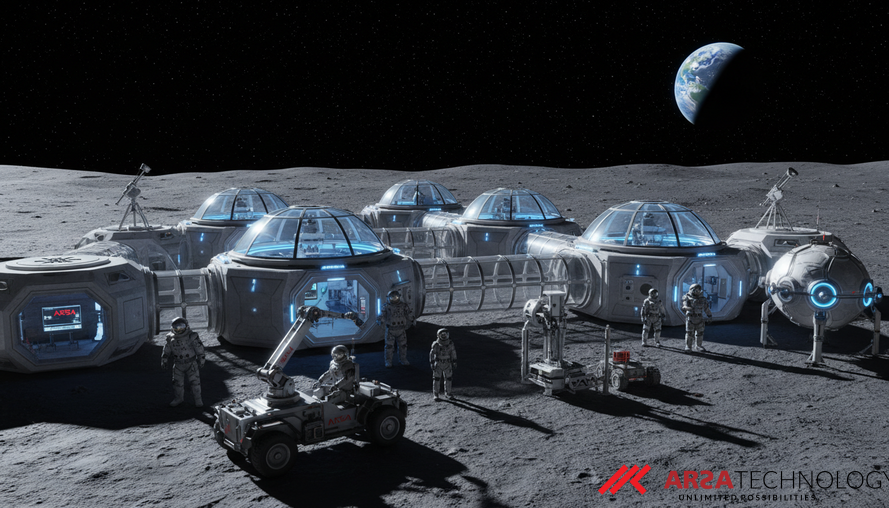
NASA Forges Ahead with Bold Plans for Lunar and Martian Futures
NASA is embarking on an unprecedented era of space exploration, with ambitious plans recently unveiled by Administrator Jared Isaacman. The agency is committing to the establishment of a permanent, human-occupied lunar base, projected to cost approximately $20 billion, to ensure an "enduring presence" on the Moon. This pivotal announcement, made during NASA’s Ignition event, also detailed intentions to launch a groundbreaking nuclear-powered spacecraft towards Mars by the close of 2028. This strategic vision signals a significant refocusing of NASA's efforts, pushing the boundaries of human reach beyond Earth.
The commitment to a permanent lunar presence underscores a shift in NASA's long-term strategy. To facilitate this, the agency announced a pause in the "current form" of its Gateway project, which had initially envisioned an orbiting space station around the Moon. Instead, resources and equipment from the Gateway initiative will be repurposed to directly support sustained surface operations, demonstrating an agile approach to achieving its lunar objectives. The focus is now firmly on building the foundational infrastructure necessary for long-term habitation and scientific research on the Moon itself.
A New Era for Lunar Exploration: NASA's $20 Billion Vision
NASA Administrator Jared Isaacman outlined a comprehensive strategy for securing humanity’s footprint on the Moon, a mission expected to span several years and involve dozens of distinct launches. The estimated $20 billion investment over the next seven years will fund the initial development and deployment phases of this ambitious lunar settlement. This financial commitment reflects the scale and complexity of establishing a self-sufficient outpost in such a demanding environment, moving beyond temporary visits to a sustained human presence.
The strategic redirection of the Gateway project highlights NASA's prioritization of direct lunar surface infrastructure. Rather than an orbital waystation, the agency will now concentrate on deploying direct support systems that enable continuous operations. This decision aims to accelerate the timeline for placing critical assets on the Moon, setting the stage for more complex missions and eventually, permanent habitation. The repurposing of existing equipment also demonstrates a pragmatic approach to resource utilization, maximizing efficiency in a high-stakes endeavor.
Phased Approach to an Enduring Lunar Presence
The establishment of NASA's lunar base is envisioned as a methodical, three-phase undertaking, each building upon the successes of the last. The initial phase will concentrate on laying the groundwork, focusing on the deployment of essential communications and navigation systems crucial for reliable operations across the lunar surface. This phase will also involve the delivery of robotic landers and advanced vehicles, designed to assist astronauts in traversing the challenging lunar terrain and preparing future construction sites. These robotic explorers will play a vital role in scouting and resource assessment before human arrival.
Following the initial setup, the second phase will see the commencement of "recurring astronaut operations" on the Moon's surface. This involves more frequent and longer-duration human missions, allowing astronauts to conduct extensive research, build preliminary structures, and test life-support systems. The ultimate goal, the third phase, is the establishment of a "long-duration human presence." This final stage will involve delivering heavier infrastructure and deploying more advanced living and working modules, culminating in a truly permanent and sustainable lunar base capable of supporting extended stays and complex scientific endeavors. Such an undertaking will require robust and intelligent systems for everything from environmental control to resource management, areas where solutions like custom AI solutions could be instrumental.
Overcoming the Moon's Harsh Environment with Advanced Technology
Establishing a human-habitable base on the Moon presents formidable engineering and biological challenges. Lunar environments are characterized by extreme temperature fluctuations, ranging from scorching highs to frigid lows, necessitating advanced thermal management systems. The constant bombardment of dangerous space radiation and micrometeorites poses significant threats to both equipment and human health, requiring robust shielding and early warning systems. Furthermore, the Moon's low-gravity environment can lead to adverse effects on human physiology, including bone density loss, muscle atrophy, and altered blood flow, which must be mitigated through exercise and medical countermeasures.
Overcoming these obstacles will heavily rely on cutting-edge AI and IoT technologies. Autonomous systems will be critical for environmental monitoring, detecting anomalies, and performing routine maintenance or repairs without constant human intervention. For instance, intelligent AI BOX - Basic Safety Guard systems could monitor habitat integrity and detect breaches, while AI-powered robotics could manage resource extraction and construction. Continuous health monitoring of astronauts using sophisticated IoT sensors and AI diagnostics, akin to the capabilities of a Self-Check Health Kiosk, will be vital to understand and counter the effects of low gravity and radiation exposure. Advanced AI algorithms will also be essential for processing vast amounts of sensor data, enabling predictive maintenance, and optimizing resource utilization to ensure the base's long-term viability and safety.
The Drive to Mars: Nuclear Propulsion and Autonomous Exploration
Beyond its lunar ambitions, NASA also outlined groundbreaking plans for deep-space travel, including the development of the "Space Reactor-1 Freedom." This initiative marks a significant leap in interplanetary exploration, as it is slated to become the first nuclear-powered interplanetary spacecraft. Scheduled for launch to Mars by the end of 2028, this propulsion technology promises faster transit times and greater power availability for missions, making distant destinations more accessible. Such advancements are crucial for shortening journey durations and minimizing astronaut exposure to radiation in deep space.
Upon reaching Mars, the Space Reactor-1 Freedom will deploy a specialized payload, including a fleet of helicopters. These vehicles will be designed with capabilities similar to the Ingenuity helicopter, which made history in 2021 by completing the first powered, controlled flight on Mars. These autonomous aerial scouts will play a crucial role in exploring Martian terrain, conducting scientific surveys, and mapping potential sites for future human landings, significantly enhancing our understanding of the Red Planet. This mission highlights the increasing reliance on AI and robotics for expanding the scope and safety of space exploration.
Geopolitical Imperatives: The New Space Race
The renewed vigor in NASA's plans is not just about scientific curiosity; it's also a response to evolving geopolitical realities. Administrator Isaacman emphasized the escalating competition in space, particularly with nations like China. He highlighted that China possesses both the "will and means to challenge American exceptionalism" in the extraterrestrial domain, noting that "the clock is running in this great-power competition, and success or failure will be measured in months, not years." This sense of urgency underscores the strategic importance of establishing a robust presence in space.
China, too, has publicly declared its aspirations, aiming to land humans on the lunar surface by 2030 and subsequently construct its own Moon base. This parallel ambition fuels what many are calling a new space race, where technological prowess and strategic presence in space are becoming key indicators of global influence. In light of these competitive dynamics, NASA has adjusted its timeline, pushing back its crewed Artemis Moon landing mission to 2028, aligning its efforts to ensure leadership in this critical frontier. The insights gleaned from projects in challenging, remote environments, like those provided by ARSA Technology, experienced since 2018 in delivering robust AI and IoT solutions, can be invaluable for such demanding endeavors.
The ambition to establish a permanent human outpost on the Moon and to send a nuclear-powered craft to Mars represents a monumental chapter in space exploration. It combines cutting-edge engineering with strategic vision, promising to unlock new scientific discoveries and redefine humanity’s place in the cosmos.
Source: The Verge: NASA wants to put a $20 billion base on the Moon
To explore how advanced AI and IoT solutions can transform complex operational challenges into competitive advantages for your enterprise, we invite you to contact ARSA for a free consultation.