Revolutionizing Brain Edema Detection: The Power of Multimodal Deep Learning
Explore AttentionMixer, an advanced AI framework combining head CT scans and clinical data for superior brain edema detection, enhancing accuracy and patient outcomes. Learn about multimodal AI in healthcare.

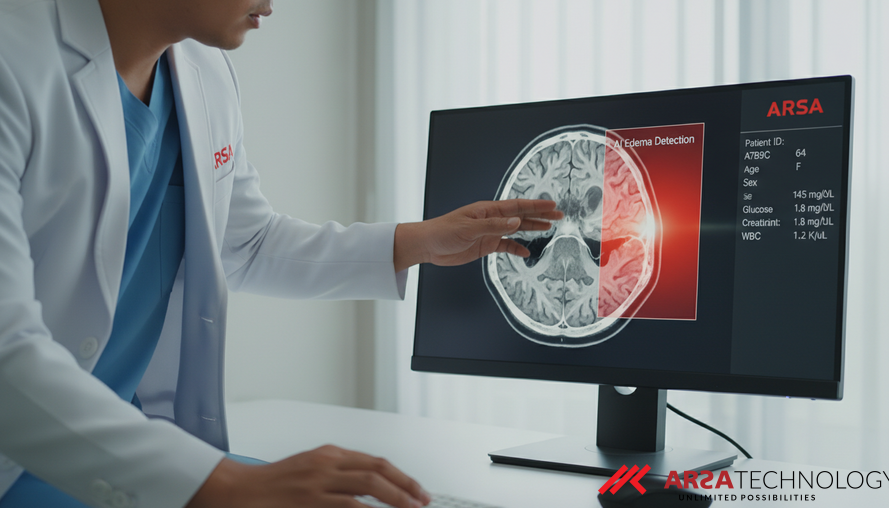
The Critical Challenge of Brain Edema Detection
Brain edema, a serious complication of various acute neurological conditions like stroke, traumatic brain injury, and tumors, poses a significant threat to patient health. It can lead to elevated intracranial pressure, brain herniation, and severe functional impairments, making its prompt and accurate detection vital for effective treatment planning and prognosis. Traditionally, this assessment relies on manual visual inspection of Head CT (HCT) scans by radiologists or neurosurgeons. However, this method is often time-consuming, prone to human error, can suffer from inter-observer variability, and may miss subtle edema patterns, especially in high-volume clinical settings. The human element, while indispensable, can benefit immensely from technological augmentation.
While deep learning has dramatically advanced automated analysis in medical imaging, particularly for tumor segmentation, many existing approaches are highly specialized for voxel-wise segmentation, requiring extensive, labor-intensive pixel-level annotations. Such methods are often tailored for specific research or radiotherapy planning rather than robust, patient-level screening or decision-support tools needed for routine clinical practice. The integration of advanced AI beyond just image analysis is therefore a critical step forward for broad clinical applicability.
Beyond Images: The Imperative of Multimodal Data
In real-world clinical decision-making, HCT scans are rarely interpreted in isolation. A patient's age, medical history, comorbidities, laboratory test results, and the timing of their scan all provide crucial contextual information that can influence the interpretation of ambiguous HCT findings. Integrating these diverse data points—both imaging and non-imaging—can significantly enhance diagnostic accuracy and improve patient outcomes. Existing research in stroke and other neurological diseases confirms that combining neuroimaging with structured clinical variables leads to better predictions and risk stratification compared to using imaging data alone.
Despite this recognized benefit, the development of sophisticated multimodal AI architectures specifically designed to fuse 3D brain HCT with tabular clinical metadata for edema detection has remained relatively unexplored. Many current multimodal approaches often resort to simplistic data fusion techniques, such as merely concatenating features or combining modality-specific sub-networks only at the final classification stage. While these methods offer some improvements, they limit the AI's ability to model complex, fine-grained interactions between different types of data, thereby reducing the potential for truly intelligent and interpretable diagnostic support. This highlights the need for more advanced frameworks that can handle the inherent heterogeneity and common missingness found in clinical datasets.
Introducing AttentionMixer: A Unified Multimodal Framework
Addressing these gaps, researchers have proposed AttentionMixer, a novel deep learning framework that unifies 3D brain HCT and routine clinical metadata for superior edema detection, as described in their paper, "A Multimodal Deep Learning Framework for Edema Classification Using HCT and Clinical Data" (arXiv:2603.26726). This framework represents a significant leap forward by leveraging the strengths of both image-based and tabular data in a cohesive and intelligent manner. AttentionMixer is designed to efficiently fuse these heterogeneous sources, moving beyond simple concatenation to more principled integration.
The core innovation of AttentionMixer lies in its ability to adaptively combine rich spatial information from HCT scans with complementary contextual details from clinical metadata. It begins by encoding HCT volumes using a self-supervised Vision Transformer Autoencoder (ViT-AE++). This technology learns robust image representations even without vast quantities of pre-labeled data, a common challenge in medical imaging. Simultaneously, clinical metadata—such as age, laboratory values, and scan timing—are transformed into the same feature space using a lightweight embedding network. This allows for a harmonious interaction between the different data types.
Advanced Fusion for Enhanced Accuracy
The true power of AttentionMixer emerges through its sophisticated data fusion mechanism: a cross-attention module. In this setup, the HCT-derived feature vector acts as a "query," while the clinical metadata embeddings serve as "keys" and "values." This design enables the network to dynamically modulate its interpretation of imaging features based on the patient-specific clinical context. For instance, if a patient’s lab values suggest a higher risk of a specific type of edema, the AI can prioritize or weigh certain image patterns more heavily. This cross-attention mechanism not only enhances detection accuracy but also offers a transparent and interpretable method for multimodal integration, allowing clinicians to better understand the AI's reasoning.
Following this intelligent fusion, a lightweight MLP-Mixer module refines the combined representation. An MLP-Mixer is a type of neural network that processes information by mixing features both within and across different data channels, allowing it to model global dependencies with substantially reduced computational overhead compared to traditional attention mechanisms. This efficient refinement ensures that the fused representation is optimized for the final classification task. A critical practical aspect of AttentionMixer is its robustness to real-world data imperfections; missing or incomplete metadata are handled gracefully through a learnable embedding, ensuring that the model remains effective even when faced with typical clinical data quality challenges.
Practical Applications and Superior Performance
The evaluation of AttentionMixer on a curated brain HCT cohort, expertly annotated for edema, showcased its superior performance. Compared to strong baselines—including HCT-only models, metadata-only models, and prior multimodal frameworks—AttentionMixer achieved impressive results: 87.32% accuracy, 92.10% precision, an F1-score of 85.37%, and an AUC of 94.14%. These figures demonstrate a significant improvement in the reliable detection of brain edema.
Beyond just the raw numbers, comprehensive ablation studies confirmed the individual contributions of both the cross-attention fusion and the MLP-Mixer refinement, underscoring the thoughtful design of the framework. Furthermore, a permutation-based analysis of metadata importance highlighted specific clinical variables that significantly drive the AI's predictions, providing valuable insights for clinical practice. This means the system not only provides a diagnosis but can also indicate why it arrived at that conclusion, linking back to clinically meaningful factors. Such a framework can be instrumental in reducing diagnostic time, enhancing detection of subtle edema, and ultimately improving patient outcomes by enabling more timely and targeted interventions.
ARSA Technology's Role in Deploying Advanced Medical AI
Implementing advanced multimodal AI frameworks like AttentionMixer requires deep expertise in both artificial intelligence and its practical deployment within complex healthcare environments. Companies like ARSA Technology, with a proven track record since its founding in 2018, specialize in translating cutting-edge AI research into robust, real-world solutions. ARSA’s focus on practical AI deployment, combined with its strong engineering discipline and commitment to data privacy, makes it an ideal partner for healthcare institutions looking to integrate such systems.
ARSA Technology offers custom AI solutions that can be tailored to specific clinical needs, adapting frameworks like AttentionMixer for various diagnostic challenges. For rapid, on-site deployment in clinics or hospitals, ARSA’s ARSA AI Box Series provides pre-configured edge AI systems that process data locally, ensuring low latency and data sovereignty crucial for healthcare. This approach aligns perfectly with the need for immediate insights without cloud dependency. Furthermore, ARSA's experience in health tech, exemplified by products like the Self-Check Health Kiosk, demonstrates its capability in developing and deploying AI-powered healthcare solutions that enhance operational efficiency and patient care. The ability to manage data securely and comply with stringent regulations like GDPR/HIPAA is paramount, and ARSA's on-premise deployment options ensure full control over sensitive patient information.
By integrating advanced AI solutions, healthcare providers can transform existing diagnostic workflows, reduce human error, and allocate medical personnel to more critical tasks. This not only optimizes resources but also drives measurable improvements in patient care and operational efficiency.
To learn more about how advanced AI and IoT solutions can transform your healthcare operations and improve diagnostic capabilities, we invite you to explore ARSA's comprehensive solutions and contact ARSA for a free consultation.
**Source:** Aram Ansary Ogholbake et al. "A Multimodal Deep Learning Framework for Edema Classification Using HCT and Clinical Data." arXiv, 20 Mar. 2026, arXiv:2603.26726.