Tesla's AI and Robotics Pivot: A New Era of Enterprise Automation
Explore Tesla's strategic shift towards large-scale AI and robotics, its latest financial results, and what this means for the future of enterprise automation and smart industrial solutions.

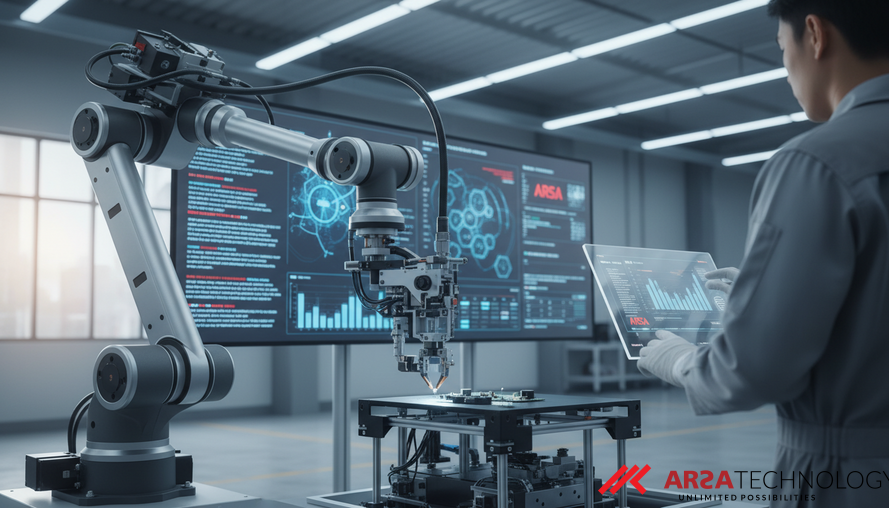
Tesla's Financial Performance and Ambitious AI Vision Unveiled
Tesla recently released its first-quarter financial earnings for 2026, offering a comprehensive look into its progress as a leading innovator in technology. The report highlighted a notable increase in the company's financial health, with a net income of $477 million on $22.4 billion in revenue for the quarter ending April 2026. This represents a 16 percent increase in revenue and a 17 percent rise in profits compared to the first quarter of 2025, which saw $409 million in net income and $19.3 billion in revenue. Despite missing Wall Street's revenue expectations of approximately $22.64 billion, these figures underscore Tesla's continued growth trajectory.
Beyond the financial numbers, the earnings update shed light on Elon Musk's ambitious strategy to redefine Tesla as a frontrunner in artificial intelligence and robotics. A key announcement was the impending commencement of preparations for the company's first "large-scale" factory dedicated to manufacturing Optimus robots. This strategic pivot signals a profound commitment to automation and AI-driven solutions, moving beyond its traditional automotive focus into a broader technological landscape.
Accelerating into the Robotic Future: Optimus and Dojo 3
The future of Tesla's manufacturing landscape is set to undergo a significant transformation with the introduction of its Optimus robot production lines. The company announced that the first-generation production line, specifically designed to produce one million robots annually, will be integrated into its Fremont factory. This strategic move will see the Model S and Model X vehicle production lines make way for the new robotic manufacturing capabilities, underscoring a clear reprioritization of resources towards humanoid robotics.
Looking further ahead, Tesla plans to establish a second-generation Optimus production line at its Gigafactory Texas. This facility is being engineered for an even more ambitious long-term annual production capacity of 10 million robots, signaling Tesla's intent to become a dominant force in the robotics industry. Parallel to these developments in hardware, Tesla is also "continuing" its work on the Dojo 3 supercomputer, a project that Elon Musk previously described as focusing on "space-based AI compute." Such an initiative reflects the increasing demand for high-performance computing to power advanced AI models, a crucial component for the complex operations of autonomous systems and robotics. Enterprises today are increasingly seeking custom AI solutions that can drive similar transformative changes, from optimized operations to advanced decision intelligence.
Navigating the Automotive Landscape Amidst a Transformative Shift
While Tesla's vision increasingly leans towards AI and robotics, its automotive division continues to evolve, albeit with its own set of challenges and adjustments. The first quarter of 2026 saw a modest 6 percent increase in vehicle sales year-over-year. However, this comparison is somewhat skewed, as sales in Q1 2025 were artificially suppressed due to assembly line shutdowns for the Model Y "Juniper" refresh, alongside other external factors like widespread protests.
Recent months have brought a mix of launches and market responses for Tesla's automotive offerings. The company introduced a robotaxi service in Dallas and Houston, yet its availability appeared limited, primarily due to an insufficient fleet of vehicles. On a more positive note, the Netherlands officially became the first European country to approve Tesla's Full Self-Driving (FSD) Supervised system for use on its roads, marking a significant regulatory milestone for its Level 2 advanced driving assistance technology. Amidst reports of challenging Cybertruck sales, Tesla has reportedly found a unique solution: selling the distinctive electric trucks to Elon Musk's other ventures. The company's two-seater autonomous vehicle, the Cybercab, has also been observed in public testing, notably still equipped with a steering wheel, indicating ongoing development towards full autonomy. These advancements in autonomous driving highlight the critical role of sophisticated AI in real-time environmental perception, a domain where solutions like AI Video Analytics are proving invaluable for various applications, including traffic monitoring and smart city infrastructure.
The Broader Implications for Enterprise AI & IoT Adoption
Tesla's profound strategic pivot towards AI and robotics serves as a potent indicator of a broader trend within the enterprise sector: the increasing recognition of AI and IoT as fundamental drivers of operational efficiency and innovation. Companies across manufacturing, logistics, retail, and public services are realizing that intelligent systems can transform passive infrastructure into active, decision-making assets. This shift necessitates solutions that are not only powerful but also practical, scalable, and adaptable to existing environments.
For enterprises considering their own AI journey, the emphasis lies on robust, production-ready systems that offer deployment flexibility. This includes options for on-premise solutions that ensure data sovereignty and minimal latency, crucial for sensitive operations and compliance with data regulations. Solutions such as the ARSA AI Box Series provide integrated edge AI hardware for rapid, plug-and-play deployment, processing video streams locally without cloud dependency. Alternatively, the ARSA AI Video Analytics Software offers a software-only approach for organizations with existing servers, allowing them to leverage their current infrastructure for real-time operational intelligence. These technologies empower organizations to move beyond mere data collection to actionable insights, driving significant ROI across various industries.
The Future of Automation: Beyond the Hype
The ambitious scale of Tesla's plans for Optimus robots and advanced AI systems underscores a vital truth in the world of industrial technology: true transformation requires more than just groundbreaking ideas; it demands meticulous engineering, strategic deployment, and a focus on real-world impact. As businesses increasingly explore the potential of robotics and AI to optimize processes, enhance security, and create new revenue streams, the practical realities of implementation become paramount. This includes considerations around privacy-by-design, the ability to operate in air-gapped or restricted environments, and ensuring the reliability and accuracy of AI models in diverse operational contexts.
Companies like ARSA Technology, experienced since 2018 in developing and deploying AI and IoT solutions, understand that the ultimate value of these technologies lies in their ability to solve concrete operational problems. We don't merely chase trends; we engineer systems that are proven to work at scale under real industrial constraints, turning complex technological challenges into measurable business advantages. From industrial automation to smart city solutions and defense applications, the goal remains consistent: to deliver practical AI that is robust, reliable, and privacy-compliant.
As the enterprise world watches pioneers like Tesla redefine what's possible with AI and robotics, the opportunity for other organizations to adopt similar transformative technologies grows. To explore how production-ready AI and IoT solutions can be tailored to your enterprise needs, we invite you to contact ARSA for a free consultation.
Source: The Verge