Unveiling Deep Learning's Hidden Dynamics: When AI Training Behaves Like Shock Waves
Explore the groundbreaking theory linking deep learning optimization to fluid mechanics, revealing how AI training can exhibit 'shock wave' phenomena and offering new insights for monitoring and controlling complex neural networks.

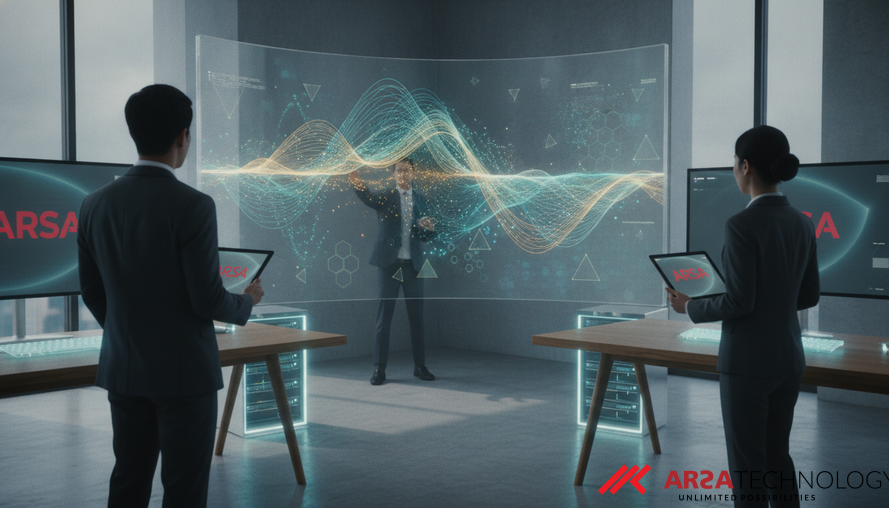
In the intricate world of artificial intelligence, training deep neural networks often feels like navigating uncharted waters. The process, typically driven by algorithms like Stochastic Gradient Descent (SGD), can be unpredictable, characterized by sudden shifts in learning behavior that defy conventional analysis. However, groundbreaking research suggests a fascinating new lens through which to understand these complex dynamics: the principles of fluid mechanics, specifically shock-wave theory. This novel perspective offers more than just a theoretical curiosity; it promises practical tools for monitoring, forecasting, and controlling the evolution of AI models, ultimately leading to more robust and efficient deployments.
Decoding Deep Learning’s Complexity
Deep learning models, from the multilayer perceptrons powering fundamental AI tasks to the advanced Transformers behind large language models, are built upon millions, or even billions, of interconnected parameters. Training these networks involves adjusting these parameters iteratively using optimization algorithms like Stochastic Gradient Descent (SGD). SGD works by calculating the gradient of the model’s error (loss function) with respect to its parameters and then nudging the parameters in the direction that reduces this error. This iterative adjustment, while effective, occurs in a vast, high-dimensional space, making the model's internal journey during training incredibly difficult to interpret.
A key challenge lies in the inherent "symmetries" within neural networks. Many different combinations of internal parameters can lead to functionally identical or very similar network behavior. For instance, in a ReLU network (a common type of neural network using Rectified Linear Unit activation functions), simply scaling all weights in one layer and inversely scaling the next might not change the final output. These "positive rescalings and permutations" mean that simply looking at the "raw parameter norms"—the magnitude of these internal numbers—can be misleading. They might indicate significant changes when, functionally, the model remains the same, obscuring the true learning process. This redundancy makes traditional analysis of training dynamics an arduous task. Understanding these complex, hidden dynamics is precisely where ARSA Technology’s expertise in Custom AI Solutions comes into play, designing systems that extract meaningful insights from opaque processes.
The Unexpected Link to Fluid Dynamics
The core insight of the recent research published in arXiv posits a mathematically explicit link between the learning dynamics of deep neural networks and shock-wave theory from fluid mechanics (Miyagawa, 2026). Shock waves, in their original context, describe abrupt, discontinuous changes in fluid properties, such as a sudden jump in pressure or density. The theory suggests that the "effective dynamics" of deep learning, once appropriately viewed through a "symmetry-reduced" lens, can behave in a strikingly similar fashion.
To achieve this, the researchers employed sophisticated mathematical tools:
- Differential geometry and Lie group theory: These branches of mathematics allow for the rigorous study of shapes, spaces, and symmetries, providing a framework to "quotient out" or effectively ignore the redundant parameter symmetries in neural networks. This transforms the complex, high-dimensional parameter space into a simpler, more meaningful "quotient manifold"—a space where each point represents a truly distinct functional state of the neural network.
- Local-entropy coarse-graining: This technique further simplifies the dynamics by smoothing out local fluctuations and focusing on the macroscopic, average behavior of the system, akin to observing the overall flow of a river rather than the individual ripples.
When these techniques are applied, the effective learning dynamics of stochastic gradient descent on this simplified quotient space are shown to satisfy either a viscous Hamilton–Jacobi equation or a Burgers-type equation. These are partial differential equations (PDEs) traditionally used in fluid mechanics to describe wave phenomena, including the formation and propagation of shock waves. The "viscous" aspect introduces a smoothing effect, preventing infinite discontinuities while still capturing sharp transitions. This mathematical correspondence provides a rigorous framework for reinterpreting sudden shifts in AI training behavior as "shock-type singularities" or "viscous shock layers" in the model's average gradient.
This isn't to say that neural networks are literally fluids, but rather that the mathematical descriptions of their emergent behavior share profound similarities. Another related area of research, such as that exploring neuromorphic computing, also finds connections between artificial neural networks and nonlinear waves like solitons and rogue waves, suggesting broader applications for these interdisciplinary insights (Marcucci, Pierangeli, & Conti, 2020).
Practical Applications for Enterprise AI
Beyond its mathematical elegance, this framework holds significant promise for the operational realities of deep learning in business and government. Currently, monitoring deep learning training is often based on simple metrics like loss values or accuracy, which may not always reveal the underlying reasons for sudden performance plateaus or erratic behavior.
This new theory proposes specific "symmetry-corrected quotient observables" as superior metrics. These observables are designed to be invariant to the network's internal symmetries, providing a more accurate and stable representation of the model's true functional state. For enterprises relying on production-grade AI, such as the industries we serve, these advanced diagnostics could be transformative:
- Early Warning Signals for Regime Change: Just as a meteorologist tracks atmospheric pressure to predict weather fronts, this framework could identify "early-warning signals" that precede abrupt changes in a model's training trajectory. This enables developers and MLOps teams to anticipate and mitigate issues, preventing catastrophic failures or wasted compute resources.
- Intelligent Hyperparameter Tuning: The theory suggests that certain hyperparameters—the settings that control the training process—can act as "control knobs" to smooth out or sharpen these training-phase transitions. This could lead to more efficient and stable training, allowing for faster convergence and better final model performance.
- Enhanced Monitoring and Forecasting: By providing a principled basis for what to monitor, the framework moves beyond surface-level metrics. It enables more accurate forecasting of a model's future behavior, which is critical for maintaining uptime and performance in mission-critical applications where ARSA has been building AI since 2018. For instance, in video analytics, understanding these training dynamics could lead to more robust AI Video Analytics Software that adapts seamlessly to changing environmental conditions.
Consider a retail enterprise deploying an AI Box - Smart Retail Counter for footfall analysis. If the model undergoes an unexpected regime change during fine-tuning due to new customer behavior patterns, identifying this early with symmetry-corrected metrics could allow for proactive recalibration, ensuring continuous accurate insights into store performance. Similarly, in industrial safety monitoring, an AI Box - Basic Safety Guard detecting PPE compliance could benefit from this understanding, ensuring its robust performance even as environmental factors fluctuate.
The Future of AI Training and Control
This research paves the way for a deeper, more physically grounded understanding of how AI learns. By drawing parallels with well-established theories from fluid mechanics, it offers a powerful conceptual framework and a suite of analytical tools to make the training of deep neural networks less of a black box and more of a controllable, predictable process. The ability to monitor and influence these "training-phase transitions" directly translates into significant business advantages: reduced development cycles, improved model reliability, and greater confidence in AI deployments across various sectors.
As AI systems become increasingly integrated into critical infrastructure, from smart cities to defense applications, the need for transparent, controllable, and robust AI will only grow. This interdisciplinary approach exemplifies the kind of innovative thinking required to unlock the full potential of artificial intelligence, transforming complex academic insights into tangible operational benefits.
Sources
Miyagawa, T. (2026). A Link between Shock-wave Theory and Symmetry-reduced Stochastic Gradient Descent for Artificial Neural Networks*. arXiv. Retrieved from https://arxiv.org/abs/2606.18303 Marcucci, G., Pierangeli, D., & Conti, C. (2020). Theory of Neuromorphic Computing by Waves: Machine Learning by Rogue Waves, Dispersive Shocks, and Solitons*. Physical Review Letters, 125(9), 093901. Retrieved from https://link.aps.org/doi/10.1103/PhysRevLett.125.093901
For enterprises seeking to leverage these advanced insights for their AI initiatives, from foundational models to edge deployments, explore ARSA Technology's production-ready solutions and contact ARSA to discuss how we can engineer intelligence into your operations.