AI, Public Data, and Urban Spectacle: Navigating the Dynamics of Open Surveillance
Explore how publicly accessible traffic cameras, AI video analytics, and data access policies intersect with urban events, privacy, and smart city infrastructure for B2B applications.

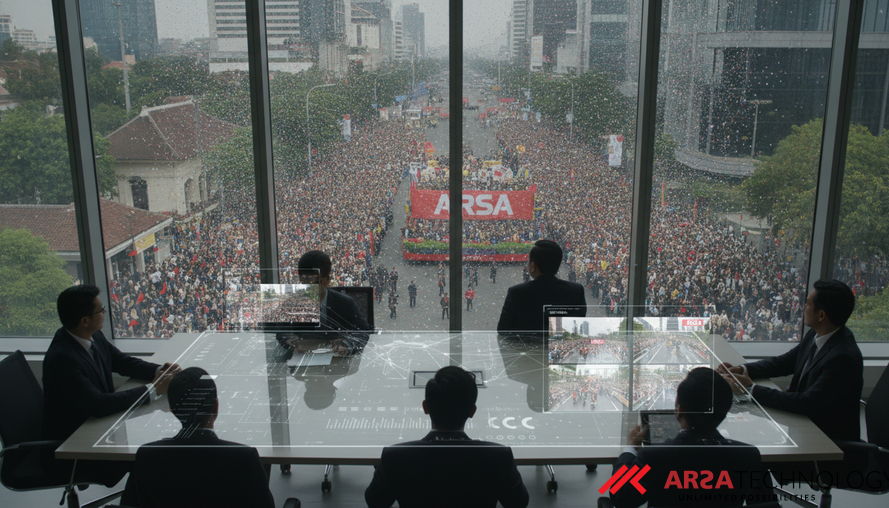
In an increasingly connected world, urban environments are equipped with vast networks of surveillance cameras, originally installed for traffic management and public safety. These omnipresent "eyes" generate massive datasets, which, while crucial for municipal operations, also offer a unique, real-time lens into public life. A recent event in New York City – the celebration of the Knicks' NBA championship with a ticker-tape parade through Lower Manhattan – provided a compelling case study on the evolving intersection of public spectacle, accessible data, and the capabilities of modern video technology.
Public Surveillance and Data Transparency: A Double-Edged Sword
The primary purpose of public traffic cameras, often operated by city departments of transportation, is to facilitate traffic flow, respond to incidents, and enhance overall public safety. These systems are integral to intelligent transportation systems and smart city initiatives, providing real-time data for operational decisions. However, the accessibility of feeds from these cameras, sometimes intentionally and sometimes through public information laws, introduces a fascinating dynamic. For instance, New York State operates under a robust Freedom of Information Law (FOIL), which grants individuals the right to access public information, including traffic camera footage, typically within a 30 to 90-day retention window, as outlined by Rosenbaum Meier Personal Injury Lawyers.
While such transparency can serve various legitimate purposes, from accident reconstruction to journalistic endeavors, it also surfaces significant privacy considerations. The widespread deployment of these cameras, alongside technologies like Automated License Plate Readers (ALPRs), raises questions about data collection, storage, and potential misuse. Privacy advocates often highlight concerns that collected data, even from public spaces, might infringe upon individual rights if not governed by stringent policies, especially regarding retention periods and data sharing with third parties, as discussed by Legal Reader. Balancing the benefits of public safety and operational efficiency with the imperative of protecting individual privacy remains a critical challenge for urban planners and technology providers alike.
From Artistic Commentary to Operational Intelligence
The Knicks parade offered a unique perspective on this balance through the lens of artist Morry Kolman's "GardenCam" project. Kolman, a native New Yorker, decided to livestream feeds from various traffic cameras along the parade route and around City Hall. His intention was to capture the collective "bigger energy rippling through the city" during the historic championship celebration (Wired). This endeavor transformed functional surveillance infrastructure into a platform for artistic and social commentary, allowing those unable to attend the parade in person to witness the event from a novel vantage point.
This wasn't Kolman's first interaction with NYC's traffic camera network. His 2024 art piece, "Traffic Cam Photobooth," which enabled individuals to take selfies via public cameras, had previously garnered a cease-and-desist letter from the New York City Department of Transportation (NYC DOT) due to safety concerns. The agency argued the project "encourages and promotes the unauthorized use" of the cameras (Wired). However, for "GardenCam," the NYC DOT expressed "no objection," indicating a potential shift in how public agencies perceive and manage the secondary use of open data, especially when it aligns with civic engagement or, as Kolman describes his work, "high-effort shitposting" that reveals the inherent visibility of urban life. This evolution in official stance underscores the ongoing dialogue around open data, innovation, and public policy in the age of pervasive digital monitoring.
Strategic AI Video Analytics for Urban & Enterprise Environments
Beyond artistic interpretations, the underlying technology enabling such real-time observation has profound implications for businesses and government entities. AI video analytics transforms passive CCTV streams into dynamic, actionable intelligence, moving beyond simple recording to proactive detection and analysis. Enterprises, for example, leverage advanced AI Video Analytics Software to gain insights into diverse operational scenarios. In a smart city context, this might involve optimizing traffic flow through real-time vehicle counting and classification, detecting congestion, and analyzing patterns to improve urban mobility, much like the capabilities of an AI Box - Traffic Monitor.
In the retail sector, similar analytics can monitor crowd density, analyze footfall, and evaluate queue lengths to enhance customer experience and operational efficiency, mirroring the functions of an AI Box - Smart Retail Counter. Industrial environments benefit from AI for safety and compliance monitoring, detecting PPE (Personal Protective Equipment) violations or unauthorized access to restricted areas, a crucial feature provided by solutions such as the AI Box - Basic Safety Guard. These solutions prioritize on-premise processing and edge AI deployment, ensuring low latency, data privacy, and robust performance without constant cloud dependency. This approach is vital for organizations that require stringent control over their data and operations.
Navigating Compliance, Ethics, and Deployment Realities
The deployment of sophisticated video analytics necessitates a strong framework for data governance and ethical considerations. For organizations operating within highly regulated sectors, adherence to privacy regulations and internal security protocols is paramount. This includes establishing clear policies for data retention, access control, and ensuring that AI systems are developed and deployed with accountability and transparency. The incident with Kolman's "Traffic Cam Photobooth" and the NYC DOT's initial response highlights the need for clear guidelines on public data usage and the potential legal implications of unauthorized access or misinterpretation of public feeds.
As an AI and IoT solutions provider, ARSA Technology understands the complexities of deploying such systems in real-world, mission-critical environments. With over 7 years delivering production AI for government and enterprise clients, ARSA emphasizes practical, proven, and profitable AI applications. Through Custom AI Solutions, organizations can implement AI video analytics that are not only technologically advanced but also designed to meet specific regulatory requirements and ethical standards across various industries we serve. This ensures that while technology empowers better decision-making and operational efficiency, it also upholds the principles of privacy and responsible data handling.
The confluence of public celebrations, accessible city data, and AI-powered video analytics paints a vivid picture of our evolving urban landscape. For businesses and public institutions, this dynamic underscores both the immense potential and the critical responsibilities associated with deploying advanced intelligent systems. Strategic investment in robust, compliant, and ethically designed AI solutions is essential for harnessing urban intelligence effectively and sustainably.
Explore ARSA Technology's AI video analytics and edge AI solutions designed for enterprise and government applications, ensuring precision, scalability, and data control. To learn more about how our practical AI solutions can benefit your organization, contact ARSA today.
Sources:
- Wired. "How to Watch the Knicks Parade on NYC Traffic Surveillance Cameras." June 18, 2026.
- Legal Reader. "Traffic Cameras and Privacy: What Are Your Rights On Public Roads?" December 18, 2024.
- Rosenbaum Meier Personal Injury Lawyers. "How to Access Traffic Camera Footage in NYS." June 10, 2025.