
Choosing the Right Face Recognition API for Attendance Management System in Telecommunications
In the rapidly evolving telecommunications sector, maintaining stringent security protocols while ensuring operational efficiency is paramount. System integrators are constantly seeking robust, scalable solutions to manage access, track personnel, and secure sensitive facilities. This is where a sophisticated face recognition API for attendance management system becomes invaluable, transforming traditional security and HR processes into intelligent, automated workflows. ARSA Technology offers a cutting-edge cloud-based Face Recognition & Liveness API designed to meet these demanding requirements, providing unparalleled accuracy and ease of integration for telecom enterprises.
Traditional attendance and access control methods, such as swipe cards or PINs, are prone to inefficiencies, “buddy punching,” and security breaches. For system integrators tasked with deploying mission-critical infrastructure, these vulnerabilities are unacceptable. The shift towards biometric solutions, particularly facial recognition, offers a powerful alternative that enhances both security and user experience.
The Evolving Landscape of Access and Attendance in Telecom
Telecommunications companies operate vast networks of critical infrastructure, including data centers, switching stations, and corporate offices. Securing these diverse environments requires a multi-layered approach. System integrators need solutions that can:
- Accurately verify identities at various access points.
- Streamline employee check-in processes.
- Manage visitor access efficiently and securely.
- Integrate seamlessly with existing security and HR platforms.
- Comply with strict data privacy regulations.
A reliable face recognition API for attendance management system addresses these challenges head-on, offering a foundation for secure, automated operations.
Why ARSA’s Face Recognition & Liveness API Stands Out
ARSA Technology’s Face Recognition & Liveness API is engineered for the demands of enterprise-grade applications, making it an ideal choice for telecommunications system integrators. This cloud-hosted solution provides a comprehensive identity layer, not just a simple comparison endpoint, ensuring robust security and operational flexibility.
Core Functions and Technical Highlights
The ARSA Face Recognition & Liveness API offers a suite of powerful features:
- 1:1 Face Verification: Confirm whether two faces belong to the same person, perfect for secure login, step-up authentication, and verifying identity during sensitive transactions.
- 1:N Face Identification: Identify a person against a large face database, designed for access control and monitoring scenarios where rapid identification is crucial.
- Active and Passive Liveness Detection: Crucial for preventing identity fraud, this feature uses challenge-response based verification (active) and sophisticated analysis (passive) to detect and prevent spoofing attacks using photos, videos, or 3D masks. This ensures that only a live, present individual can gain access or complete a transaction.
- Face Database Management: Easily enroll, update, and remove identities, organizing data into secure collections per application or tenant.
- REST API & Cloud-Hosted: As a cloud-based REST API, it offers instant integration capabilities, allowing system integrators to quickly embed facial recognition into existing or new applications. It’s available on the RapidAPI marketplace, complete with a free tier for testing and scalable plans up to 500,000 API calls per month.
- High Accuracy: With an impressive 99.67% accuracy rate (LFW benchmark), ARSA’s API delivers reliable performance in diverse real-world conditions.
Business Outcomes and Measurable ROI for Telecom
Implementing ARSA’s Face Recognition & Liveness API translates directly into significant business advantages for telecommunications companies:
- Prevent Identity Fraud: The robust active and passive liveness detection capabilities are critical for preventing spoofing, safeguarding sensitive customer data, and securing physical access points. This is particularly vital for e-KYC processes in customer onboarding, where fraud prevention can lead to substantial cost savings.
- Automate KYC Onboarding: Streamline the customer onboarding process with automated facial authentication, reducing manual verification steps and improving customer experience. This accelerates service activation and reduces operational overhead.
- Reduce Manual Verification Costs by 80%: By automating attendance and access control, companies can significantly cut down on the labor costs associated with manual checks, security guards, and administrative tasks. The efficiency gains free up staff to focus on higher-value activities.
- Sub-Second Verification Response: The API’s low latency ensures near-instantaneous verification, preventing bottlenecks at entry points and improving overall operational flow. This is crucial for high-traffic areas in corporate offices or data centers.
- Enhanced Compliance: With secure data handling and on-premise SDK options (for highly regulated environments), ARSA helps organizations meet stringent data privacy regulations like GDPR and Indonesia PDPA.
Integrating Facial Authentication API for Access Control Apps
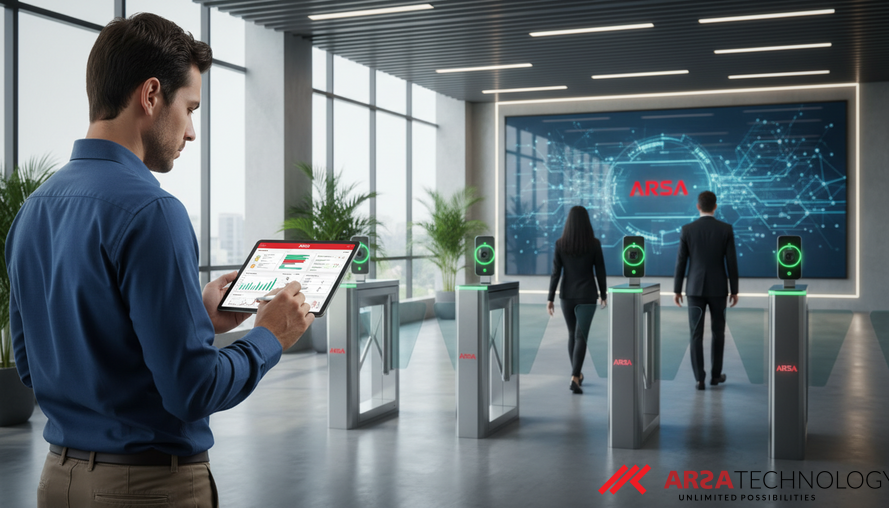
For system integrators developing an facial authentication API for access control app, ARSA’s solution provides the backbone for a highly secure and user-friendly experience. Imagine employees simply looking at a camera at a turnstile, and gaining access in milliseconds, without fumbling for cards. This not only enhances security by eliminating lost or stolen credentials but also improves daily convenience. The API’s flexibility allows for integration into various access control hardware and software platforms.
Face Verification for Employee Check-in Systems
Beyond physical access, a robust face verification for employee check-in system can revolutionize HR and operations. Telecommunications companies with large workforces spread across multiple locations can centralize attendance data, gain real-time insights into staffing levels, and ensure accurate payroll processing. This eliminates the common issue of “buddy punching” and provides an undeniable audit trail for compliance.
Biometric API for Visitor Management Platforms
Managing visitors in secure telecom facilities is a complex task. A biometric API for visitor management platform can automate and secure this process. Visitors can pre-register, have their identity verified upon arrival using facial recognition, and be granted temporary, time-limited access. This enhances security, creates a professional impression, and reduces the administrative burden on front-desk staff.
Face ID API for Building Access Control
Ultimately, a face ID API for building access control provides the highest level of security and convenience for critical infrastructure. Whether it’s a data center, a network operations center, or a research and development facility, restricting access to authorized personnel is non-negotiable. ARSA’s API ensures that only verified individuals can enter, with real-time alerts for unauthorized attempts. This capability is also available through all ARSA products, including our edge AI solutions for localized processing.
Comparison: Cloud API vs. On-Premise SDK
While this article focuses on the cloud-based Face Recognition & Liveness overview, ARSA also offers an On-Premise SDK. The choice depends on specific operational realities:
- Cloud API (ARSA Face Recognition & Liveness API): Ideal for rapid prototyping, SaaS products, and applications where fast integration and managed infrastructure are preferred. Data is processed in ARSA’s secure cloud environment (though the sandbox processes in memory and is never stored).
- On-Premise SDK (ARSA Face Recognition & Liveness SDK): Best for organizations requiring absolute data sovereignty, air-gapped deployments, and full control over their biometric systems within their own infrastructure. This is often chosen by government, defense, and highly regulated enterprises.
For many system integrators in telecommunications, the cloud API offers the perfect balance of performance, scalability, and ease of deployment, especially when integrating with existing cloud-native applications or for rapid rollout across multiple sites.
Conclusion
The demand for advanced security and operational efficiency in the telecommunications industry makes a robust face recognition API for attendance management system an indispensable tool. ARSA Technology’s Face Recognition & Liveness API provides system integrators with a powerful, accurate, and easily integratable solution to enhance security, streamline operations, and deliver significant ROI. By leveraging ARSA’s proven technology, telecom enterprises can move beyond outdated methods, embracing a future where security is intelligent, seamless, and proactive. To explore how ARSA’s solutions can transform your projects, contact ARSA solutions team today.
—
FAQ
What is a facial authentication API for access control app?
A facial authentication API for an access control app is a software interface that allows applications to integrate face recognition capabilities for verifying user identities before granting access to physical locations, digital systems, or sensitive data. It typically includes features like 1:1 verification, 1:N identification, and liveness detection to prevent spoofing.
How does face verification for employee check-in system improve efficiency?
Face verification for an employee check-in system significantly improves efficiency by automating the attendance process, eliminating manual sign-ins, and preventing “buddy punching.” It provides real-time attendance data, reduces administrative overhead, and ensures accurate payroll processing, all with sub-second verification times.
Can a biometric API for visitor management platform be integrated with existing security systems?
Yes, a biometric API for a visitor management platform, like ARSA’s, is designed for seamless integration with existing security systems, including CCTV, access control hardware, and facility management software. ARSA’s solutions are modular and offer REST API integration for flexible deployment.
What are the key benefits of using a face ID API for building access control in telecommunications?
A face ID API for building access control in telecommunications offers enhanced security by ensuring only authorized personnel enter critical facilities, prevents identity fraud through advanced liveness detection, and provides a streamlined, touchless access experience. It also offers real-time monitoring and audit trails, crucial for compliance and operational oversight.
Stop Guessing, Start Optimizing.
Discover how ARSA Technology drives profit through intelligent systems.
