
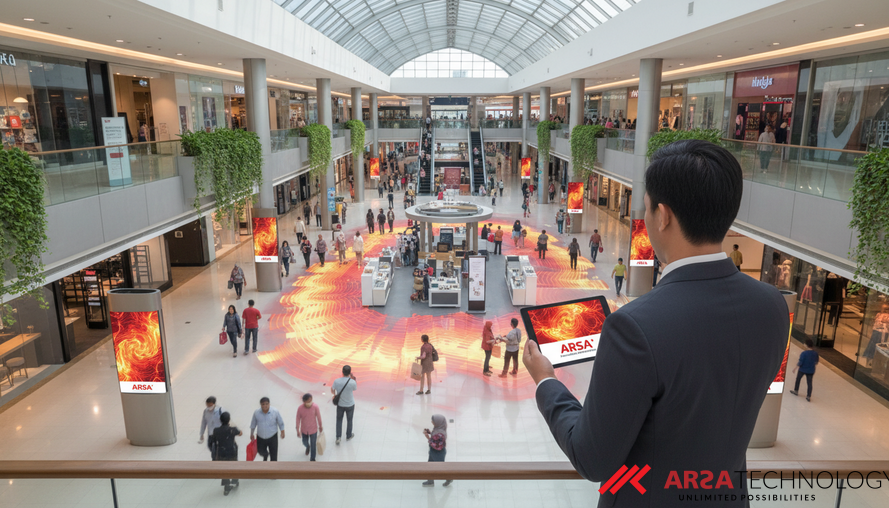

Customer Heatmap Analytics for Store Layout Optimization: A Mall Manager’s Guide
In the competitive landscape of modern retail, understanding customer behavior is no longer a luxury—it’s a necessity. For mall property managers, the challenge lies in transforming vast, dynamic spaces into optimized environments that maximize tenant success and overall revenue. This is where customer heatmap analytics for store layout optimization emerges as a game-changer, offering unprecedented insights into how visitors interact with your retail environment. By visualizing foot traffic and engagement patterns, mall managers can make data-driven decisions that enhance the shopping experience, improve operational efficiency, and ultimately, drive profitability.
Traditional methods of observing customer flow are often subjective, labor-intensive, and prone to human error. They fail to capture the granular data needed to truly understand why certain areas thrive while others languish. With the advent of advanced AI and IoT solutions, however, properties can now leverage existing infrastructure to gain precise, actionable intelligence, turning passive observation into active strategy.
Understanding Customer Heatmap Analytics
Customer heatmap analytics is a powerful visualization tool that represents the intensity of customer activity across a physical space. By processing video feeds from existing CCTV cameras, AI algorithms can detect and track individual movements, dwell times, and paths. This raw data is then translated into a color-coded map, where warmer colors (red, orange) indicate high-traffic, high-engagement areas, and cooler colors (blue, green) signify less frequented zones.
For a mall property manager, these heatmaps provide an immediate, intuitive understanding of:
- High-Value Zones: Which entrances, corridors, and common areas attract the most attention.
- Dead Zones: Areas that customers consistently avoid, indicating potential issues with accessibility, visibility, or appeal.
- Traffic Flow: The most common routes customers take, revealing natural pathways and bottlenecks.
- Engagement Hotspots: Where customers pause, browse, or interact with displays, indicating interest.
This visual data is critical for making informed decisions about everything from tenant placement to promotional display locations.
The Power of AI Dwell Time Analysis for Shopping Malls
Beyond simple footfall, understanding *how long* customers spend in specific areas is paramount. This is where AI dwell time analysis for shopping malls provides deeper insights. Dwell time refers to the duration a customer remains in a particular zone or in front of a specific storefront. High dwell times often correlate with increased interest and a higher likelihood of conversion.
ARSA Technology’s ARSA Smart Retail Counter (AI Box) offers robust dwell time analysis capabilities. This edge AI solution processes video streams locally, ensuring privacy and low latency, and can identify areas where customers linger. For mall managers, this data can:
- Validate Tenant Performance: Prove which tenants are effectively drawing and engaging visitors.
- Optimize Common Areas: Identify benches, kiosks, or promotional spaces that genuinely capture attention.
- Inform Lease Negotiations: Provide data-backed evidence of traffic and engagement for prospective tenants.
- Enhance Wayfinding: Understand if current signage or mall layout effectively guides customers to desired destinations or if they are getting lost or disoriented.
By combining heatmaps with dwell time analysis, you gain a comprehensive picture of customer engagement, allowing you to fine-tune your mall’s ecosystem.
Transforming Operations with Customer Movement Pattern Analysis CCTV
The foundation of effective retail space optimization lies in granular data derived from your existing surveillance infrastructure. Customer movement pattern analysis CCTV transforms standard security footage into a rich source of business intelligence. Instead of merely recording events, ARSA’s AI-powered systems interpret the continuous flow of human activity.
This analysis goes beyond simple counting, providing details on:
- Entry and Exit Points: Understanding peak times and popular access routes.
- Pathing: Mapping the journey customers take through the mall, identifying common routes and deviations.
- Queue Management: Detecting queue formation and length, enabling proactive staffing adjustments to reduce wait times and prevent abandonment.
- Crowd Density: Monitoring congestion in specific areas to ensure safety and comfort, especially during peak hours or events.
The ARSA AI Box Series integrates seamlessly with your existing CCTV cameras, turning them into intelligent sensors. With a 5-minute plug-and-play setup, this edge computing device processes video streams on-site, eliminating cloud dependency and ensuring data privacy—a critical concern for many enterprises and government entities.
How to Optimize Retail Floor Plan with Heatmap Data
The ultimate goal of these analytics is to optimize retail floor plan with heatmap data. For mall property managers, this means leveraging insights to create a more intuitive, engaging, and profitable environment. Here are practical applications:
1. Strategic Tenant Placement: Place high-demand tenants in areas with proven foot traffic, and strategically position complementary businesses to encourage cross-visitation. Heatmaps can reveal natural “flow zones” where new tenants are most likely to succeed.
2. Effective Kiosk and Pop-Up Locations: Identify high-dwell-time areas for temporary installations, ensuring maximum exposure and potential revenue for short-term leases.
3. Enhanced Promotional Display Effectiveness: Use heatmaps to position digital signage and promotional materials where they will capture the most eyeballs and engagement. For instance, ARSA’s related DOOH Audience Meter can further refine this by measuring audience exposure and demographics for digital out-of-home advertising.
4. Improved Common Area Design: Redesign seating areas, restrooms, or food courts based on actual usage patterns, enhancing visitor comfort and satisfaction.
5. Optimized Staffing: Use real-time people counting and queue data to deploy security, cleaning, and customer service staff more efficiently, reducing operational costs.
By continuously analyzing heatmap data, mall managers can iteratively refine their layouts, testing hypotheses and measuring the impact of changes with hard data.
Boosting Tenant Performance with Foot Traffic Analytics
A key responsibility of a mall property manager is to support and enhance the performance of their tenants. Foot traffic analytics for tenant performance provides the objective data needed to do just that. With ARSA’s solutions, you can offer tenants:
- Verified Visitor Counts: Provide accurate data on how many people pass by or enter their store, helping them understand their conversion rates.
- Peak Hour Insights: Advise tenants on optimal staffing levels and promotional timing based on mall-wide and store-specific traffic patterns.
- Layout Consultation: Collaborate with tenants to optimize their in-store layouts using micro-heatmaps derived from the overall mall data, helping them increase sales conversion by 25% and reduce queue abandonment.
- Benchmarking: Allow tenants to compare their performance against anonymized industry benchmarks or other stores within the mall (with appropriate privacy considerations), fostering healthy competition and data-driven improvements.
This level of data transparency strengthens relationships with tenants, helps justify rental rates, and positions the mall as a proactive partner in their success. ARSA’s all ARSA products are designed with these enterprise-level partnerships in mind, ensuring scalability and robust data security.
The ARSA Advantage: Edge AI for Real-World Hospitality
ARSA Technology understands the unique demands of the hospitality and retail sectors. Our ARSA Smart Retail Counter (AI Box) is engineered to deliver enterprise-grade AI video analytics with unparalleled ease of deployment and data control.
Key advantages include:
- Edge Processing: All AI analysis happens on the device, meaning video streams stay within your network. This ensures maximum data privacy and eliminates cloud costs and latency.
- Plug-and-Play Setup: Integrates with your existing CCTV infrastructure in minutes. No need to replace cameras or complex backend systems.
- Real-Time Insights: Get immediate data on people counting, dwell time, and heatmaps, enabling instant actionable decisions.
- Scalability: Deploy a single AI Box for a specific area or scale across multiple sites, all managed from a centralized dashboard. Each AI Box Mini PC model can process up to 3 cameras, while the Server Model can handle up to 30, offering flexible hardware for any scale.
- Business Outcomes: Our solutions are designed to deliver tangible ROI, from optimizing staffing costs and improving store layout to significantly reducing queue abandonment and increasing sales conversion.
ARSA Technology has a proven track record of deploying mission-critical AI and IoT solutions for government and enterprise clients, demonstrating our expertise and commitment to reliable, impactful technology.
Conclusion
For mall property managers seeking to gain a competitive edge, embracing customer heatmap analytics for store layout optimization is no longer optional. It’s the strategic imperative that transforms guesswork into data-driven certainty. By leveraging advanced AI solutions like the ARSA Smart Retail Counter, you can unlock profound insights into customer behavior, optimize every square meter of your retail space, and foster a thriving environment for both visitors and tenants. The ability to understand, predict, and influence customer journeys directly translates into increased revenue, operational efficiency, and a superior shopping experience.
Ready to transform your mall into an intelligent, data-driven ecosystem? Don’t let your valuable CCTV footage remain a passive record. Empower your operations with real-time AI insights. Contact ARSA solutions team today for a consultation and discover how our edge AI technology can deliver measurable impact for your property.
—
FAQ Section
What is the primary benefit of AI dwell time analysis for shopping malls?
AI dwell time analysis helps mall property managers understand how long customers spend in specific areas or in front of storefronts. This insight is crucial for validating tenant performance, optimizing common areas like seating or promotional kiosks, and informing strategic decisions about layout and tenant mix to maximize engagement and potential revenue.
How does customer movement pattern analysis CCTV improve mall operations?
By transforming standard CCTV footage into actionable data, customer movement pattern analysis provides insights into entry/exit points, common customer paths, queue formation, and crowd density. This allows mall managers to optimize staffing, manage congestion, enhance security, and make data-backed decisions on layout adjustments for better flow and visitor experience.
Can ARSA’s solution help optimize retail floor plan with heatmap data for multiple tenants?
Absolutely. ARSA’s Smart Retail Counter (AI Box) generates comprehensive heatmap data across your mall. This data can be used to strategically place tenants, identify optimal locations for kiosks and promotional displays, and collaboratively work with individual tenants to refine their in-store layouts, ultimately boosting overall tenant performance and mall profitability.
Is ARSA’s customer analytics solution privacy-compliant?
Yes, ARSA prioritizes data privacy. Our AI Box Series, including the Smart Retail Counter, utilizes edge computing, meaning all AI processing and video stream analysis occur locally on the device. This ensures that video data does not leave your network unless explicitly configured, providing full control over data flow and storage, aligning with privacy-first principles.
—
Stop Guessing, Start Optimizing.
Discover how ARSA Technology drives profit through intelligent systems.
