
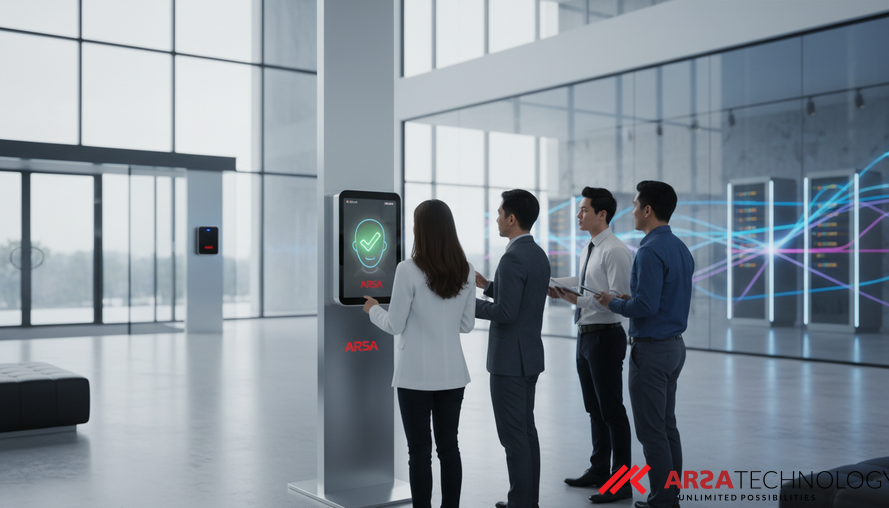

Edge AI vs. Cloud: Choosing the Best Face Recognition API for Attendance Management Systems
In today’s rapidly evolving HR-tech landscape, organizations are constantly seeking innovative solutions to streamline operations, enhance security, and improve efficiency. One technology at the forefront of this transformation is face recognition, particularly its application in managing employee attendance and access. For system integrators tasked with deploying these solutions, a critical decision arises: should you opt for an Edge AI or a cloud-based face recognition API for attendance management system? This guide delves into the nuances of each approach, helping you make an informed choice that aligns with your clients’ operational realities, security requirements, and budget.
The demand for robust and reliable facial authentication is surging across various sectors, from corporate offices to industrial facilities. Implementing a precise `face verification for employee check-in system` can drastically reduce administrative overhead, eliminate “buddy punching,” and provide accurate timekeeping data. However, the underlying infrastructure—whether processing data at the edge or leveraging scalable cloud services—significantly impacts performance, data privacy, and overall system architecture.
Understanding Face Verification in HR-Tech
Face verification, often referred to as 1:1 face verification, is the process of confirming a person’s identity by comparing their live facial scan against a single, pre-enrolled facial template in a database. This differs from 1:N face identification, which involves searching a large database to identify an unknown individual. In the context of HR-tech, 1:1 verification is ideal for applications like attendance tracking, where an employee presents themselves to a system that verifies their identity against their known record.
Beyond attendance, this technology is pivotal for secure access control. A reliable `facial authentication API for access control app` can manage entry to restricted areas, ensuring only authorized personnel gain access. Similarly, a `face ID API for building access control` provides a frictionless yet secure entry experience for employees and approved visitors, replacing traditional keycards or manual sign-ins.
Edge AI for Face Verification: Processing Power at the Source
Edge AI refers to artificial intelligence processing that occurs directly on a local device or server, close to the data source, rather than sending data to a centralized cloud server. For face verification, this means that the camera or a local AI appliance performs the facial analysis and matching.
Advantages of Edge AI:
- Low Latency: Processing data locally minimizes delays, offering near-instantaneous verification, which is crucial for high-traffic entry points.
- Enhanced Data Privacy: Biometric data remains within the client’s local network, reducing the risk of data breaches during transmission and simplifying compliance with stringent data protection regulations (e.g., GDPR, Indonesia PDPA).
- Offline Operation: Edge systems can function even without a continuous internet connection, ensuring uninterrupted service in environments with unreliable network access.
- Reduced Bandwidth Usage: Only metadata or aggregated results, not raw video streams, need to be sent to the cloud (if any), saving bandwidth costs.
Disadvantages of Edge AI:
- Higher Upfront Hardware Costs: Requires investment in specialized edge devices or servers with sufficient processing power.
- Complex Management: Distributed edge deployments can be more challenging to manage, update, and maintain across multiple locations.
- Limited Scalability: Scaling capacity typically involves deploying more physical hardware, which can be less flexible than cloud-based scaling.
ARSA Technology offers solutions like the ARSA AI Box Series, which provides pre-configured edge AI systems for rapid deployment and on-premise processing, working seamlessly with existing CCTV infrastructure.
Cloud-Based Face Verification APIs: Scalability and Simplicity
Cloud-based face verification solutions leverage powerful remote servers and infrastructure to perform AI processing. Data (or relevant features extracted from data) is sent to the cloud, processed, and results are returned to the local system. This model is often delivered through a `biometric API for visitor management platform` or an attendance system.
Advantages of Cloud-Based APIs:
- Unmatched Scalability: Cloud infrastructure can easily scale up or down to meet fluctuating demand, handling thousands to millions of verification requests without additional hardware investment.
- Ease of Integration: APIs (Application Programming Interfaces) like ARSA’s are designed for straightforward integration into existing applications and platforms using standard REST API protocols. This significantly reduces development time and effort for system integrators.
- Lower Upfront Costs: Eliminates the need for significant hardware investment, shifting costs to a more predictable operational expenditure model (pay-as-you-go).
- Centralized Management & Updates: Software updates, model improvements, and system management are handled by the cloud provider, reducing IT burden for clients.
- High Availability: Cloud services are typically designed for high availability and redundancy, minimizing downtime.
Disadvantages of Cloud-Based APIs:
- Internet Dependency: Requires a stable and continuous internet connection for operation.
- Data Transfer & Privacy Concerns: Biometric data or its derivatives must be transmitted to the cloud, which can raise data sovereignty and privacy concerns for some organizations, especially in highly regulated industries.
- Potential Latency: Network latency can introduce slight delays, though modern cloud APIs are highly optimized for speed.
Key Considerations for System Integrators
When advising clients on the ideal face recognition API for attendance management system, system integrators must weigh several factors:
1. Data Privacy & Compliance
For many organizations, especially those dealing with sensitive employee data, data sovereignty is paramount. If biometric data absolutely cannot leave the premises, an on-premise SDK or edge solution is necessary. However, reputable cloud API providers like ARSA implement robust security measures, including encryption and strict data handling protocols, to protect data in transit and at rest. ARSA’s Face Recognition & Liveness API, for instance, is built with security in mind, offering features like active and passive liveness detection to prevent spoofing.
2. Scalability & Performance
Consider the volume of daily transactions. An enterprise with thousands of employees across multiple locations will require a highly scalable solution. Cloud APIs excel here, offering elastic scaling. For smaller deployments or specific remote sites, edge solutions might suffice. ARSA’s cloud API is designed to scale efficiently, supporting up to 500,000 API calls per month, ensuring sub-second verification responses even under heavy load.
3. Integration & Development Effort
System integrators often prioritize solutions that integrate seamlessly with existing HR platforms, access control systems, or custom applications. Cloud APIs, with their well-documented REST API interfaces, generally offer faster and simpler integration. ARSA’s Face Recognition & Liveness API is available on RapidAPI, making it incredibly accessible for developers to integrate quickly. For those requiring deeper, air-gapped integration, ARSA also offers an on-premise SDK version.
4. Cost-Effectiveness
Evaluate total cost of ownership (TCO). Edge solutions have higher upfront hardware costs but potentially lower ongoing data transmission fees. Cloud APIs have lower upfront costs but recurring subscription fees based on usage. ARSA’s API offers a free tier, allowing for initial testing and smaller-scale deployments before committing to higher volumes. The significant reduction in manual verification costs (up to 80%) and prevention of identity fraud often provide a rapid ROI for both cloud and edge solutions.
5. Anti-Spoofing & Liveness Detection
Security is non-negotiable. Any face verification system must be resilient against spoofing attempts using photos, videos, or masks. ARSA’s Face Recognition & Liveness overview emphasizes its advanced active and passive liveness detection capabilities, ensuring that only a live, present individual can be verified. This is crucial for preventing fraud in `face verification for employee check-in system` and other high-security applications. ARSA’s API boasts an impressive 99.7% accuracy rate, a testament to its reliability.
ARSA’s Cloud Face Recognition API: A Strategic Choice
For system integrators seeking a powerful, scalable, and easy-to-integrate solution, the ARSA Face Recognition & Liveness API stands out. This cloud-hosted service provides enterprise-grade biometric capabilities designed for modern HR-tech and security applications.
Key features include:
- 1:1 Face Verification & 1:N Face Identification: Versatile for both identity confirmation and broader identification needs.
- Active & Passive Liveness Detection: Robust anti-spoofing measures to prevent fraudulent access.
- Face Database Management: Tools to securely enroll, store, and manage facial templates.
- High Accuracy: Achieving 99.7% accuracy, ensuring reliable performance.
- REST API: Standardized and easy to integrate into any application or platform.
- Scalability: Designed to handle high volumes, making it suitable for large enterprises.
- e-KYC Ready: Supports automated Know Your Customer (KYC) onboarding processes, reducing manual effort and costs.
By leveraging ARSA’s API, businesses can automate identity verification, prevent fraud, and significantly reduce operational costs associated with manual checks. This translates into tangible business outcomes, such as an 80% reduction in manual verification costs and sub-second verification response times, enhancing both security and user experience.
Implementing Face Verification for Attendance and Access Control
Imagine a scenario where an employee simply approaches a kiosk or a tablet at the entrance, and within milliseconds, their identity is verified, and their attendance is logged. This is the power of a well-integrated `face recognition API for attendance management system`. For a `facial authentication API for access control app`, the same seamless experience can unlock doors or grant access to sensitive data, all while maintaining a high level of security.
Beyond employees, a `biometric API for visitor management platform` can streamline guest registration, ensuring that visitors are quickly and securely identified upon arrival, enhancing overall facility security. This also extends to a `face ID API for building access control`, providing a modern, efficient, and secure way to manage who enters and exits premises. ARSA’s technology is already trusted by government and enterprise clients, including deployments for the Indonesian Ministry of Defense and national police infrastructure, demonstrating its proven capability in demanding environments.
For specialized applications, ARSA also offers innovative IoT solutions like the ARSA Self-Check Health Kiosk, which integrates face recognition for subject identification in health screening programs, showcasing the versatility of ARSA’s biometric technology across various use cases.
The ARSA Advantage: Proven Expertise and Support
ARSA Technology has been at the forefront of AI and IoT solutions for over seven years, delivering production-ready systems that solve real-world operational problems. Our expertise in computer vision, industrial IoT, and software engineering ensures that our products are not just innovative but also reliable, scalable, and compliant. We understand the critical importance of data privacy and operational reliability, offering flexible deployment models—cloud, on-premise, or edge—to meet diverse client needs.
Whether your client prioritizes absolute data sovereignty with an on-premise SDK or seeks the agility and scalability of a cloud-based `face recognition API for attendance management system`, ARSA Technology provides the solutions and expertise to engineer intelligence into their operations. Explore all ARSA products to find the perfect fit for your next project.
Conclusion
The choice between Edge AI and Cloud for a face recognition API for attendance management system hinges on a careful evaluation of specific project requirements, particularly concerning data privacy, scalability, and integration complexity. While Edge AI offers benefits like low latency and offline operation, cloud-based APIs, like ARSA’s, provide unparalleled scalability, ease of integration, and cost-effectiveness for a vast array of enterprise applications. For system integrators, understanding these distinctions is key to delivering secure, efficient, and future-proof HR-tech solutions.
Ready to integrate a high-performance face recognition solution into your next project? Contact ARSA solutions team today to discuss your specific needs and explore how our enterprise-grade AI can transform your clients’ operations.
—
Frequently Asked Questions
What is the primary benefit of using a face recognition API for attendance management system?
The primary benefit is enhanced efficiency and accuracy in tracking employee attendance, eliminating manual processes and preventing issues like “buddy punching.” It also provides real-time data for HR and payroll, significantly reducing administrative overhead and operational costs.
How does a facial authentication API for access control app improve security?
A facial authentication API improves security by ensuring that only authorized individuals can access restricted areas or systems. With advanced features like active liveness detection, it prevents spoofing attempts using photos or videos, providing a highly secure and frictionless access experience.
Can a face verification for employee check-in system integrate with existing HR software?
Yes, modern face verification systems, especially those offered as REST APIs, are designed for seamless integration with existing HR software, payroll systems, and access control platforms. This allows for a unified management system and leverages existing infrastructure.
What are the data privacy considerations for a biometric API for visitor management platform?
Data privacy is crucial for any biometric system. For a `biometric API for visitor management platform`, key considerations include secure data encryption, clear consent mechanisms for visitors, defining data retention policies, and ensuring compliance with relevant data protection regulations like GDPR or local privacy laws. ARSA’s solutions are built with these considerations in mind.
—
Stop Guessing, Start Optimizing.
Discover how ARSA Technology drives profit through intelligent systems.
