
Edge AI vs. Cloud: Which PPE Detection Solution Fits Your Business?
Workplace safety is paramount, yet accidents continue to pose significant risks, leading to human suffering, operational disruptions, and substantial financial losses. For CFOs and facility managers, the challenge lies in finding effective, scalable, and cost-efficient solutions to mitigate these risks. The emergence of AI video analytics offers a powerful answer, but a critical decision remains: should you opt for an Edge AI or a cloud-based system? Understanding this distinction is key to successfully deploying technology that can reduce workplace accidents with AI video analytics and deliver a strong return on investment.
In the quest to enhance safety, organizations are increasingly turning to AI-powered solutions for tasks like PPE detection, restricted area monitoring, and real-time safety violation alerts. These systems transform passive CCTV footage into actionable intelligence, proactively identifying potential hazards and ensuring compliance. However, the architectural choice between edge and cloud deployment profoundly impacts data privacy, latency, scalability, and ultimately, the overall cost benefit analysis AI safety system. This guide will help you navigate these options, focusing on the advantages of on-premise solutions like ARSA’s AI Video Analytics Software for facility management.
The Imperative to Reduce Workplace Accidents with AI Video Analytics
Every year, workplace accidents result in millions of injuries and billions in lost productivity and legal expenses. Traditional safety measures, while essential, often rely on reactive responses or manual oversight, which can be prone to human error and limited by scale. AI video analytics offers a paradigm shift, providing continuous, automated monitoring that can detect anomalies and non-compliance in real-time. This proactive approach is crucial for industries like manufacturing, construction, and logistics, where safety incidents can have severe consequences.
For a CFO, investing in an AI workplace safety system cost savings is not just about compliance; it’s about protecting assets, reducing insurance premiums, avoiding costly downtime, and safeguarding employee well-being. The ability to automatically identify missing PPE, monitor hazardous zones, and log all safety-related events provides an unprecedented level of control and insight, directly contributing to a safer, more efficient operation.
Edge AI: Real-Time Intelligence at the Source
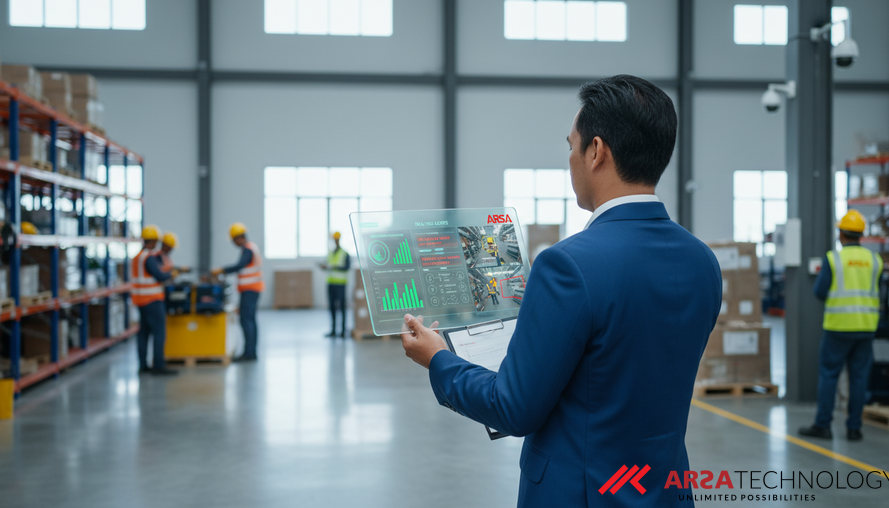
Edge AI refers to artificial intelligence processing that occurs directly on the device or at the local network edge, rather than sending data to a centralized cloud server. For AI safety monitoring, this means that video streams from your existing CCTV cameras are analyzed on-site by dedicated hardware (like an AI Box) or software deployed on local servers.
- Key Advantages of Edge AI for Safety:
- Low Latency: Decisions and alerts are generated in milliseconds, crucial for immediate safety interventions. If a worker enters a restricted area without a hard hat, an alert is triggered instantly.
- Data Privacy & Security: Video footage and sensitive operational data never leave your premises, addressing critical concerns for data sovereignty and compliance (e.g., GDPR, PDPA). This is particularly vital for government, defense, and regulated industries.
- Offline Operation: Edge systems can function entirely without an internet connection, ensuring continuous safety monitoring even during network outages.
- Reduced Bandwidth Costs: Only metadata or aggregated insights are sent over the network, significantly lowering bandwidth requirements and associated cloud data transfer fees.
- Customization & Control: On-premise solutions offer greater flexibility for custom model training and integration with existing security and operational systems.
Cloud AI: Centralized Power and Scalability
Cloud AI, conversely, involves sending video streams or processed data to remote cloud servers for analysis. These powerful data centers can handle massive computational loads and offer seemingly infinite scalability.
- Key Advantages of Cloud AI for Safety:
- Massive Scalability: Easily scale up or down processing power as needed without managing physical hardware.
- Lower Upfront Investment: Often involves subscription models, reducing initial capital expenditure.
- Simplified Management: Cloud providers handle infrastructure maintenance, updates, and security.
- Global Accessibility: Data and insights can be accessed from anywhere with an internet connection.
The Critical Comparison: Edge vs. Cloud for PPE Detection
When evaluating how AI CCTV reduces safety incidents, the choice between Edge and Cloud hinges on several factors, especially for a CFO focused on long-term value and risk management:
| Feature | Edge AI (On-Premise) | Cloud AI |
|---|---|---|
| Data Privacy | Full data ownership, no external transfer | Data resides on third-party servers, potential privacy concerns |
| Latency | Near real-time, critical for immediate alerts | Dependent on network speed, potential delays |
| Operational Reliability | Functions offline, immune to internet outages | Requires constant internet connectivity |
| Cost Structure | Higher upfront hardware/software, lower ongoing bandwidth | Lower upfront, higher ongoing subscription/bandwidth costs |
| Customization | High, integrates deeply with existing IT | Moderate, often limited by vendor’s API/platform |
| Compliance | Easier to meet strict data sovereignty regulations | Requires careful vetting of cloud provider’s compliance |
| Bandwidth | Minimal, only metadata sent | High, requires constant video stream upload |
For facility management, particularly in sensitive or regulated environments, the advantages of Edge AI often outweigh those of cloud-only solutions. The ability to maintain full data ownership and ensure real-time response without cloud dependency is a significant differentiator.
ARSA Basic Safety Guard: An On-Premise Solution for Uncompromised Safety
ARSA Technology offers the ARSA Basic Safety Guard (Software), an enterprise-grade AI video analytics solution designed for on-premise deployment. This software transforms your existing CCTV infrastructure into an intelligent safety monitoring system, delivering the benefits of Edge AI without requiring new, dedicated hardware appliances.
The Basic Safety Guard module is part of ARSA’s comprehensive AI Video Analytics Software overview, engineered to run on your existing servers, private data centers, or edge compute infrastructure. This means you can leverage your current IT investments while gaining advanced capabilities like:
- Precise PPE Detection: Automatically identifies if workers are wearing required safety gear (helmets, vests, masks) in designated zones.
- Restricted Area Monitoring: Detects unauthorized entry into hazardous or off-limits areas, triggering immediate alerts.
- Real-time Safety Violation Alerts: Instant notifications for any detected non-compliance or unsafe behavior, allowing for rapid intervention.
- Comprehensive Compliance Reporting: Generates detailed event logs and historical analytics, invaluable for audits and demonstrating adherence to safety regulations.
- Centralized Safety Monitoring: Analyze multiple camera streams from a central location, providing a unified view of safety across all your sites.
The self-hosted nature of ARSA’s solution ensures full data ownership, meaning all video streams, inference results, and metadata remain entirely within your infrastructure. This eliminates concerns about data leaving your premises and simplifies compliance with stringent data privacy regulations. Furthermore, its hardware-agnostic design allows for flexible deployment on bare metal, virtual machines, or containerized environments, aligning seamlessly with your existing IT strategy. Integration is also straightforward, with a robust REST API for connecting with existing dashboards, alerting systems, and data pipelines.
The ROI of AI Safety Monitoring in Manufacturing and Beyond
Implementing an AI safety system like ARSA Basic Safety Guard translates into tangible financial benefits. A thorough cost benefit analysis AI safety system reveals several key areas of ROI:
1. Reduced Accidents & Injuries: The most direct impact is the prevention of incidents. Each avoided accident saves on medical costs, workers’ compensation claims, legal fees, and potential fines.
2. Increased Productivity: Fewer accidents mean less downtime, maintaining operational continuity. Automated monitoring also frees up human supervisors to focus on higher-value tasks rather than constant manual surveillance.
3. Lower Insurance Premiums: A verifiable track record of enhanced safety and compliance can lead to reduced insurance costs.
4. Improved Compliance: Automated reporting and real-time alerts ensure adherence to industry regulations (e.g., OSHA), minimizing the risk of penalties and reputational damage.
5. Enhanced Employee Morale: A visibly safer workplace fosters trust and improves employee satisfaction, potentially reducing turnover.
Consider a manufacturing plant where a single serious accident can cost hundreds of thousands, if not millions, of dollars in direct and indirect expenses. An investment in an AI safety system that prevents even a few such incidents can achieve payback within months. ARSA’s solutions are engineered for measurable outcomes, providing the data needed to demonstrate this ROI clearly.
Scalability and Future-Proofing Your Safety Infrastructure
One of the significant advantages of ARSA’s AI Video Analytics Software is its scalable by design architecture. You can expand your analytics capacity by simply allocating more compute resources, rather than purchasing and deploying new physical devices at each site. This flexibility is crucial for growing enterprises or those with evolving safety requirements.
Moreover, by choosing a self-hosted, on-premise solution, you future-proof your investment against changes in cloud pricing models or vendor lock-in. You maintain full control over your technology stack and data, ensuring long-term operational independence.
Conclusion: Making an Informed Investment for Workplace Safety
For CFOs evaluating the next strategic investment, the decision to reduce workplace accidents with AI video analytics is clear. The question then becomes *how* to deploy this transformative technology. While cloud solutions offer certain conveniences, the critical requirements for data privacy, real-time response, and operational control in facility management environments strongly favor on-premise Edge AI solutions.
ARSA Technology’s Basic Safety Guard, delivered as a self-hosted software, provides a robust, compliant, and cost-effective path to superior workplace safety. By transforming your existing CCTV into an intelligent monitoring network, you gain unparalleled visibility and control, ultimately safeguarding your workforce and your bottom line. Explore all ARSA products, including our ARSA Self-Check Health Kiosk for comprehensive employee wellness, to build a truly intelligent and secure operational environment.
—
Frequently Asked Questions
What is the typical ROI of AI safety monitoring in manufacturing?
The typical ROI for AI safety monitoring in manufacturing can be achieved within 12-24 months, primarily through significant reductions in manual monitoring workload, defect escape rates, and unauthorized access incidents. These savings come from preventing accidents, reducing downtime, lowering insurance premiums, and improving compliance.
How does AI CCTV reduce safety incidents in industrial settings?
AI CCTV reduces safety incidents by providing continuous, automated monitoring for PPE compliance, restricted area breaches, and unsafe behaviors. It triggers real-time alerts, enabling immediate intervention, and generates detailed reports for proactive safety management and compliance audits, effectively transforming reactive safety into a proactive system.
What are the key differences in cost benefit analysis AI safety system between Edge and Cloud deployments?
Edge AI systems typically have higher upfront costs for hardware and software but lower ongoing operational costs due to minimal bandwidth usage and no recurring cloud subscription fees. Cloud AI systems have lower upfront costs but higher ongoing expenses for data transfer and subscriptions, which can escalate with scale. Edge solutions offer better data ownership and privacy, which can reduce compliance-related risks and costs.
Can ARSA’s AI Video Analytics Software integrate with my existing IT infrastructure?
Yes, ARSA’s AI Video Analytics Software is designed for flexible deployment on existing servers, private data centers, or virtualized environments. It is hardware-agnostic and offers a robust REST API for seamless integration with your current dashboards, alerting systems, and data pipelines, ensuring it fits within your established IT strategy.
—
Stop Guessing, Start Optimizing.
Discover how ARSA Technology drives profit through intelligent systems.
