
How to Automate PPE Compliance Monitoring with AI for Enhanced Workplace Safety
In the demanding world of logistics, safety is paramount. High-traffic environments, heavy machinery, and complex operations inherently carry risks, making robust safety protocols essential. However, relying solely on manual inspections for Personal Protective Equipment (PPE) compliance is often inefficient, inconsistent, and reactive. This is where artificial intelligence steps in, offering a transformative solution. Understanding how to automate PPE compliance monitoring with AI is no longer a luxury but a strategic imperative for any organization committed to safeguarding its workforce and optimizing operations.
AI-powered systems are revolutionizing how businesses approach workplace safety, moving from periodic checks to continuous, real-time oversight. For HSE managers in logistics, this means a significant reduction in administrative burden, a proactive approach to hazard mitigation, and ultimately, a safer working environment.
The Challenges of Manual PPE Compliance in Logistics
Logistics operations, encompassing everything from vast warehouses and distribution centers to bustling shipping yards and associated construction sites, present unique challenges for safety management.
- Vast Areas and High Volume: Monitoring hundreds or thousands of workers across sprawling facilities manually is nearly impossible. Blind spots are inevitable, and human attention can wane.
- Inconsistent Enforcement: Different supervisors or safety officers might interpret compliance rules inconsistently, leading to varying levels of adherence.
- Reactive Measures: Manual inspections often identify non-compliance *after* it has occurred, rather than preventing it in real-time. This reactive approach can be too late to prevent an accident.
- High Costs and Labor: Dedicating personnel solely to PPE checks is a significant operational cost that doesn’t scale efficiently with growth.
- Data Gaps: Manual record-keeping is prone to errors and makes it difficult to generate comprehensive reports or identify long-term trends in non-compliance.
These challenges highlight the urgent need for a more reliable, scalable, and proactive solution.
How to Automate PPE Compliance Monitoring with AI
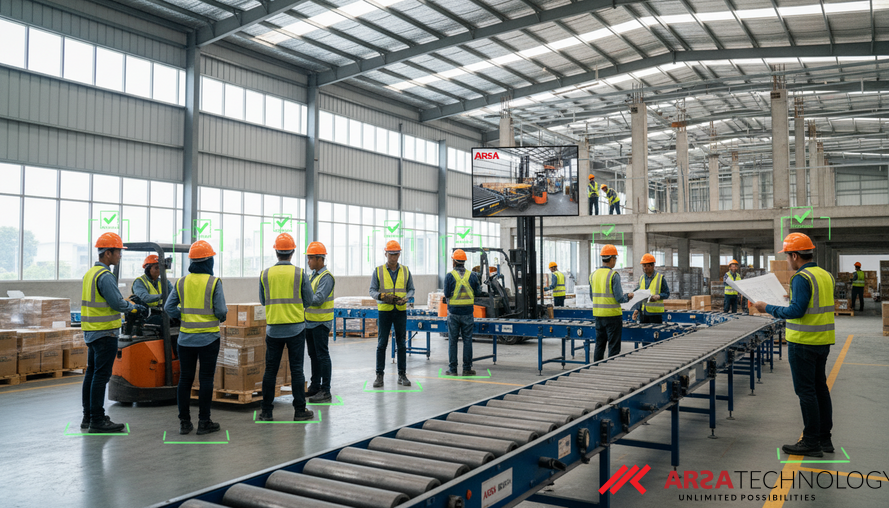
Automating PPE compliance monitoring with AI involves deploying intelligent video analytics systems that can identify and track individuals, detect specific PPE items (like hard hats, safety vests, and masks), and flag non-compliance in real-time. These systems leverage existing CCTV infrastructure, transforming passive surveillance into active, intelligent safety oversight.
The core process involves:
1. Data Ingestion: Video feeds from existing CCTV cameras are fed into the AI system.
2. AI Detection: Sophisticated computer vision models analyze each frame to identify individuals and their attire.
3. PPE Classification: The AI classifies whether required PPE (e.g., hard hats, safety vests) is being worn correctly.
4. Anomaly Detection: If PPE is missing or worn improperly in a designated area, the system identifies this as a safety violation.
5. Real-Time Alerts: Immediate alerts are sent to relevant personnel (e.g., HSE managers, supervisors) via dashboards, email, or SMS.
6. Reporting & Analytics: The system logs all incidents, providing detailed data for compliance reporting, trend analysis, and continuous improvement.
This automated approach ensures consistent monitoring 24/7, eliminating human error and providing objective data for safety audits.
Key Components of an AI PPE Detection System for Construction Sites and Logistics
For environments like construction sites within logistics hubs or busy warehouse floors, a robust AI PPE detection system requires several critical capabilities:
- Automated Hard Hat Detection Using CCTV: This is fundamental. The AI must accurately identify if workers are wearing hard hats in mandatory zones, even in varying lighting conditions or from different camera angles.
- Safety Vest and Other PPE Detection: Beyond hard hats, the system should detect other crucial PPE such as high-visibility vests, safety glasses, and even specialized gear like gloves or respirators, depending on the operational requirements.
- Restricted Area Monitoring: AI can define virtual boundaries and trigger alerts if unauthorized personnel or individuals without proper PPE enter these zones. This is crucial for preventing intrusions into hazardous areas.
- Real-Time Safety Violation Alerts with Edge AI: The ability to process video feeds at the source (the “edge”) is vital. Edge AI minimizes latency, ensuring that alerts are generated almost instantaneously, allowing for immediate intervention. This also reduces bandwidth requirements and keeps sensitive data on-premise.
- Comprehensive Reporting: The system should generate detailed reports on compliance rates, common violations, and incident timestamps, providing actionable insights for safety improvements and audit readiness.
ARSA Technology’s Basic Safety Guard (AI Box) is engineered precisely for these needs. It’s a plug-and-play solution that integrates seamlessly with your existing CCTV infrastructure, processing video streams at the edge for instant, on-premise insights without cloud dependency. This means your data stays within your network, enhancing privacy and security.
Business Outcomes: Driving ROI Through Automated Safety
Implementing an automated PPE compliance monitoring system delivers tangible business outcomes beyond just improved safety:
- Reduced Workplace Accidents: Proactive detection and real-time alerts enable immediate intervention, significantly reducing the likelihood of accidents. This can lead to a projected reduction in workplace accidents by 60% or more, based on industry benchmarks for proactive safety measures.
- Automated Safety Compliance Audits: The system generates comprehensive, objective data logs of all PPE compliance events, simplifying and streamlining safety audits. This ensures readiness for regulatory inspections and reduces the administrative burden on HSE teams.
- Lower Insurance Premiums: A demonstrably safer workplace with a robust, automated compliance system can lead to lower workers’ compensation and liability insurance premiums. Insurers often reward companies that invest in advanced safety technologies.
- Eliminate Manual Safety Inspections: While human oversight remains important, the need for constant, labor-intensive manual inspections is drastically reduced. This frees up safety officers to focus on higher-value tasks like training, risk assessment, and strategic safety planning.
- Operational Efficiency: By reducing accidents and streamlining compliance, operations run more smoothly with fewer disruptions, leading to improved productivity and uptime.
ARSA’s AI Box Series, including the Basic Safety Guard, is designed for rapid deployment, often taking as little as 5 minutes to set up. It works with your existing CCTV cameras, making it a cost-effective upgrade rather than a complete overhaul.
Choosing the Right CCTV AI Analytics for Workplace Safety
When considering CCTV AI analytics for workplace safety, especially for PPE compliance, several factors are crucial:
- Edge vs. Cloud Processing: For sensitive environments or those with limited internet connectivity, edge computing is superior. It ensures data privacy, minimizes latency, and reduces cloud costs. ARSA’s AI Box processes all video streams locally, ensuring data never leaves your network unless explicitly configured.
- Scalability: The solution should be able to scale from monitoring a few cameras to dozens or even hundreds across multiple sites. ARSA offers AI Box models capable of processing up to 3 cameras (Mini PC Model) or up to 30 cameras (Server Model), providing flexible hardware for any scale.
- Accuracy and Reliability: The AI models must be highly accurate to minimize false positives and negatives. ARSA’s solutions are built on proprietary technology proven in demanding environments.
- Integration Capabilities: Look for systems that offer REST API integration, allowing you to connect with existing dashboards, alerting systems, and data pipelines for a unified operational view.
- Vendor Expertise and Support: Partnering with a vendor with a proven track record in AI and IoT solutions, especially in regulated industries, is critical for long-term success. ARSA Technology has over 7 years of experience delivering production-ready systems to government and enterprise clients.
While this article focuses on PPE, ARSA Technology also offers a range of AI and IoT products, including advanced Face Recognition & Liveness API for identity management and access control, further enhancing overall security and operational intelligence.
Conclusion
The ability to how to automate PPE compliance monitoring with AI represents a significant leap forward in industrial safety. For HSE managers in logistics, this technology offers an unparalleled opportunity to create safer, more efficient, and more compliant workplaces. By leveraging edge AI solutions like ARSA’s Basic Safety Guard, organizations can move beyond reactive safety measures to a proactive, intelligent system that protects their most valuable asset: their people. The benefits—from reduced accidents and lower insurance premiums to streamlined audits and enhanced operational control—make AI-powered PPE monitoring a smart investment for the future of logistics safety.
Ready to transform your workplace safety? Contact ARSA’s solutions team today to discuss how our AI Box Series can integrate with your existing infrastructure and elevate your safety protocols.
FAQ
What is an AI PPE detection system for construction sites?
An AI PPE detection system for construction sites uses artificial intelligence and computer vision to automatically identify if workers are wearing required Personal Protective Equipment (PPE) like hard hats, safety vests, and gloves. It analyzes CCTV footage in real-time to detect non-compliance and issue alerts, enhancing safety and streamlining monitoring.
Can automated hard hat detection using CCTV integrate with existing security systems?
Yes, automated hard hat detection systems, particularly those leveraging edge AI like ARSA’s AI Box, are designed to integrate seamlessly with existing CCTV infrastructure. They connect to your current cameras and network, processing video feeds locally without requiring a complete overhaul of your security setup.
How do real-time safety violation alerts with edge AI benefit logistics operations?
Real-time safety violation alerts with edge AI provide immediate notification of non-compliance or hazardous situations, enabling rapid intervention. For logistics, this means faster response to potential accidents, reduced downtime, enhanced data privacy by processing on-device, and improved overall operational reliability and safety across warehouses and distribution centers.
What are the main advantages of using CCTV AI analytics for workplace safety?
The main advantages include continuous, 24/7 monitoring, elimination of human error and inconsistency in inspections, real-time alerts for immediate intervention, comprehensive data for compliance reporting and trend analysis, and significant cost savings by reducing manual labor and potential accident-related expenses.
Stop Guessing, Start Optimizing.
Discover how ARSA Technology drives profit through intelligent systems.
