
How to Choose Between AI Software and AI Hardware for CCTV: A Media Industry Buyer’s Guide
For solutions architects and technology leaders in the media industry, the question of how to choose between AI software and AI hardware for CCTV deployments is becoming increasingly critical. As demand for real-time audience analytics, content optimization, and enhanced security grows, integrating artificial intelligence into existing video infrastructure is no longer optional—it’s a strategic imperative. The decision between a software-centric approach and a hardware-based edge solution profoundly impacts scalability, cost, data privacy, and operational efficiency. This guide will dissect these deployment models, helping you make an informed choice that aligns with your enterprise goals.
The proliferation of CCTV cameras in public spaces, retail environments, and digital out-of-home (DOOH) advertising locations presents a goldmine of untapped data. AI video analytics transforms this passive footage into actionable intelligence, from understanding audience demographics to detecting unusual behavior. However, the path to leveraging this intelligence requires careful consideration of the underlying infrastructure.
Understanding the Core Dilemma: AI Software vs. AI Hardware
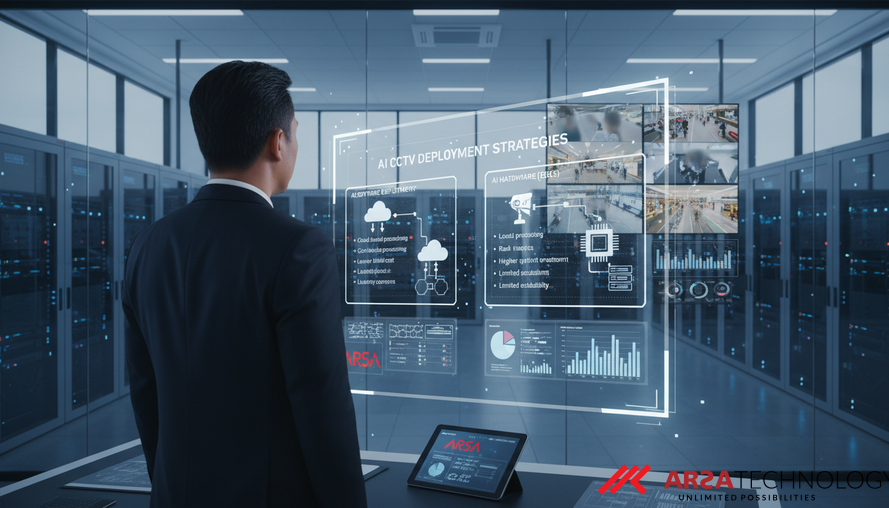
At its heart, the choice between AI software and AI hardware for CCTV boils down to where the computational heavy lifting—the AI inference—occurs.
- AI Video Analytics Software: This model involves deploying AI algorithms and platforms on existing servers, private data centers, or virtualized infrastructure. The software processes video streams centrally or on powerful edge servers, providing flexibility and leveraging current IT investments.
- AI Hardware (Edge AI Box): This refers to dedicated, pre-configured devices (like ARSA’s AI Box Series) that integrate both the hardware and the AI software. These units perform AI processing directly at the source of the video feed, often near the camera, minimizing data transfer and latency.
Each approach offers distinct advantages and is suited for different operational realities and strategic priorities within the media sector.
The Case for AI Video Analytics Software: Centralized Intelligence and Flexibility
Choosing an AI video analytics software solution, such as ARSA’s offerings, is often preferred by enterprises with robust existing IT infrastructure and a need for centralized control and extensive customization. This model allows for maximum flexibility in deployment and resource allocation.
Key Advantages of AI Video Analytics Software:
- No Hardware Dependency: One of the most significant benefits is the ability to deploy AI on existing servers, private data centers, or virtualized environments. This eliminates the need to purchase dedicated AI appliances for every camera or location, significantly reducing initial capital expenditure and leveraging existing IT assets.
- Full Data Ownership and Privacy: For media companies dealing with sensitive audience data, privacy is paramount. With self-hosted AI video analytics software, all video streams, inference results, and metadata remain entirely within your infrastructure. This ensures compliance with stringent data protection regulations like GDPR and Indonesia PDPA, and mitigates concerns about data leaving your control.
- Flexible Deployment Architecture: Whether you prefer bare metal, virtual machines, or containerized environments, AI software can be aligned with your existing IT strategy. This adaptability is crucial for large enterprises with diverse and evolving technology stacks.
- Centralized Processing and Management: Analyze multiple camera streams from a central location, providing a holistic view of your entire network. This is particularly beneficial for managing DOOH advertising campaigns across numerous screens or monitoring audience engagement across a chain of retail media points. A centralized dashboard, like the one offered by ARSA, allows for comprehensive analytics and reporting.
- Scalability by Design: Scaling analytics capacity becomes a matter of allocating more compute resources, not installing new physical devices. This software-defined scalability allows media companies to easily expand their AI capabilities as their network grows or as new analytical needs emerge.
- Integration Ready: Enterprise-grade AI software comes with robust REST APIs, enabling seamless integration with existing dashboards, programmatic advertising platforms, alerting systems, and data pipelines. This ensures that AI-derived insights flow directly into your operational workflows.
For instance, the ARSA DOOH Audience Meter (Software) exemplifies these benefits. It transforms existing CCTV feeds into powerful audience measurement tools, providing demographic profiling, engagement tracking, and campaign effectiveness analytics. Deployed on your servers, it offers network-wide audience analytics and enables programmatic ad optimization, all while maintaining full data control.
When to Use AI Box vs Self-Hosted Analytics: The Edge Hardware Perspective
While AI software offers immense flexibility, there are specific scenarios where dedicated AI hardware, often referred to as an “AI box” or “edge device,” provides a more suitable solution. This is particularly relevant for rapid deployment, remote locations, or situations where network bandwidth is limited.
Key Advantages of AI Hardware (Edge AI Box):
- Plug-and-Play Deployment: AI boxes are typically pre-configured, integrated edge AI hardware solutions that combine AI-ready hardware with pre-installed video analytics software. This makes them ideal for rapid rollout projects, requiring minimal IT overhead and expertise for on-site deployment.
- Distributed Edge Processing: The AI processing happens directly at the edge, near the camera. This minimizes latency, as data doesn’t need to travel to a central server for analysis. For real-time applications like immediate audience engagement detection or security alerts, this can be a critical factor.
- Minimal Infrastructure Management: For sites with limited local IT infrastructure or remote locations, an AI box provides a self-contained solution. It reduces the need for extensive server racks or complex network configurations at each individual site.
- Offline Operation: Since processing occurs locally, AI boxes can operate effectively even without a constant internet connection, making them suitable for environments with unreliable network access.
- Cost-Effective for Specific Scenarios: While the per-unit cost might be higher than just software, the total cost of ownership can be lower for distributed deployments where network infrastructure upgrades or extensive IT support at each site would be prohibitive.
ARSA’s AI Box Series offers such turnkey edge systems, providing a 5-minute setup and working with existing CCTV, making them perfect for quick site-level rollouts.
AI Video Analytics Software vs AI Box Comparison: Making the Right Choice
The decision between an edge device vs on-premise server for video AI hinges on several factors, and a solutions architect must weigh these carefully.
| Feature / Consideration | AI Video Analytics Software (On-Premise Server) | AI Hardware (Edge Device / AI Box) |
|---|---|---|
| Deployment Speed | Requires server setup, software installation, and configuration. | Plug-and-play, rapid deployment, minimal on-site IT. |
| Processing Location | Centralized processing on your servers/data center. | Distributed processing at the edge, near the camera. |
| Latency | Potentially higher latency if video streams travel far to central server. | Ultra-low latency, real-time insights at the source. |
| Data Ownership/Privacy | Full data ownership, all data remains within your infrastructure. | Full data ownership, all data remains within the local device/network. |
| Scalability | Scale by allocating more compute resources to central servers. | Scale by deploying more individual AI boxes. |
| Existing Infrastructure | Leverages existing servers, virtual machines, and IT infrastructure. | Works with existing CCTV, but requires dedicated hardware units. |
| IT Management Overhead | Requires IT staff for server maintenance, software updates, and network management. | Minimal local IT management; often managed centrally via dashboard. |
| Network Bandwidth | Requires sufficient bandwidth to stream video to central processing. | Reduces bandwidth needs by processing video locally; sends only metadata. |
| Use Cases | Large-scale, centralized analytics (e.g., network-wide DOOH analytics). | Rapid deployment, remote sites, localized real-time alerts (e.g., single store). |
| Customization | High degree of customization for software, integrations, and models. | Typically pre-configured; customization might be more complex or limited. |
For media enterprises, especially those managing extensive DOOH networks, the ability to achieve network-wide audience analytics and centralized campaign management often points towards the advantages of a robust AI video analytics software platform. This allows for a unified view of performance, easier A/B testing across campaigns, and more sophisticated data aggregation for proving DOOH ROI at scale.
An AI CCTV Deployment Model Guide for Enterprises
When evaluating your options, consider these critical questions:
1. What is your primary goal? Are you looking for comprehensive, aggregated insights across many locations (software), or localized, immediate alerts at individual sites (hardware)?
2. What is your existing IT infrastructure like? Do you have powerful servers and a skilled IT team capable of managing software deployments, or do you need a simpler, plug-and-play solution for multiple distributed sites?
3. What are your data privacy and compliance requirements? Both on-premise software and edge hardware offer strong data sovereignty, but ensure the chosen solution explicitly supports your regulatory needs (e.g., GDPR, PDPA). ARSA, for example, prioritizes privacy with its self-hosted options, including the ARSA Face Recognition & Liveness SDK for highly regulated environments.
4. What is your budget and timeline? Software might have lower upfront hardware costs but require more internal IT resources. Hardware might have higher per-unit costs but faster deployment times.
5. How critical is real-time, ultra-low latency processing? While software can offer real-time capabilities, edge hardware inherently minimizes network travel time for data.
For a media company focused on optimizing advertising revenue and understanding audience behavior across a vast network of digital screens, the ARSA AI Video Analytics Software, particularly the DOOH Audience Meter, offers a compelling solution. It provides the centralized processing, multi-screen management, and REST API integration needed to turn raw video into powerful business intelligence, without the burden of managing countless individual edge devices.
Ultimately, the best choice is one that aligns with your specific operational context, strategic objectives, and long-term vision for AI integration. ARSA Technology provides both robust AI video analytics software and flexible AI Box Series hardware, ensuring that enterprises can find the perfect fit for their unique needs. Explore all ARSA products to see the full range of possibilities.
Frequently Asked Questions
What are the main benefits of using AI video analytics software for audience measurement?
AI video analytics software for audience measurement, like the ARSA DOOH Audience Meter, offers centralized control, network-wide analytics, detailed demographic profiling, and engagement tracking. It allows media companies to optimize programmatic ad campaigns, prove ROI at scale, and manage multiple screens efficiently from a single dashboard, all while maintaining full data ownership.
When should an enterprise consider an AI box vs self-hosted analytics for their CCTV infrastructure?
An enterprise should consider an AI box for rapid, plug-and-play deployment at remote sites, or when ultra-low latency processing at the source is critical, and local IT infrastructure is minimal. Self-hosted analytics software is better suited for organizations with existing server infrastructure that prefer centralized processing, flexible deployment, and extensive customization capabilities for their AI CCTV deployment model.
How does ARSA Technology ensure data privacy with its on-premise AI solutions?
ARSA Technology ensures data privacy by offering fully self-hosted, on-premise AI solutions where all video streams, inference results, and metadata remain entirely within the client’s infrastructure. This eliminates cloud dependency and external data transfer, allowing organizations to define their own retention and access policies, aligning with strict compliance requirements like GDPR and Indonesia PDPA.
Can ARSA’s AI video analytics software integrate with existing media management platforms?
Yes, ARSA’s AI video analytics software is designed to be integration-ready. It features a robust REST API that allows seamless connection with existing media management platforms, programmatic advertising systems, dashboards, and data pipelines, ensuring that AI-derived insights can be easily incorporated into current operational workflows.
—
For a deeper dive into how ARSA Technology can transform your media operations with intelligent AI solutions, contact our solutions team today.
Stop Guessing, Start Optimizing.
Discover how ARSA Technology drives profit through intelligent systems.
