
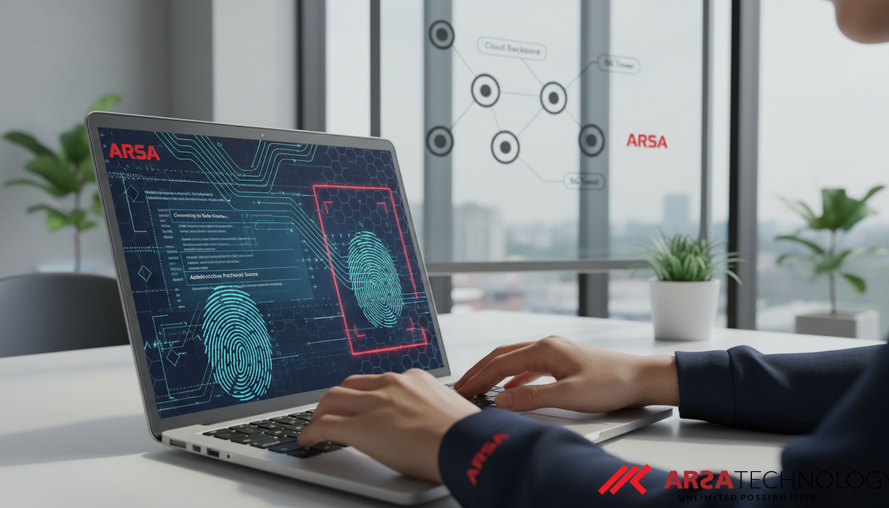

How to Integrate Face Recognition API into Mobile App for Enhanced Security and User Experience
In today’s fast-paced digital landscape, mobile applications are at the forefront of customer interaction, especially within the telecommunications sector. As these apps handle increasingly sensitive data and transactions, the demand for robust, user-friendly security measures has never been higher. For software developers and product managers, understanding how to integrate face recognition API into mobile app is no longer a niche skill but a critical component of modern identity management strategies. This integration offers a powerful solution to prevent identity fraud, streamline user onboarding, and provide a seamless, secure experience that keeps users engaged and protected.
The shift towards biometric authentication addresses several pain points: the cumbersome nature of traditional passwords, the rising threat of sophisticated cyberattacks, and the need for rapid, reliable identity verification. By embedding face recognition capabilities directly into mobile applications, businesses can transform their security posture and significantly improve the customer journey. ARSA Technology, with its advanced ARSA Face Recognition & Liveness API, empowers developers to achieve this transformation with ease and confidence.
The Strategic Imperative for Face Recognition in Mobile Apps
Mobile applications are the primary touchpoint for millions of users, particularly in industries like telecommunications, banking, and digital services. From activating new SIM cards to accessing mobile banking or managing personal data, the need for ironclad identity verification is paramount. Traditional methods, such as SMS OTPs or password-based logins, are increasingly vulnerable to phishing, SIM-swap fraud, and other social engineering attacks. Face recognition offers a multi-layered defense, leveraging unique biological traits to confirm a user’s identity.
For telecommunications providers, this means more secure customer onboarding, preventing fraudulent account creations, and protecting existing customer accounts from unauthorized access. The ability to verify a user’s identity in real-time, directly from their smartphone camera, drastically reduces operational costs associated with manual verification processes and enhances compliance with stringent regulatory requirements.
Understanding the Core Components: How to Integrate Face Recognition API into Mobile App
Integrating face recognition into a mobile app involves several key components, all orchestrated through a robust API. At its heart, a face recognition API provides the algorithms and infrastructure to detect, analyze, and compare facial features.
The process typically begins with user enrollment, where a user registers their face by taking a selfie or a short video. This biometric template is then securely stored in a database. Subsequently, for authentication or verification, the user takes another selfie, which the API compares against their stored template.
ARSA’s Face Recognition & Liveness overview offers a comprehensive identity layer, not just a simple comparison endpoint. It includes:
- Face Database Management: Securely enroll, update, and remove identities, managing collections per application or tenant.
- 1:1 Face Verification: Confirms if two faces belong to the same person, ideal for login and step-up authentication.
- 1:N Face Identification: Identifies a person against a larger face database, crucial for access control and monitoring.
These capabilities are delivered via a cloud-hosted REST API, making it accessible and scalable for developers. The API’s 99.67% accuracy, benchmarked on the Labeled Faces in the Wild (LFW) dataset, ensures reliable performance, a critical factor for high-stakes applications.
Beyond Basic Login: Add Face Liveness Check to Login Flow
One of the most significant advancements in biometric security is liveness detection. Without it, a simple photograph or video could potentially bypass face recognition systems, rendering them vulnerable to spoofing attacks. To truly secure mobile applications, it’s essential to add face liveness check to login flow.
ARSA’s API incorporates both active and passive liveness detection. Active liveness detection prompts the user to perform specific actions, such as blinking, turning their head, or speaking, to prove they are a live person. Passive liveness detection, on the other hand, uses advanced AI algorithms to analyze subtle cues like skin texture, reflections, and micro-movements to detect signs of spoofing without requiring explicit user actions.
This dual-layer approach is vital for applications requiring high assurance, such as e-KYC (Electronic Know Your Customer) onboarding in telecommunications. By ensuring the person presenting their face is physically present and not a fraudster using a mask, photo, or deepfake, businesses can significantly mitigate identity fraud risks. This proactive security measure is a cornerstone of trust in digital interactions.
Choosing the Right Face Verification API for SaaS Platform
For SaaS platforms, especially those operating in regulated industries like telecommunications, selecting the right face verification API for SaaS platform is a strategic decision. The chosen API must not only be accurate and reliable but also scalable, secure, and easy to integrate.
Key considerations for SaaS platforms include:
- Scalability: Can the API handle a growing user base and increasing transaction volumes without performance degradation? ARSA’s API is designed to scale, supporting up to 500,000 API calls per month in its enterprise tier.
- Integration Ease: A well-documented REST API with clear examples and a developer-friendly sandbox is crucial for rapid development cycles. ARSA’s API is available on RapidAPI, offering a streamlined integration experience.
- Security & Compliance: Data privacy (e.g., GDPR, Indonesia PDPA) and robust encryption (AES-256) are non-negotiable. Cloud-hosted solutions must demonstrate stringent data handling practices.
- Liveness Detection: As discussed, this is critical for preventing spoofing and ensuring the integrity of verification.
- Cost-Effectiveness: Transparent pricing models that align with usage are important for managing operational expenses.
ARSA’s API meets these criteria, providing a robust and secure foundation for any SaaS platform looking to implement advanced biometric verification.
Leveraging a Face Recognition REST API with Free Tier for Development
For developers exploring face recognition capabilities, the availability of a face recognition REST API with free tier is a significant advantage. It allows for experimentation, proof-of-concept development, and initial integration testing without upfront financial commitment.
ARSA Technology understands the needs of developers. Its Face Recognition & Liveness API is available on RapidAPI with a BASIC Free Tier, offering 100 API calls per month and supporting a database of up to 100 Face IDs. This allows developers to:
- Test core functionalities: Experiment with 1:1 face matching and active liveness detection in a sandbox environment.
- Understand API structure: Familiarize themselves with the REST API endpoints, request/response formats, and authentication mechanisms.
- Build prototypes: Quickly develop and test initial integrations into mobile apps or other platforms.
This accessibility lowers the barrier to entry for adopting advanced biometric solutions, enabling developers to innovate and build secure applications more efficiently.
Scaling Identity Management with Face ID API with 1:N Search Capability
As mobile applications grow and serve larger user bases, the ability to perform efficient identity searches becomes crucial. A face ID API with 1:N search capability allows applications to identify a user from a large database of enrolled faces, rather than just verifying against a single known identity. This is particularly useful for:
- Access Control: Identifying authorized personnel entering restricted areas within a facility.
- Customer Service: Quickly identifying a customer at a service counter without requiring them to present an ID.
- Fraud Detection: Cross-referencing new enrollments against a database of known fraudsters.
In the telecommunications context, a 1:N search could enhance security at physical stores or service centers, allowing staff to quickly identify registered customers or flag individuals on a watchlist. ARSA’s API provides ranked matches with confidence scores, allowing applications to make informed decisions based on the identification results. This capability transforms passive identity data into active intelligence, enhancing both security and operational efficiency.
Business Outcomes and ROI for Telecommunications
Implementing ARSA’s Face Recognition & Liveness API in telecommunications mobile apps translates into tangible business outcomes and a strong return on investment:
- Fraud Prevention: By integrating robust liveness detection and accurate face verification, telecommunication companies can significantly prevent identity fraud during new subscriber onboarding and account access. This protects both the company and its customers from financial losses and reputational damage.
- Automated e-KYC Onboarding: Automating the KYC process with face recognition reduces the need for manual document checks and in-person verification. This speeds up customer acquisition, reduces operational costs by up to 80%, and improves the overall customer experience.
- Enhanced Customer Experience: Sub-second verification response times mean users can log in or authorize transactions almost instantly, eliminating friction and improving satisfaction.
- Regulatory Compliance: ARSA’s solutions are built with data privacy in mind, offering GDPR and Indonesia PDPA compliance readiness, which is crucial for regulated industries.
- Operational Efficiency: Reallocating resources from manual verification to other critical areas, leading to more efficient operations and better resource utilization.
ARSA Technology has a proven track record, with over 7 years of experience delivering production-ready AI and IoT solutions to government and enterprise clients, including those in critical sectors. Our commitment to accuracy, scalability, privacy, and operational reliability ensures that our solutions deliver measurable impact. For example, our work with government agencies on vehicle registration platforms demonstrates our capability in high-volume, secure identity management, which is directly transferable to telecommunications challenges. While our ARSA Traffic Monitor (Software) focuses on vehicle analytics, it underscores our broader expertise in real-time AI processing for critical infrastructure.
Conclusion
The question of how to integrate face recognition API into mobile app is answered by a clear path towards enhanced security, streamlined operations, and superior user experience. For software developers in the telecommunications industry, ARSA Technology’s Face Recognition & Liveness API provides a powerful, accurate, and scalable solution. By leveraging its 1:1 verification, 1:N identification, and advanced active and passive liveness detection, businesses can build mobile applications that are not only secure against modern threats but also delightful for their users.
Ready to transform your mobile application’s security and user experience? Explore the capabilities of ARSA’s Face Recognition & Liveness API and begin your journey towards a more secure digital future.
FAQ
What is a face verification API for SaaS platform and why is it important?
A face verification API for a SaaS platform is a cloud-based service that allows applications to confirm a user’s identity by comparing their live facial scan against a stored biometric template. It’s crucial for secure user onboarding (e-KYC), preventing fraud, and ensuring that only legitimate users access sensitive data or services within the SaaS environment.
How does an active liveness check enhance mobile app security?
An active liveness check enhances mobile app security by requiring the user to perform specific, guided actions (like blinking or turning their head) during face verification. This proves the user is a live person and not a fraudster attempting to spoof the system with a photo, video, or mask, thereby preventing sophisticated identity fraud.
Can I test a face recognition REST API with a free tier before committing?
Yes, many providers, including ARSA Technology, offer a face recognition REST API with a free tier. This allows developers to test core functionalities, understand the API’s structure, and build prototypes without any upfront cost, facilitating a low-risk evaluation and integration process.
What are the benefits of a face ID API with 1:N search capability for large user bases?
A face ID API with 1:N search capability allows an application to identify a user from a large database of many individuals, rather than just verifying against a single known identity. For large user bases, this enables efficient access control, rapid customer identification in various scenarios, and proactive fraud detection by cross-referencing against watchlists.
—
Stop Guessing, Start Optimizing.
Discover how ARSA Technology drives profit through intelligent systems.
