
How to Reduce Occupational Health Costs with AI Health Kiosk for Clinics and Workplaces
For CFOs and plant managers, the escalating burden of occupational health costs is a persistent challenge. Traditional health screening methods are often time-consuming, resource-intensive, and prone to inconsistencies, directly impacting productivity and bottom lines. The good news is that innovative technology offers a powerful solution. Implementing an AI health kiosk can significantly reduce occupational health costs with AI health kiosk technology, transforming how enterprises manage employee wellness and safety.
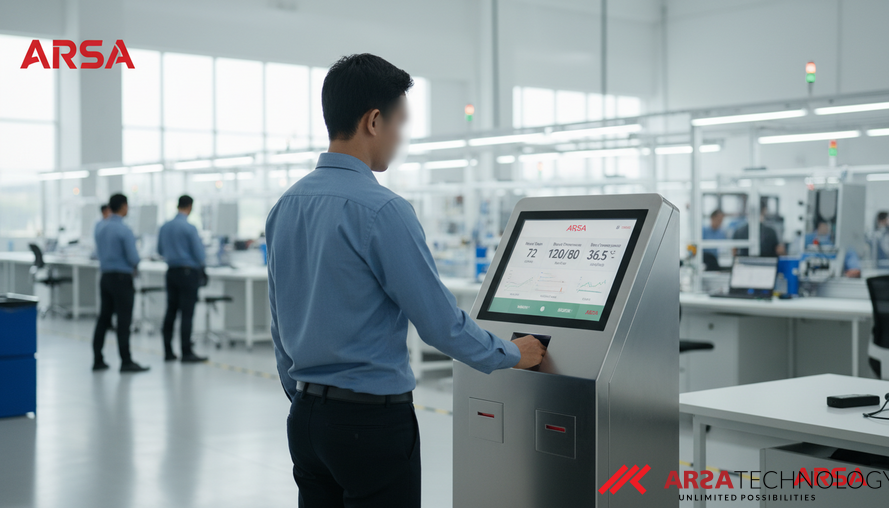
ARSA Technology’s Self-Check Health Kiosk represents a paradigm shift in corporate health management. This AI & IoT-powered solution provides autonomous, medical-grade health screening, enabling organizations to streamline preventive care, enhance early detection of employee health issues, and ultimately achieve substantial cost savings.
The Rising Burden of Occupational Health Costs
Occupational health expenses encompass everything from routine check-ups and sick leave to workers’ compensation claims and long-term disability. These costs are often exacerbated by:
- Clinic Congestion: Traditional vital sign checks can consume a significant portion of healthcare staff time, creating bottlenecks and delaying patient flow in occupational health clinics.
- Workplace Health Blind Spots: Without real-time, consistent data, corporations often miss early indicators of chronic conditions or emerging health trends among their workforce. This leads to undetected issues that compound into greater productivity losses and higher treatment costs down the line.
- Inconsistent Screening: Manual measurements introduce human error, and fragmented paper records hinder comprehensive trend analysis, making proactive intervention difficult.
- High Per-Screening Costs: Each traditional, nurse-administered vital check incurs a direct cost, making large-scale preventive health programs economically unsustainable for many organizations.
These challenges highlight the urgent need for a more efficient, accurate, and scalable approach to workplace health.
How AI Health Kiosks Reduce Occupational Health Costs with AI Health Kiosk
An AI health kiosk directly addresses these pain points by automating and digitizing the health screening process. The ARSA Self-Check Health Kiosk, for instance, allows employees to perform comprehensive vital sign checks autonomously in just 90 seconds. This self-service model offers several key advantages for cost reduction:
- Labor Reallocation: By automating routine screenings, the kiosk frees up valuable medical personnel time. This means nurses and other healthcare staff can be reallocated to critical care or more complex consultations, rather than spending 40-60% of their shift on basic vital checks. This directly translates to reduced labor costs per screening.
- Increased Throughput: The speed and efficiency of self-service kiosks allow for a higher volume of screenings in less time, ensuring more employees can be monitored regularly without extending clinic hours or hiring additional staff.
- Elimination of Human Error: Medical-grade sensors and AI-powered software ensure consistent, accurate data capture, reducing the risk of misdiagnosis or missed early warning signs due to manual errors.
- Data-Driven Insights: All vital user data is recorded and displayed on a web-based dashboard, providing employers with aggregated, de-identified analytics for population health management. This enables targeted wellness programs and proactive interventions, preventing minor issues from becoming major expenses.
Beyond Cost Savings: The ROI of Employee Health Screening Kiosk
While cost reduction is a primary driver, the ROI of employee health screening kiosk extends far beyond immediate savings. ARSA’s solution typically achieves ROI in 14-18 months, primarily through labor reallocation and increased patient throughput. However, the strategic returns are even more significant:
- Enhanced Productivity: Healthier employees are more productive. By facilitating regular check-ups and early intervention, kiosks contribute to a healthier workforce, reducing absenteeism and presenteeism.
- Reduced Insurance Premiums: Data-backed wellness programs, enabled by consistent health monitoring, can be leveraged to negotiate lower insurance premiums, offering a tangible financial benefit.
- Improved Employee Morale: Offering convenient, private, and efficient health screening demonstrates a commitment to employee well-being, fostering a positive workplace culture and potentially reducing turnover.
- Compliance Support: For industries with strict occupational health and safety regulations, automated screening provides auditable records and ensures consistent compliance, mitigating legal and financial risks.
Key Features of ARSA’s Self-Check Health Kiosk for Clinics
The Self-Check Health Kiosk overview highlights its comprehensive capabilities designed for enterprise environments:
- Multi-Parameter Screening: Guided interface for 8-parameter screening including blood pressure monitoring, heart rate monitoring, blood oxygen measurement (SpO2), body temperature, BMI, and optional modules for glucose and cholesterol. It also includes an AI-powered Romberg test to assess balance.
- Medical-Grade Sensors: Ensures high accuracy with FDA/CE-certified sensors, offering ±3mmHg BP accuracy and ±0.2°C temperature precision.
- Smart Triage Alerts: AI flags critical readings (e.g., hypertension >140/90, fever >38°C, SpO2 <94%) and automatically routes alerts to on-call physicians, reducing emergency response time by up to 73%.
- Instant Digital Records: Encrypted health profiles are stored in a secure cloud dashboard, with patients receiving SMS/email reports within 60 seconds.
- Data Sovereignty: Offers on-premise or hybrid cloud deployment options, ensuring full compliance with EU GDPR and Indonesia PDPA, a critical factor for sensitive health data.
- API Integration: Seamlessly integrates with existing corporate wellness platforms, HR systems, or electronic health records (EHR) via REST API.
Implementing Preventive Health Monitoring for Manufacturing Workers
Manufacturing environments, in particular, benefit immensely from preventive health monitoring for manufacturing workers. Regular, accessible health checks can identify fatigue, stress, or underlying conditions that might impair judgment or physical capability, directly impacting safety. The ARSA Self-Check Health Kiosk can be deployed as an on-site employee health station, automating pre-shift health screening and ensuring workers are fit for duty. This proactive approach not only safeguards employees but also reduces the likelihood of accidents, minimizing costly downtime and workers’ compensation claims. For broader safety monitoring, ARSA also offers solutions like the ARSA Basic Safety Guard (Software), which can detect PPE compliance and restricted area intrusions, complementing health screening with physical safety measures.
Ensuring Early Detection Employee Health Issues Technology
The ability for early detection employee health issues technology is paramount in mitigating long-term health costs. The ARSA Health Kiosk’s smart triage alerts and instant digital records empower occupational health clinics to intervene quickly when critical readings are detected. This proactive system moves beyond reactive treatment, allowing for timely referrals, lifestyle interventions, and follow-up care that can prevent conditions from worsening. For example, consistent monitoring of blood pressure can help identify hypertension early, allowing for management before it leads to more severe cardiovascular events. This systematic approach to early detection is a cornerstone of effective occupational health management.
The Future of Workplace Wellness: Self-Service Health Check Reduces Clinic Visits
The convenience of a self-service health check reduces clinic visits for routine screenings, alleviating the burden on healthcare facilities and making health monitoring more accessible for employees. This shift towards autonomous health screening is not just about efficiency; it’s about empowering individuals to take a more active role in their health. For corporations and facilities, this means:
- Reduced Administrative Overhead: Less scheduling, fewer forms, and automated data entry significantly cut down on administrative tasks associated with traditional health checks.
- Enhanced Accessibility: Kiosks can be placed in convenient locations within the workplace, making it easier for employees to conduct quick checks without disrupting their work schedule or requiring travel to an off-site clinic.
- Scalability: A single dashboard can manage 1 to 1,000 kiosks across multiple sites, allowing for scalable health programs without compromising data quality or oversight.
ARSA Technology offers a comprehensive suite of all ARSA products designed to enhance operational intelligence and safety across various industries, with the Self-Check Health Kiosk being a vital component for health and wellness.
Conclusion
For enterprises seeking to optimize their operational efficiency and financial health, investing in an AI health kiosk is a strategic imperative. The ability to reduce occupational health costs with AI health kiosk technology is no longer a futuristic concept but a tangible reality. By embracing autonomous, medical-grade screening, organizations can not only cut expenses but also foster a healthier, more productive workforce, ensuring compliance and demonstrating a commitment to employee well-being.
Ready to transform your occupational health strategy and realize significant ROI? Contact ARSA solutions team today for a consultation and discover how our Self-Check Health Kiosk can benefit your organization.
—
FAQ
- What vital signs can the ARSA Self-Check Health Kiosk measure for early detection of employee health issues?
The ARSA Self-Check Health Kiosk measures multiple parameters including blood pressure, heart rate, SpO2 (blood oxygen saturation), body temperature, and BMI. It also features an AI-powered Romberg test for balance assessment. Optional modules can extend screening to glucose and cholesterol, providing comprehensive data for early detection of employee health issues.
- How does the ARSA Self-Check Health Kiosk contribute to the ROI of employee health screening kiosk investments?
The ARSA Self-Check Health Kiosk contributes to ROI by significantly reducing labor costs through automation, freeing up medical staff for critical tasks. It also increases screening throughput, improves data accuracy, and facilitates early intervention, which can lead to reduced absenteeism, lower insurance premiums, and fewer costly health incidents, typically achieving ROI in 14-18 months.
- Can the ARSA Health Kiosk be integrated for preventive health monitoring for manufacturing workers?
Absolutely. The ARSA Health Kiosk is ideal for preventive health monitoring for manufacturing workers. It can be deployed on-site for convenient, automated pre-shift screenings, helping to identify potential health issues or fatigue before they impact safety or productivity, and providing real-time data for compliance tracking and targeted wellness programs.
- How does a self-service health check reduce clinic visits and administrative burden?
A self-service health check reduces clinic visits by allowing employees to perform routine vital sign screenings autonomously at convenient on-site locations. This minimizes the need for appointments, travel to off-site clinics, and waiting times. It also significantly cuts down on administrative tasks like scheduling and manual data entry, streamlining the entire health monitoring process.
—
Stop Guessing, Start Optimizing.
Discover how ARSA Technology drives profit through intelligent systems.
