
How to Reduce Occupational Health Costs with AI Health Kiosk Technology: A CFO’s Guide
In today’s competitive industrial landscape, managing operational expenses is paramount. For CFOs and plant managers, occupational health costs represent a significant, often underestimated, line item. From absenteeism and presenteeism to insurance premiums and regulatory fines, the financial burden of employee health issues can severely impact profitability. The good news is that innovative solutions exist. By strategically implementing advanced technology, enterprises can effectively reduce occupational health costs with AI health kiosk systems, transforming reactive care into proactive wellness management.
This guide explores the critical factors to evaluate when considering AI-powered health kiosks, focusing on how they deliver measurable ROI and enhance workforce well-being.
The Hidden Financial Drain of Traditional Occupational Health
Traditional approaches to occupational health often involve periodic, manual screenings or reliance on external clinics. While necessary, these methods come with inherent inefficiencies and costs:
- Time Consumption: Routine vital checks can consume 40-60% of healthcare staff time, creating bottlenecks and delaying patient flow in clinics. For employees, time spent traveling to and waiting at clinics translates directly into lost productivity.
- Inconsistent Data & Delayed Intervention: Manual measurements are prone to human error, and fragmented paper records hinder comprehensive trend analysis. This often means chronic conditions or emerging health risks go undetected until they become severe, leading to higher treatment costs and prolonged absences.
- High Per-Screening Costs: Nurse-administered vital checks can cost $15-30 per session. Scaling preventive health programs across a large workforce using traditional methods quickly becomes economically unsustainable.
- Workplace Health Blind Spots: Without real-time, consistent data, corporations lack visibility into the overall health status of their employee population. This prevents targeted wellness initiatives and leaves businesses vulnerable to unexpected productivity losses.
These challenges highlight the urgent need for a more efficient, accurate, and scalable solution.
Why AI Health Kiosks are a Game-Changer for Industrial Workplaces
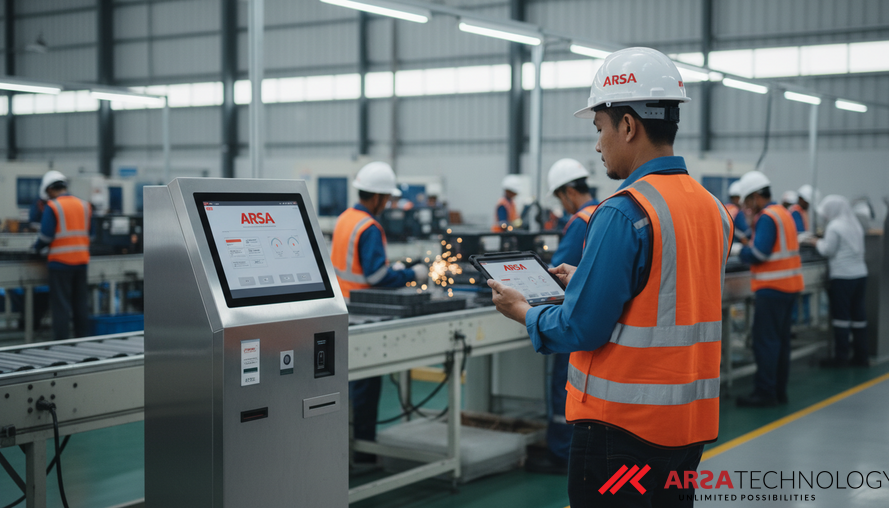
AI and IoT-powered health kiosks represent a paradigm shift in occupational health. These autonomous stations enable employees to conduct self-service health checks quickly and accurately, right on-site. For industries like manufacturing, where pre-shift screenings and continuous health monitoring are crucial, this technology offers unparalleled benefits.
By integrating medical-grade sensors with intelligent software, these kiosks provide instant vital sign measurements, digital record-keeping, and smart triage alerts. This not only streamlines health monitoring but also empowers employees to take a more active role in their well-being.
Key Evaluation Criteria for Choosing Blood Pressure Monitoring Technology and Beyond
When selecting an AI health kiosk, particularly for critical functions like blood pressure monitoring, several factors must be rigorously evaluated to ensure it aligns with your operational and financial objectives.
1. Accuracy and Medical-Grade Certification
The reliability of health data is non-negotiable. Ensure the kiosk utilizes FDA/CE-certified sensors for all measurements, especially for blood pressure, heart rate, and SpO2. Precision in readings (e.g., ±3mmHg for BP, ±0.2°C for temperature) is crucial for credible health assessments and early detection of employee health issues technology.
2. Comprehensive Parameter Measurement
Beyond basic blood pressure monitoring, evaluate the range of vital signs the kiosk can measure. A robust system, like the ARSA Self-Check Health Kiosk, typically includes:
- Blood Pressure
- Heart Rate
- SpO2 (Blood Oxygen Saturation)
- Body Temperature
- BMI (Body Mass Index)
- AI-powered Romberg Test (for balance assessment, critical for roles requiring physical stability)
- Optional modules for glucose and cholesterol.
A broader range of parameters provides a more holistic view of employee health, supporting comprehensive preventive health monitoring for manufacturing workers and other industrial staff.
3. Speed and Ease of Use (Self-Service Capability)
For busy industrial environments, speed is essential. The kiosk should offer multi-parameter measurements in under 90 seconds with a guided, multi-language user interface and voice guidance. This self-service health check reduces clinic visits and minimizes time away from the production floor, maximizing operational efficiency.
4. Data Management, Security, and Compliance
Data sovereignty and security are paramount. Look for systems that offer:
- Encrypted Digital Records: Health profiles stored securely in a cloud dashboard, with options for on-premise or hybrid cloud deployment.
- GDPR/HIPAA/PDPA Compliance: Crucial for protecting sensitive employee health information. ARSA’s solutions are designed with full compliance in mind.
- API Integration: Seamless integration with existing HR, EHS (Environmental, Health, and Safety), or corporate wellness platforms is vital for centralized data management and trend analysis.
- Role-Based Access Control: Ensures only authorized personnel can access specific data.
5. Smart Triage and Alerting Systems
An effective AI health kiosk should do more than just collect data. It should intelligently flag critical readings (e.g., hypertension >140/90, fever >38°C, SpO2 <94%) and automatically route alerts to on-call physicians or designated EHS personnel. This capability significantly reduces emergency response time, potentially by up to 73%, and enables timely intervention.
6. Scalability and Centralized Management
Consider how easily the system can scale across multiple sites or a growing workforce. A single, intuitive dashboard should be able to manage hundreds or even thousands of kiosks, facilitating centralized firmware updates, predictive maintenance, and aggregated analytics for population health management.
How ARSA’s AI Health Kiosk Helps Reduce Occupational Health Costs with AI Health Kiosk
ARSA Technology’s Self-Check Health Kiosk overview is engineered to address the core challenges of occupational health, offering a robust solution that directly contributes to cost reduction and improved workforce wellness. Our AI & IoT-powered kiosks provide autonomous health screening, delivering fast, accurate results without requiring medical personnel for every check.
For a plant manager, this means automating pre-shift health screening, ensuring workers are fit for duty before they even step onto the production line. For a CFO, the benefits translate into tangible financial returns. The kiosk effectively replaces the need for 2-3 full-time equivalent (FTE) nurses per shift for routine vital checks, freeing up valuable healthcare staff for critical care or other essential duties. This labor reallocation, combined with increased patient throughput, allows enterprises to achieve a significant ROI of employee health screening kiosk typically within 14-18 months.
Beyond direct labor savings, the ARSA Health Kiosk enables proactive health management. Its capability for early detection of employee health issues technology means conditions like hypertension or low SpO2 can be identified and addressed before they escalate into costly medical emergencies or prolonged absences. This preventive health monitoring for manufacturing workers not only safeguards employee well-being but also reduces long-term healthcare expenditures and insurance claims.
The kiosk’s self-service model ensures that a self-service health check reduces clinic visits, saving both employee time and company resources. Furthermore, the integrated health dashboard provides de-identified, aggregated analytics for employers, allowing for data-backed corporate wellness programs that can lead to reduced insurance premiums.
Beyond Cost Savings: Proactive Wellness and Compliance
While cost reduction is a primary driver, the benefits of an AI health kiosk extend far beyond financial metrics.
Enhanced Safety and Compliance: In high-risk environments, ensuring employee fitness is critical. The ARSA Health Kiosk, with its comprehensive vital sign monitoring and AI-powered Romberg test, can be integrated into access control systems, ensuring only medically cleared personnel enter restricted areas. This complements other safety solutions like the ARSA Basic Safety Guard (AI Box) which monitors PPE compliance.
Improved Employee Morale and Productivity: Offering convenient, on-site health screening demonstrates a commitment to employee well-being. Healthy employees are more engaged, productive, and less prone to accidents. The ease of access encourages regular checks, fostering a culture of health within the organization.
Strategic Decision-Making: The aggregated, anonymized health data provides invaluable insights into population health trends. This allows management to implement targeted wellness interventions, optimize resource allocation, and make informed decisions about workplace health strategies.
Conclusion
For enterprises seeking to optimize their operational efficiency and safeguard their most valuable asset—their workforce—investing in an AI health kiosk is a strategic imperative. The ability to reduce occupational health costs with AI health kiosk technology is not merely a promise but a proven outcome, delivering substantial ROI through labor reallocation, early intervention, and streamlined health management.
ARSA Technology offers robust, compliant, and scalable AI and IoT solutions designed for the real-world demands of government and enterprise clients. Our Self-Check Health Kiosk transforms passive health data into predictive intelligence, empowering organizations to foster a healthier, safer, and more productive workforce. To explore how ARSA can tailor a solution for your specific needs, contact ARSA solutions team today for a consultation.
FAQ
What is the typical ROI for an employee health screening kiosk?
The ROI of employee health screening kiosk solutions like the ARSA Health Kiosk is typically achieved within 14-18 months. This is primarily driven by significant labor reallocation (replacing 2-3 FTE nurses per shift for routine checks) and increased patient throughput, alongside long-term savings from early detection of health issues and reduced absenteeism.
How does AI health kiosk technology help with early detection of employee health issues?
AI health kiosks utilize medical-grade sensors and intelligent software to perform rapid, accurate vital sign measurements. The system automatically flags critical readings against user-defined thresholds and can route alerts to medical personnel, enabling early detection of employee health issues technology before conditions escalate, leading to timely intervention and better health outcomes.
Can AI health kiosks support preventive health monitoring for manufacturing workers?
Absolutely. AI health kiosks are ideal for preventive health monitoring for manufacturing workers. Deployed on-site, they allow for regular, convenient self-checks of vital signs, including blood pressure, heart rate, SpO2, and even balance (Romberg test). This continuous monitoring helps identify health trends and potential risks early, promoting a proactive approach to workforce wellness.
In what ways does a self-service health check reduce clinic visits?
A self-service health check reduces clinic visits by providing immediate, on-site access to vital sign measurements. Employees no longer need to travel to off-site clinics or wait for appointments for routine checks, saving significant time and reducing the burden on external healthcare facilities. This convenience encourages more frequent monitoring, leading to better overall health management.
Stop Guessing, Start Optimizing.
Discover how ARSA Technology drives profit through intelligent systems.
