
How to Reduce Occupational Health Costs with AI Health Kiosk Technology
For CFOs and plant managers, managing occupational health is a critical balancing act. Ensuring employee well-being, maintaining productivity, and complying with safety regulations often come with substantial financial burdens. Traditional health screening methods are time-consuming, resource-intensive, and prone to inconsistencies, leading to escalating costs and delayed interventions. The good news is that innovative solutions are emerging. One such game-changer is the integration of AI-powered health kiosks, offering a strategic pathway to reduce occupational health costs with AI health kiosk technology while simultaneously enhancing workforce health and operational efficiency.
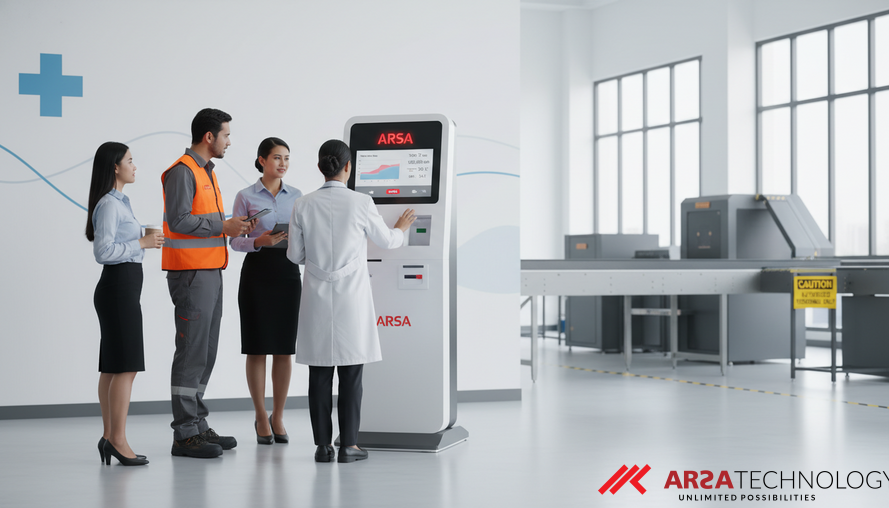
ARSA Technology’s Self-Check Health Kiosk represents a significant leap forward, transforming how enterprises approach employee health screening. This autonomous, medical-grade station provides fast, accurate vital sign measurements without the need for constant medical personnel intervention, directly addressing many of the challenges faced by modern industrial and corporate environments.
The Hidden Costs of Traditional Occupational Health Management
Before diving into the solutions, it’s crucial to understand the true impact of conventional health management on an organization’s bottom line.
- Clinic Congestion and Staffing Overheads: Routine vital checks can consume a significant portion of healthcare staff time, creating bottlenecks that delay patient flow and reduce the capacity for billable consultations. The cost of employing dedicated nurses for basic screenings adds up quickly.
- Workplace Health Blind Spots: Without real-time, consistent data, corporations often lack visibility into employee health trends. Absenteeism, presenteeism, and chronic conditions can go undetected until they severely impact productivity and lead to more expensive, reactive treatments.
- Inconsistent Screening and Data Fragmentation: Manual measurements are susceptible to human error. Furthermore, data often remains fragmented across paper records or disparate systems, preventing comprehensive trend analysis and proactive intervention strategies.
- High Cost Per Screening: Traditional nurse-administered vital checks can cost $15-30 per session. Scaling preventive health programs across a large workforce becomes economically unsustainable at this rate.
These challenges underscore the urgent need for a more efficient, accurate, and cost-effective approach to occupational health.
How an AI Health Kiosk Can Reduce Occupational Health Costs
The ARSA Self-Check Health Kiosk is engineered to tackle these challenges head-on, delivering measurable financial and operational benefits. By automating routine health screenings, it frees up valuable medical personnel, provides instant digital records, and enables smart triage alerts.
1. Significant Cost Efficiency and ROI
One of the most compelling advantages of deploying an AI health kiosk is its potential for substantial cost savings. The ARSA Health Kiosk can effectively replace the need for 2-3 full-time equivalent (FTE) nurses per shift for basic vital sign collection. This labor reallocation alone can lead to a rapid return on investment (ROI), typically achieved within 14-18 months. The ROI of employee health screening kiosk is not just about labor savings; it also encompasses reduced administrative burden, fewer clinic visits for routine checks, and a healthier, more productive workforce.
2. Early Detection of Employee Health Issues Technology
The kiosk measures multiple parameters in just 90 seconds, including blood pressure, heart rate, SpO2, body temperature, and even an AI-powered Romberg test for balance assessment. Optional modules can extend screening to weight, height, BMI, glucose, and cholesterol. This comprehensive, rapid screening capability acts as an early detection employee health issues technology, identifying potential health risks before they escalate into serious, costly conditions. Instant digital records, encrypted and stored in a cloud dashboard, allow for immediate physician review and trend analysis.
3. Automated Pre-Shift Health Screening for Enhanced Safety
For industries like manufacturing, logistics, and construction, pre-shift health screening is crucial for safety and compliance. The ARSA Health Kiosk automates this process, ensuring that workers are fit for duty. It can flag critical readings (e.g., hypertension >140/90, fever >38°C, SpO2 <94%) and automatically route alerts to on-call physicians, reducing emergency response time by up to 73%. This proactive approach contributes significantly to a safer work environment and helps prevent accidents caused by impaired health.
4. Scalability and Data Sovereignty
The ARSA Self-Check Health Kiosk offers unparalleled scalability, allowing a single dashboard to manage anywhere from 1 to 1,000 kiosks across multiple sites. Centralized firmware updates and predictive maintenance minimize downtime, ensuring continuous operation. For organizations with strict data privacy requirements, ARSA provides on-premise or hybrid cloud deployment options, ensuring full compliance with regulations like EU GDPR and Indonesia PDPA. This commitment to data sovereignty means your sensitive health data remains entirely within your control. For even greater control over biometric data, ARSA also offers the ARSA Face Recognition & Liveness SDK for self-hosted deployments.
5. Supporting Corporate Wellness Programs
Beyond basic screening, the kiosk provides valuable aggregated analytics (de-identified) for population health management. This data empowers employers to design more effective corporate wellness programs, potentially leveraging data-backed wellness initiatives for insurance premium reductions. The preventive health monitoring for manufacturing workers and other industrial sectors becomes a tangible, data-driven strategy rather than a qualitative goal.
ARSA Self-Check Health Kiosk: A Superior Choice
When considering solutions for occupational health, the ARSA Self-Check Health Kiosk overview highlights its unique blend of AI and IoT technology, medical-grade sensors (FDA/CE-certified with high accuracy standards), and user-friendly design. It features a 19-inch touchscreen interface with multi-language UI and voice guidance, making it accessible to a diverse workforce. Identity verification can be done via face recognition or QR code, secured with GDPR/HIPAA encryption.
Unlike generic solutions, ARSA’s kiosk is a production-ready system, not an experimental tool. It’s designed for environments where latency, privacy, reliability, and regulatory compliance are non-negotiable. This makes it an ideal investment for enterprises, government facilities, and even hospitals looking to automate pre-consultation vitals and reallocate nursing staff to critical care. The ability for a self-service health check reduces clinic visits, optimizing healthcare resource allocation.
Elevate Your Occupational Health Strategy
The shift from reactive healthcare to proactive, preventive health monitoring is not just a trend; it’s a strategic imperative for businesses aiming for long-term sustainability and productivity. By embracing solutions like the ARSA Self-Check Health Kiosk, organizations can significantly reduce occupational health costs with AI health kiosk technology, foster a healthier workforce, and streamline their health and safety compliance efforts.
ARSA Technology has a proven track record of delivering transformative AI and IoT solutions across various demanding industries, trusted by government and enterprise clients for over seven years. Our expertise ensures that our health kiosks are robust, reliable, and integrate seamlessly with existing infrastructure via REST API.
Ready to explore how ARSA Technology can help your organization achieve these benefits?
Frequently Asked Questions
How do AI health kiosks help reduce occupational health costs?
AI health kiosks significantly reduce costs by automating routine vital sign screenings, thereby minimizing the need for medical personnel for basic checks. This leads to labor reallocation, increased patient throughput, and a faster ROI, typically within 14-18 months.
What is the typical ROI of employee health screening kiosk deployment?
The typical ROI of employee health screening kiosk deployment for ARSA’s solution is achieved within 14-18 months. This is primarily driven by the ability to reallocate 2-3 FTE nurses per shift and the long-term benefits of early detection and improved workforce health.
How does early detection employee health issues technology improve workplace safety?
Early detection technology, such as the ARSA Health Kiosk, rapidly identifies critical health readings (e.g., high blood pressure, fever, low SpO2) that could impair a worker’s fitness for duty. By providing instant alerts to medical staff, it enables timely intervention, reducing the risk of accidents and supporting compliance with safety regulations.
Can a self-service health check reduce clinic visits for employees?
Absolutely. A self-service health check reduces clinic visits for routine vital sign measurements, allowing employees to quickly screen themselves on-site. This streamlines patient flow in clinics, frees up medical staff for more critical cases, and offers employees a convenient way to monitor their health without disrupting their work schedule.
To learn more about how our solutions can benefit your organization, please contact ARSA solutions team. You can also explore all ARSA products to see our full range of AI and IoT innovations.
Stop Guessing, Start Optimizing.
Discover how ARSA Technology drives profit through intelligent systems.
