
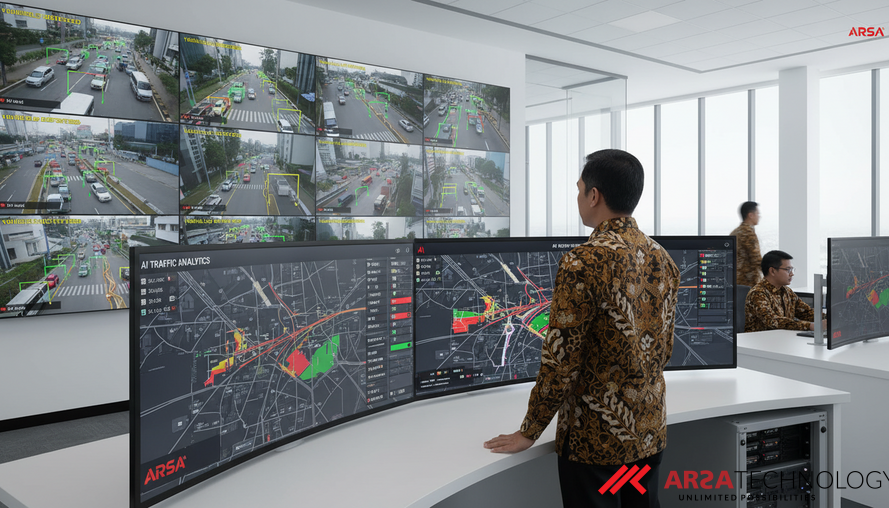

Understanding How to Implement AI Traffic Analytics with Existing CCTV Cameras
In an era of rapidly expanding urban populations and increasing traffic congestion, city planners and government agencies face immense pressure to optimize urban mobility. The challenge often lies in leveraging existing infrastructure to gain actionable insights without incurring prohibitive costs or overhauling entire systems. For government IT procurement leaders, understanding how to implement AI traffic analytics with existing CCTV cameras is a critical step towards building smarter, more responsive cities. This guide explores the practicalities, benefits, and deployment considerations for transforming conventional surveillance into powerful traffic intelligence.
Traditional traffic monitoring relies heavily on manual observation, road sensors, or expensive new hardware installations. However, with advancements in artificial intelligence, it’s now possible to convert your existing network of closed-circuit television (CCTV) cameras into sophisticated traffic sensors. This approach offers a cost-effective and efficient pathway to real-time data, enabling proactive traffic management, improved public safety, and data-driven urban planning.
The Limitations of Traditional Traffic Monitoring
For decades, traffic management has grappled with outdated methods. Inductive loops embedded in roads provide basic vehicle counts but lack granular data on vehicle types, speeds, or complex behavioral patterns. Manual observation is labor-intensive, prone to human error, and impossible to scale across an entire city. Deploying new, specialized traffic cameras can be prohibitively expensive, requiring significant capital expenditure, civil engineering work, and integration challenges with legacy systems. These limitations often result in:
- Delayed Incident Response: Without real-time, granular data, identifying and responding to accidents, blockages, or unusual traffic patterns is slow.
- Inefficient Resource Allocation: Police, emergency services, and maintenance crews cannot be optimally dispatched without precise information on traffic conditions.
- Suboptimal Urban Planning: Long-term infrastructure projects and policy decisions are based on incomplete or outdated data, leading to less effective outcomes.
- High Operational Costs: Maintaining disparate systems and relying on manual data collection inflates operational budgets.
The Power of AI Traffic Analytics for Smart Cities
AI traffic analytics offers a transformative solution by converting passive video streams into active, intelligent data. By applying computer vision algorithms to existing CCTV footage, cities can unlock a wealth of information previously unattainable. This includes precise vehicle counting, accurate vehicle classification (cars, trucks, motorcycles, buses), speed estimation, congestion detection, and even anomalous behavior identification.
For government entities, the benefits extend beyond mere data collection:
- Enhanced Public Safety: Faster detection of accidents, illegal parking, or suspicious activities enables quicker emergency response.
- Optimized Traffic Flow: Real-time insights allow for dynamic signal timing adjustments, rerouting strategies, and proactive congestion management.
- Data-Driven Urban Planning: Comprehensive historical data supports informed decisions on infrastructure development, public transport routes, and policy changes.
- Cost Efficiency: Leveraging existing CCTV infrastructure significantly reduces the need for new hardware, lowering both capital and operational expenditures.
- Environmental Impact: By reducing congestion, AI traffic analytics can contribute to lower emissions and improved air quality.
How to Implement AI Traffic Analytics with Existing CCTV Cameras
The most effective way to implement AI traffic analytics with existing CCTV cameras is through a software-centric, on-premise deployment model. This approach ensures data sovereignty, minimizes latency, and provides maximum control over sensitive government data.
1. Assess Existing CCTV Infrastructure: Begin by evaluating your current CCTV network. Identify camera locations, coverage areas, video stream formats (e.g., RTSP, ONVIF), and network connectivity. Most modern IP cameras are compatible, and even older analog systems can be integrated with appropriate encoders.
2. Choose an On-Premise AI Video Analytics Software: Select an enterprise-grade AI video analytics software designed for on-premise deployment. Solutions like ARSA Technology’s ARSA Traffic Monitor (Software) are specifically built to run on your existing servers or private data centers. This eliminates cloud dependency, addressing critical concerns around data privacy and compliance for government agencies.
3. Software Installation and Configuration: The chosen software is installed directly into your environment. This process involves connecting the software to your CCTV video streams. ARSA’s AI Video Analytics Software overview highlights its hardware-agnostic nature, meaning it can deploy on various existing compute resources without requiring specialized AI appliances.
4. Define Analytics Modules: Configure the specific AI modules required. For traffic, this typically includes:
- Vehicle Counting: Accurately count vehicles entering, exiting, or passing through defined zones.
- Vehicle Classification: Distinguish between different types of vehicles (e.g., cars, buses, trucks, motorcycles) for more granular analysis.
- Congestion Analysis: Identify areas of high traffic density and slow movement in real-time.
- Traffic Flow Optimization: Monitor average speeds, travel times, and identify bottlenecks.
5. Integration with Existing Systems: A key advantage of modern AI software is its integration readiness. Using a REST API, the AI traffic analytics system can feed real-time data into existing city dashboards, alerting systems, and data pipelines. This allows for a unified operational view and avoids creating new data silos.
6. Real-Time Monitoring and Reporting: Once deployed, the system continuously processes video streams, generating real-time alerts and populating interactive dashboards. Operators can monitor traffic conditions, respond to incidents, and access historical analytics for long-term planning.
Retrofitting CCTV for Vehicle Classification and Beyond
The concept of retrofitting CCTV for vehicle classification is central to this transformation. Instead of replacing cameras, you are enhancing their intelligence. This not only allows you to add AI traffic counting to security cameras but also to unlock a broader spectrum of capabilities:
- Detailed Traffic Studies: Generate reports on peak hours, directional flow, and vehicle composition, providing invaluable data for infrastructure upgrades.
- Parking Management: Monitor parking lot occupancy, detect unauthorized parking, and guide drivers to available spots.
- Public Transport Optimization: Track bus lane usage, identify bottlenecks affecting public transit, and optimize route planning.
- Incident Detection: Automatically flag stalled vehicles, wrong-way drivers, or pedestrians in restricted areas, triggering immediate alerts.
By choosing an on-premise solution, government agencies retain full ownership of all video streams, inference results, and metadata. This is crucial for maintaining privacy, adhering to local data protection regulations, and ensuring the integrity of public sector operations.
Upgrading Traffic Cameras with Edge AI vs. Centralized Software
While the primary focus here is on centralized software deployment, it’s worth noting the distinction with edge AI. To upgrade traffic cameras with edge AI typically involves deploying small, powerful computing devices directly at the camera location. These “AI Boxes” process data locally, reducing bandwidth requirements and offering ultra-low latency. ARSA Technology offers both approaches: the AI Box Series for distributed edge processing and the AI Video Analytics Software for centralized processing.
For government IT procurement, the software-only approach often provides greater flexibility and scalability when leveraging existing, robust data center infrastructure. It allows for centralized management of analytics across a vast network of cameras, simplifying maintenance and updates. However, for remote locations with limited network connectivity or specific privacy requirements, edge AI can be a compelling alternative.
Ultimately, the goal is to convert surveillance cameras to traffic sensors that deliver tangible business outcomes. ARSA Technology’s solutions are engineered for this purpose, providing city-wide traffic intelligence, reducing infrastructure costs, supporting data-driven transport planning, and enabling real-time incident response. Our track record with government and enterprise clients underscores our commitment to delivering production-grade AI that works in the real world.
Frequently Asked Questions
What are the key benefits of using existing CCTV for AI traffic analytics?
Leveraging existing CCTV infrastructure for AI traffic analytics significantly reduces costs by avoiding new hardware purchases. It enables real-time insights into traffic flow, congestion, and vehicle types, leading to improved incident response, optimized urban planning, and enhanced public safety, all while maintaining data ownership.
Can ARSA’s AI Traffic Monitor integrate with my current city management systems?
Yes, ARSA’s AI Traffic Monitor, part of our AI Video Analytics Software, is designed with integration in mind. It provides a robust REST API, allowing seamless connection with existing dashboards, alerting systems, and data pipelines used in city management and operations centers.
How does on-premise deployment ensure data privacy and compliance for government use?
On-premise deployment means all video streams, inference results, and metadata remain entirely within your government’s secure infrastructure. This eliminates cloud dependency, ensuring full data ownership and control, which is critical for adhering to strict data privacy regulations and compliance requirements.
What level of accuracy can I expect for vehicle classification and counting?
ARSA’s AI Video Analytics solutions are built for high accuracy. While specific numbers can vary based on camera quality and environmental conditions, our systems are engineered to provide reliable vehicle counting and classification, enabling precise data for traffic management and planning. For example, our general AI video analytics achieve 99.7% accuracy.
Conclusion
The journey to a smarter city begins with intelligent infrastructure. For government IT procurement leaders, understanding how to implement AI traffic analytics with existing CCTV cameras presents a strategic opportunity to modernize urban management efficiently and responsibly. By adopting a self-hosted, on-premise AI solution like the ARSA Traffic Monitor, cities can transform their surveillance networks into powerful tools for real-time traffic intelligence, ensuring data sovereignty and delivering measurable improvements in public safety and operational efficiency.
Ready to transform your city’s traffic management? Explore our full range of ARSA products or contact ARSA solutions team today to discuss how our AI video analytics can be tailored to your specific needs. We also offer advanced biometric solutions like the ARSA Face Recognition & Liveness SDK for comprehensive security infrastructure.
Stop Guessing, Start Optimizing.
Discover how ARSA Technology drives profit through intelligent systems.
