
Understanding How to Turn Existing CCTV into Smart Safety Monitoring: A Business Leader’s Guide
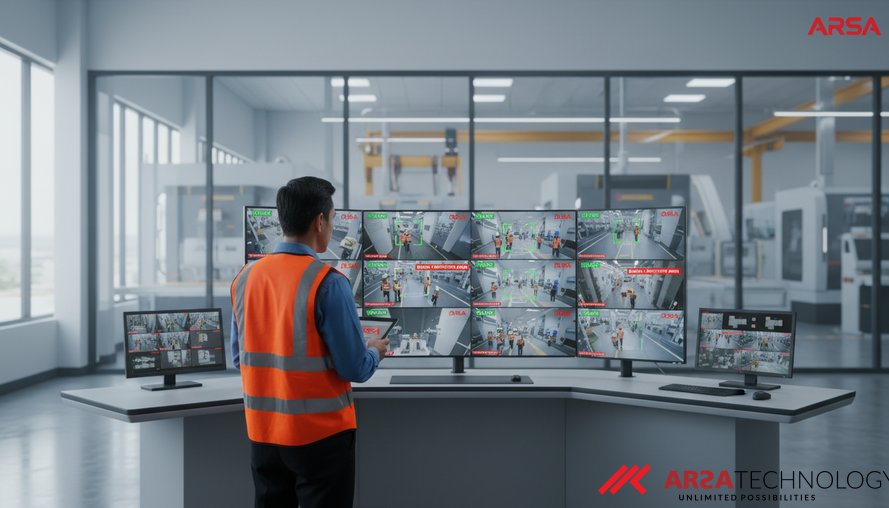
For facility managers and business leaders in the manufacturing sector, the challenge of maintaining stringent safety protocols is constant. Traditional CCTV systems, while effective for recording incidents, often fall short in providing proactive, real-time safety intelligence. The good news is that you don’t need to rip and replace your entire infrastructure. This guide will show you how to turn existing CCTV into smart safety monitoring, transforming passive surveillance into an active, intelligent safety network.
The journey from conventional CCTV to a smart safety system involves leveraging advanced AI video analytics. This upgrade path is not just about enhancing security; it’s about creating a safer, more compliant, and ultimately more productive operational environment. By integrating AI capabilities, manufacturing facilities can significantly reduce risks, automate compliance checks, and gain unprecedented visibility into their safety performance.
The Limitations of Traditional CCTV in Manufacturing Safety
Manufacturing environments are dynamic, with numerous potential hazards, from moving machinery to restricted zones and the constant need for Personal Protective Equipment (PPE) compliance. Relying solely on human monitoring of dozens, if not hundreds, of camera feeds is inefficient and prone to error. Operators can miss critical events, leading to delays in response, increased accident rates, and potential regulatory fines.
Traditional CCTV systems primarily serve as forensic tools, useful for reviewing incidents *after* they’ve occurred. They lack the ability to:
- Detect safety violations in real-time.
- Automatically identify missing PPE like hard hats or safety vests.
- Issue instant alerts for intrusions into hazardous or restricted areas.
- Generate comprehensive, data-driven safety compliance reports.
This reactive approach costs businesses in terms of lost productivity, increased insurance premiums, and, most importantly, human well-being. The imperative to upgrade CCTV with AI safety detection has never been clearer.
How AI Transforms Existing CCTV into Proactive Safety Systems
The core of transforming your existing CCTV infrastructure lies in integrating an AI-powered video analytics solution. This technology processes video streams in real-time, identifying specific objects, actions, and conditions that signify a safety risk. Instead of just recording, your cameras become intelligent sensors.
ARSA Technology’s Basic Safety Guard (AI Box) is a prime example of how this transformation is achieved. It’s an edge computing device designed to add AI analytics to existing security cameras, providing immediate insights without requiring a complete system overhaul.
Here’s how it works:
1. Connect: The AI Box connects directly to your existing CCTV cameras and network. It’s a plug-and-play installation, designed for rapid deployment.
2. Configure: You select the specific analytics modules relevant to your safety needs – such as PPE detection, restricted area monitoring, or intrusion alerts.
3. Monitor: The AI Box processes video feeds locally, at the edge, delivering real-time alerts and detailed reports to your dashboard.
This edge-based processing is crucial for manufacturing, ensuring low latency and data privacy, as video streams are analyzed on-device and do not leave your network unless explicitly configured.
Key AI Safety Monitoring Capabilities for Manufacturing
To effectively retrofit CCTV with PPE detection and other critical safety features, an AI system must offer a robust set of capabilities tailored for industrial environments.
1. PPE Detection and Compliance:
The ARSA Basic Safety Guard can automatically detect if workers are wearing required PPE, such as hard hats, safety vests, or face masks. If a worker enters a designated area without the necessary gear, the system triggers an immediate alert. This capability eliminates the need for constant human supervision, ensuring consistent compliance and significantly reducing the risk of accidents. Automated reporting provides clear audit trails for regulatory bodies.
2. Restricted Area Monitoring and Intrusion Alerts:
Manufacturing facilities often have zones with dangerous machinery, high-voltage equipment, or sensitive materials. AI video analytics can define these restricted areas and immediately alert personnel if an unauthorized individual or object enters them. This proactive alerting mechanism is vital for preventing accidents, theft, and sabotage.
3. Safety Compliance Reporting:
Beyond real-time alerts, the system continuously collects data on safety incidents, PPE compliance rates, and restricted area breaches. This data is compiled into comprehensive reports, offering invaluable insights for safety managers. These reports help identify recurring issues, pinpoint high-risk areas, and demonstrate adherence to safety standards, which can also contribute to lower insurance premiums.
4. Real-time Incident Response:
With instant alerts delivered to designated personnel via email, SMS, or integrated safety management platforms, response times to safety incidents are drastically cut. Whether it’s a fall, an unauthorized entry, or a missing piece of PPE, the right people are notified immediately, enabling swift intervention.
The Business Impact: Measurable ROI from Smart Safety Monitoring
Investing in smart safety monitoring isn’t just a cost; it’s a strategic move that delivers significant returns. Manufacturing businesses adopting solutions like the ARSA Basic Safety Guard can expect:
- Reduced Workplace Accidents: By proactively identifying and alerting on safety violations, businesses can reduce workplace accidents by an estimated 60% or more. This directly translates to fewer injuries, less downtime, and a healthier workforce.
- Automated Safety Compliance Audits: Manual audits are time-consuming and prone to human error. AI systems automate the collection of compliance data, making audits faster, more accurate, and less resource-intensive.
- Lower Insurance Premiums: A proven track record of enhanced safety and compliance can lead to favorable negotiations with insurance providers, resulting in reduced premiums.
- Eliminated Manual Safety Inspections: While human oversight remains important, AI significantly reduces the need for constant physical patrols and manual checks, freeing up safety personnel for more strategic tasks.
- Enhanced Operational Efficiency: A safer environment means fewer disruptions, leading to more consistent production schedules and improved overall operational flow.
ARSA Technology’s AI Box Series overview demonstrates how these edge AI systems are designed for practical, profitable deployment, ensuring that your investment yields tangible benefits.
Converting Analog Cameras to an AI Safety System
Many manufacturing facilities still operate with analog CCTV cameras. The good news is that you can convert analog cameras to AI safety system capabilities without replacing them. Modern AI Box solutions are designed to integrate with existing analog cameras through video encoders, digitizing the feed before applying AI analytics. This means your legacy infrastructure can gain cutting-edge intelligence, extending its lifespan and maximizing your initial investment.
Whether you have IP cameras or analog systems, the principle remains the same: the AI Box acts as an intelligent layer, processing video streams at the source (or near the source) to deliver real-time insights. The ARSA AI Box Series offers flexible hardware configurations, from a Mini PC Model capable of processing up to 3 cameras, ideal for distributed deployments, to a Server Model that can handle up to 30 cameras for centralized monitoring. This flexibility ensures that businesses of any scale can implement smart safety monitoring effectively.
Beyond Safety: The Broader Potential of AI Video Analytics
While this article focuses on how to turn existing CCTV into smart safety monitoring, it’s worth noting that the underlying AI video analytics technology has broader applications. The same ARSA AI Box Series that powers your safety monitoring can also be configured for other operational insights. For example, in a retail context, it could be used for audience measurement, similar to the capabilities of the ARSA DOOH Audience Meter (Software), demonstrating the versatility of AI at the edge. However, for manufacturing, the immediate and most impactful application is undoubtedly safety.
By choosing a robust, on-premise or edge-based solution, you maintain full control over your data, ensuring privacy and compliance with local regulations. ARSA Technology, with its 7+ years of experience and a track record with government and enterprise clients, understands the critical need for reliable, secure, and effective AI solutions that work in the real world.
Conclusion
The question of how to turn existing CCTV into smart safety monitoring is no longer a futuristic concept but a practical, implementable strategy for manufacturing facilities worldwide. By integrating AI video analytics solutions like the ARSA Basic Safety Guard (AI Box), businesses can transform their passive surveillance systems into proactive safety intelligence hubs. This transition leads to a significant reduction in workplace accidents, streamlined compliance, and substantial cost savings, ultimately fostering a safer and more efficient operational environment.
Ready to explore how ARSA Technology can help you upgrade your existing CCTV for enhanced safety and compliance? Our solutions team is prepared to discuss your specific needs and demonstrate the measurable impact our AI Box Series can deliver. Take the first step towards a smarter, safer future for your manufacturing facility. Contact ARSA solutions team today for a consultation.
—
FAQ
1. Can I add AI analytics to existing security cameras without replacing my entire CCTV system?
Yes, absolutely. Solutions like the ARSA AI Box Series are specifically designed to integrate with your existing CCTV infrastructure. They act as an intelligent layer, processing video feeds from your current cameras to provide real-time AI analytics without requiring you to replace your entire system.
2. What specific safety issues can AI video analytics detect in a manufacturing plant?
AI video analytics can detect a wide range of safety issues, including missing Personal Protective Equipment (PPE) like hard hats and safety vests, unauthorized entry into restricted zones, unusual activity that might indicate a fall or accident, and even crowd density in specific areas. This allows for proactive alerts and rapid response.
3. How does retrofitting CCTV with PPE detection help reduce workplace accidents?
By automatically detecting if workers are not wearing required PPE in designated areas, the system can issue immediate alerts. This real-time enforcement helps ensure compliance, corrects unsafe behaviors before incidents occur, and significantly reduces the likelihood of injuries, leading to a safer work environment and fewer accidents.
4. Is an internet connection required for the AI Box to provide smart safety monitoring?
No, the ARSA AI Box Series operates using edge computing, meaning all AI processing runs locally on the device. This ensures that video streams are analyzed on-device and do not leave your network unless explicitly configured, making cloud connectivity optional and ideal for environments requiring strict data privacy and offline operation.
—
Stop Guessing, Start Optimizing.
Discover how ARSA Technology drives profit through intelligent systems.
