
Achieving Workplace Compliance with Automated Employee Health Screening
For occupational health directors, ensuring a safe and compliant workplace while managing costs is a constant challenge. Traditional manual health screening processes are often resource-intensive, prone to inconsistencies, and can create bottlenecks, especially in high-traffic environments. The solution lies in embracing technology: automated employee health screening for workplace compliance. This innovative approach leverages AI and IoT to streamline health checks, reduce operational overhead, and provide actionable insights, fundamentally transforming how organizations manage employee well-being and regulatory adherence.
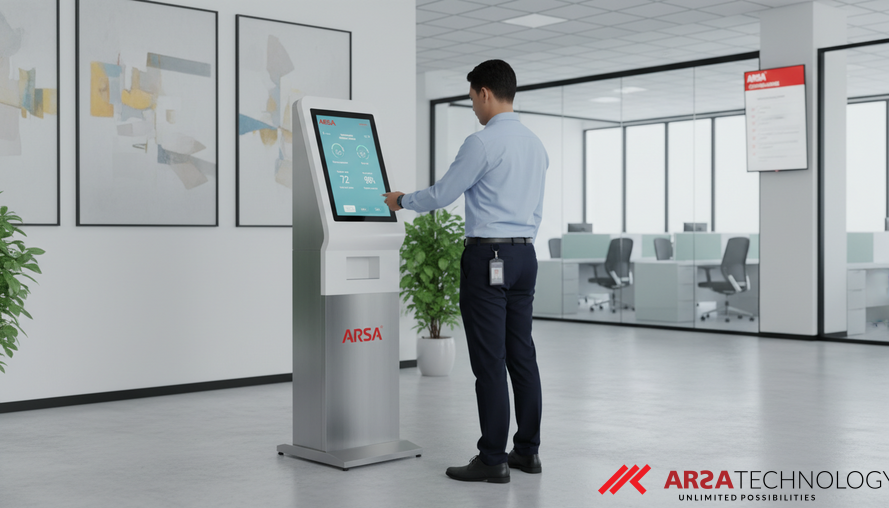
ARSA Technology understands the critical need for efficient, accurate, and privacy-preserving health monitoring. Our ARSA Self-Check Health Kiosk offers a robust, self-service platform designed to meet the demands of modern enterprises and regulated industries. By automating routine health assessments, businesses can achieve superior compliance, enhance employee safety, and reallocate valuable medical staff to more critical tasks, driving significant return on investment.
The Hidden Costs of Manual Health Screening
Many organizations still rely on manual methods for pre-shift health checks, visitor screening, or routine wellness assessments. While seemingly straightforward, these processes carry substantial hidden costs and inefficiencies:
- Staffing Expenses: Dedicated medical personnel or administrative staff are required to conduct screenings, taking them away from their primary duties. This labor cost can quickly escalate, particularly for large workforces or multi-site operations.
- Time & Productivity Loss: Employees spend valuable work time waiting in queues for screening, leading to reduced productivity and operational delays. For critical infrastructure or manufacturing, even minor delays can have significant financial repercussions.
- Inconsistent Data & Human Error: Manual measurements are susceptible to human error, leading to inconsistent data collection. This fragmentation makes it difficult to track trends, identify early health warnings, or demonstrate robust compliance during audits.
- Compliance Risks: Without standardized, auditable processes, organizations face increased risks of non-compliance with health and safety regulations, potentially leading to fines, legal challenges, and reputational damage.
- Lack of Real-time Insight: Manual systems provide delayed or aggregated data, preventing real-time intervention for critical health issues or immediate adjustments to operational protocols.
These challenges highlight the urgent need for a more efficient and reliable solution, one that can deliver precision and scalability without compromising data integrity or privacy.
Automated Employee Health Screening for Workplace Compliance: A Strategic Investment
Implementing an automated health screening solution like the ARSA Self-Check Health Kiosk is not just an operational upgrade; it’s a strategic investment in your workforce and your organization’s resilience. The kiosk integrates AI and IoT to provide a comprehensive, self-service health assessment that empowers employees while delivering critical data to management.
Imagine employees quickly and accurately checking their vital signs, including blood pressure monitoring, blood oxygen measurement, and heart rate monitoring, all within 90 seconds. The system can even incorporate an advanced AI Romberg test kiosk for balance assessment, crucial for roles requiring physical stability. This rapid, consistent data collection minimizes queues and maximizes productive time.
Key Advantages of ARSA’s Self-Check Health Kiosk
ARSA Technology’s Self-Check Health Kiosk overview details a suite of features designed for enterprise-grade performance and compliance:
- Medical-Grade Accuracy: Equipped with FDA/CE-certified sensors, the kiosk ensures precise measurements, providing reliable data for health assessments. This eliminates the variability associated with manual checks and builds trust in the screening process.
- Full Data Ownership and Privacy: With on-premise or hybrid cloud deployment options, organizations maintain full control over their health data. The system is designed for full compliance with stringent regulations like EU GDPR and Indonesia PDPA, utilizing AES-256 encryption and role-based access control to protect sensitive information.
- Real-time Health Dashboard and Reporting: All vital user data is recorded and displayed on a secure, web-based health kiosk with dashboard and reporting. This provides occupational health directors with instant access to aggregated analytics (de-identified for population health management), enabling proactive interventions and supporting compliance audits.
- Smart Triage Alerts: AI flags critical readings (e.g., hypertension >140/90, fever >38°C, SpO2 <94%) and can auto-route alerts to on-call physicians or designated personnel. This significantly reduces emergency response time by up to 73%, potentially saving lives and mitigating severe health incidents.
- Seamless Integration: The kiosk supports REST API integration, allowing it to connect with existing HR systems, access control platforms, or corporate wellness programs. For instance, it can serve as a digital health kiosk for hospital visitor screening, ensuring a safe environment for patients and staff.
- Identity Verification: Utilizing face recognition or QR-based identification, the kiosk ensures that screening records are accurately linked to the correct employee IDs, enhancing accountability and data integrity.
Quantifiable ROI: Reducing Occupational Health Costs and Boosting Efficiency
The financial justification for adopting an automated solution is compelling. By replacing manual processes, the ARSA Self-Check Health Kiosk can effectively replace the equivalent of 2-3 full-time nurses per shift dedicated to routine vital checks. This labor reallocation allows skilled medical staff to focus on critical care, complex cases, or other high-value activities.
Organizations typically achieve a full return on investment (ROI) within 14-18 months, driven by:
- Reduced Labor Costs: Significant savings from automating routine screenings.
- Increased Productivity: Minimizing employee wait times and streamlining the screening process.
- Improved Compliance: Avoiding penalties and legal costs associated with non-compliance, and providing robust, auditable records.
- Early Detection & Prevention: Proactive identification of health issues reduces long-term healthcare costs, absenteeism, and presenteeism.
- Enhanced Employee Morale: Demonstrating a commitment to employee well-being through convenient, private, and accurate health monitoring.
For clinics, a self-service blood pressure kiosk for clinics can drastically improve patient flow, allowing nurses to prioritize direct patient care rather than routine measurements. This efficiency translates directly into increased patient throughput and improved service quality.
Beyond Compliance: Supporting Corporate Wellness Programs
While workplace compliance is a primary driver, the ARSA Self-Check Health Kiosk extends its value to comprehensive corporate wellness programs. By providing regular, accessible health data, organizations can:
- Track Health Trends: Monitor population health metrics (de-identified) to identify common issues and tailor wellness initiatives.
- Empower Employees: Give individuals direct access to their health data, encouraging proactive health management.
- Leverage Insurance Benefits: Data-backed wellness programs can often lead to reduced insurance premiums, further enhancing ROI.
This holistic approach transforms health screening from a mere compliance task into a cornerstone of a thriving, healthy workforce.
Seamless Deployment and Scalability
ARSA Technology ensures that deploying the Self-Check Health Kiosk is straightforward. It’s an IoT kiosk that requires minimal setup, connecting easily via WiFi or Ethernet. Whether you need a single unit for a small office or a network of 1,000 kiosks across multiple facilities, the system is designed for scalability. Centralized firmware updates and predictive maintenance features minimize downtime, ensuring continuous operation and maximum reliability.
For organizations exploring other AI solutions, ARSA Technology offers a range of products, including all ARSA products from AI video analytics to face recognition systems. For instance, the ARSA Smart Retail Counter (Software) demonstrates our capability in diverse AI applications, highlighting our expertise in transforming operational data into actionable intelligence.
Conclusion
The imperative for automated employee health screening for workplace compliance is clear. It’s a critical step for occupational health directors seeking to optimize operations, reduce costs, and elevate employee well-being. The ARSA Self-Check Health Kiosk provides a proven, production-ready solution that delivers medical-grade accuracy, robust data privacy, and actionable insights. By embracing this technology, organizations can move beyond reactive health management to a proactive, data-driven approach that safeguards their workforce and strengthens their bottom line.
Ready to transform your occupational health strategy and achieve unparalleled compliance? Contact ARSA solutions team today for a consultation and discover how our Self-Check Health Kiosk can benefit your organization.
FAQ
What are the primary benefits of using a digital health kiosk for hospital visitor screening?
A digital health kiosk for hospital visitor screening significantly reduces the burden on administrative staff, automates the collection of vital health parameters, and provides real-time alerts for potential health risks. This ensures a safer environment for patients and staff by quickly identifying visitors who may pose a health risk, improving overall operational efficiency and compliance.
How does a self-service blood pressure kiosk for clinics improve patient flow?
A self-service blood pressure kiosk for clinics allows patients to take their own blood pressure measurements quickly and accurately before seeing a doctor or nurse. This automates a routine task, reduces patient wait times, and frees up nursing staff to focus on more complex patient care, ultimately improving clinic efficiency and patient satisfaction.
Can an AI Romberg test kiosk for balance assessment be integrated into existing health programs?
Yes, an AI Romberg test kiosk for balance assessment can be seamlessly integrated into existing occupational health or corporate wellness programs through its API integration capabilities. This allows organizations to track balance assessment data alongside other vital signs, providing a comprehensive view of employee health and supporting targeted intervention programs, especially for roles requiring physical stability.
What kind of reporting does a health kiosk with dashboard and reporting provide?
A health kiosk with dashboard and reporting offers real-time operational and safety metrics, historical analytics, and business insights. Occupational health directors can view aggregated, de-identified data for population health management, track compliance, identify health trends, and receive smart triage alerts for critical readings, all accessible via a secure web-based interface.
Stop Guessing, Start Optimizing.
Discover how ARSA Technology drives profit through intelligent systems.
