
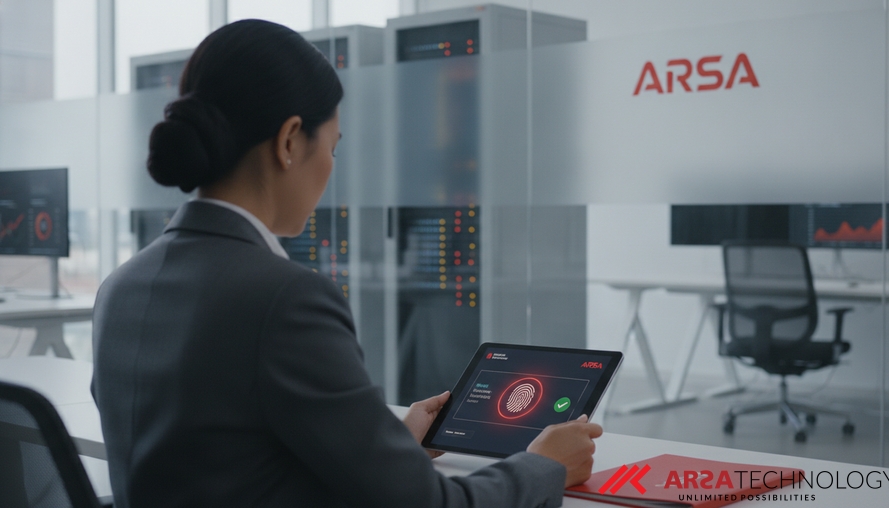

Choosing a Face Liveness API for RBI V-CIP Video KYC in India: A Compliance Guide
In India’s rapidly evolving digital banking landscape, ensuring robust identity verification is paramount. Financial institutions, including banks and Non-Banking Financial Companies (NBFCs), are increasingly relying on Video Customer Identification Process (V-CIP) for remote customer onboarding. A critical component of this process is a reliable face liveness API for RBI V-CIP video KYC in India. This guide will help compliance leads and technology decision-makers evaluate the essential features and considerations when selecting a provider to meet stringent regulatory demands and combat sophisticated fraud.
The Reserve Bank of India (RBI) has established comprehensive guidelines for V-CIP, recognizing it as a formal equivalent to in-person verification. However, the threat landscape is constantly shifting. Recent reports indicate a significant surge in financial fraud, with losses reported to the RBI increasing by 715% in the first half of FY2024-25, amounting to a staggering INR 21,367 crore (approximately $2.56 billion USD). This highlights the urgent need for advanced fraud prevention measures that go beyond basic checks.
The Evolving Landscape of RBI Compliant Face Liveness Detection
The RBI Master Direction DBR.AML.BC.No.81/14.01.001/2015-16, which governs V-CIP, explicitly mandates “face liveness/spoof detection as well as face matching technology with a high degree of accuracy.” Furthermore, it encourages the use of “Appropriate Artificial Intelligence (AI) technology… to ensure that the V-CIP is robust.” This emphasis on robustness means that simple liveness checks, once sufficient, are no longer adequate against modern threats like deepfakes and advanced presentation attacks.
Modern fraudsters employ two primary attack vectors:
1. Face Swap Attacks: Where an AI-generated face is superimposed onto a legitimate person’s identity documents during a live video session.
2. Video Injection Attacks: These bypass the physical camera entirely, feeding a pre-generated or real-time synthesized video stream directly into the device’s virtual camera layer.
A robust V-CIP liveness and spoof detection vendor must offer solutions capable of countering these sophisticated methods. The RBI also requires Regulated Entities (REs) to regularly upgrade their infrastructure based on detected or near-miss forged identities and to report such cases as cyber events, underscoring the dynamic nature of compliance.
Key Evaluation Criteria for Your Face Liveness API
When selecting a video based customer identification process API, consider these critical aspects:
1. Advanced Liveness and Spoof Detection Capabilities
Your chosen API must offer both passive and active liveness detection. Passive liveness, which analyzes subtle cues without requiring user interaction, is crucial for a seamless user experience and for detecting sophisticated presentation attacks (PAD) like high-quality masks, photos, or video replays. Active liveness, involving challenge-response mechanisms like head movements, provides an additional layer of security against more advanced spoofing attempts. It’s important to understand that presentation attack detection (PAD), covered by standards like ISO/IEC 30107-3, addresses attacks against the camera. However, injection attacks and deepfakes that bypass the camera are not covered by PAD certification alone, necessitating a multi-layered approach. ARSA’s Face Liveness Detection in Fintech is designed to address these evolving threats.
2. High Accuracy Face Recognition and Verification
The RBI guidelines stress a “high degree of accuracy” for face matching. This includes both 1:1 face verification (comparing a live face to a reference image, often for login or step-up authentication) and 1:N face recognition against a database (identifying a person against a collection of known identities, useful for watchlist screening or access control). The API should provide confidence scores for matches and support multiple images per face ID to enhance accuracy. ARSA’s Face Recognition & Liveness API offers these core functions, including face detection with bounding boxes, age and gender estimation, and expression detection.
3. Robust Security and Data Sovereignty
For Indian financial institutions, data security and sovereignty are non-negotiable. The RBI mandates end-to-end encryption, IP-origin controls (blocking connections from outside India or spoofed IPs), geo-tagging, and timestamps for video recordings. Crucially, if cloud infrastructure is used, all data must be transferred to the RE’s exclusively owned or leased servers immediately after the V-CIP process, with no data retention by third-party cloud providers. This ensures full data ownership and compliance with local regulations. ARSA Technology offers a cloud-based API that supports these requirements by providing per-account isolated face databases, ensuring data privacy and tenant separation. For organizations requiring full on-premise control, ARSA also offers a Face Recognition & Liveness SDK.
4. Ease of Integration and Developer Support
A seamless integration process is vital for rapid deployment. Look for an API that offers comprehensive documentation, clear code examples (e.g., cURL, Python, JavaScript), and a developer dashboard for usage analytics. The ability to launch face login or V-CIP capabilities in days, not months, can provide a significant competitive advantage. The ARSA Face Recognition & Liveness API is designed for quick integration, with the first API call possible in under 5 minutes, supported by extensive documentation.
5. Scalability and Reliability
The chosen solution must be able to handle high volumes of transactions with minimal latency and high uptime. A cloud SaaS deployment model, like the ARSA Face Recognition & Liveness API, offers inherent scalability without requiring you to manage infrastructure. ARSA targets a 99.9% uptime, ensuring continuous service for mission-critical operations.
6. Compliance Readiness and Evolving Standards
Beyond RBI V-CIP, financial institutions must navigate a complex web of global and local regulations, including GDPR, PSD2, eIDAS, and FinCEN. While ARSA does not claim certification, its solutions are designed to help you meet these obligations. The IT Act’s Section 43A requires “reasonable security practices and procedures,” a standard that evolves with the threat landscape. As noted by industry experts, what constitutes “reasonable” in 2026 demands GAN-level deepfake detection capabilities, even if not explicitly named in every circular. This proactive approach to security is critical for an India digital KYC face verification API. For broader regulatory context, you might find our article on Navigating EU Regulations for KYC insightful.
ARSA Face Recognition & Liveness API: Your Partner for RBI V-CIP Compliance
ARSA Technology’s Face Recognition & Liveness API provides a robust, scalable, and secure solution for financial institutions in India. Designed to help you meet the rigorous demands of RBI V-CIP, our cloud-based API offers:
- Advanced Liveness Detection: Both passive and active liveness with head movement challenges to prevent presentation and injection attacks.
- Comprehensive Face Analytics: 1:N face recognition against a database, 1:1 face verification, age/gender estimation, and expression detection.
- Secure Face Database Management: Isolated per-account face databases ensure data privacy and tenant separation, crucial for compliance.
- Flexible Pricing: A free trial (100 calls/month, 100 face IDs, no credit card) allows you to test capabilities, with scalable plans (Pro $29/mo, Ultra $149/mo, Mega $1,290/mo) that include all features. You only pay for what you use, with no infrastructure to manage. Explore our Face API pricing plans.
- Developer-Friendly: Quick setup, comprehensive documentation, and support for common image (JPEG/PNG) and video (MP4/WebM) formats.
By leveraging ARSA’s proven technology, you can launch secure digital onboarding processes in days, not months, significantly reducing operational costs and enhancing customer experience. Our commitment to privacy-by-design ensures that your biometric data is handled with the utmost care, aligning with the highest standards of data protection.
Conclusion
Choosing the right face liveness API for RBI V-CIP video KYC in India is a strategic decision that impacts your institution’s security, compliance, and competitive edge. As deepfake technology advances, relying on outdated liveness detection methods is a significant risk. Prioritize vendors that offer advanced anti-spoofing capabilities, high accuracy, robust data security, and ease of integration.
ARSA Technology, with its 7+ years of experience and partnerships with industry leaders like NVIDIA and Intel, is dedicated to delivering practical AI solutions that work in the real world. Our Face Recognition & Liveness API is engineered to provide the confidence and control you need to navigate the complexities of digital KYC and secure your customer onboarding processes.
Ready to enhance your V-CIP framework and protect against emerging fraud? Create a free Face API account today or contact ARSA solutions team to discuss your specific requirements.
—
FAQ
What are the key RBI requirements for face liveness detection in V-CIP?
The RBI Master Direction mandates “face liveness/spoof detection as well as face matching technology with a high degree of accuracy” and encourages “Appropriate Artificial Intelligence (AI) technology” for robustness. It also requires regular infrastructure upgrades based on detected fraud and reporting of forged identity cases as cyber events.
Why is basic liveness detection no longer sufficient for RBI compliant face liveness detection in 2026?
Basic liveness detection is vulnerable to advanced deepfake attacks, including face swaps and video injection attacks, which can bypass traditional checks. The evolving threat landscape and the IT Act’s “reasonable security practices” standard necessitate more sophisticated, AI-powered spoof detection.
How does ARSA’s API help financial institutions meet India digital KYC face verification API needs?
ARSA’s Face Recognition & Liveness API provides advanced passive and active liveness detection, high-accuracy 1:N face recognition against a database, 1:1 face verification, and secure, isolated per-account face databases. It’s designed for quick integration and scalability, helping institutions comply with RBI V-CIP and other regulatory obligations while combating fraud.
Does ARSA’s Face Liveness API support data sovereignty requirements for India?
Yes, while ARSA’s Face Recognition & Liveness API is cloud-based, it provides isolated per-account face databases, ensuring data privacy and tenant separation. For strict data sovereignty needs where no data can leave your infrastructure, ARSA also offers an on-premise Face Recognition & Liveness SDK.
Stop Guessing, Start Optimizing.
Discover how ARSA Technology drives profit through intelligent systems.