
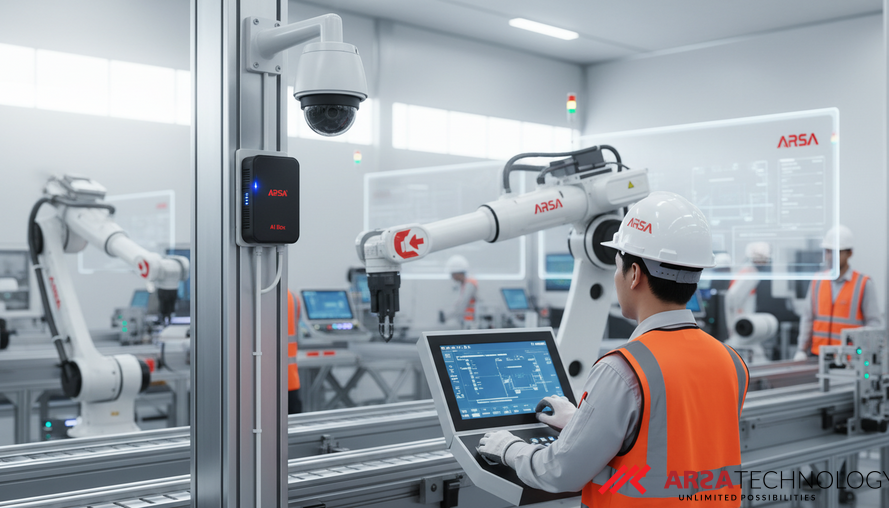

Edge AI vs Cloud AI for Enterprise Video Analytics Comparison: A CTO’s Guide to Optimal Deployment
In today’s data-driven enterprise landscape, leveraging video surveillance for operational intelligence and safety is no longer a luxury but a necessity. However, the fundamental architectural decision between edge AI vs cloud AI for enterprise video analytics comparison presents a significant challenge for CTOs and IT Directors. While cloud processing offers perceived scalability, it often introduces unforeseen complexities, costs, and data sovereignty concerns. For mission-critical applications, particularly in demanding environments like manufacturing, the choice of deployment model profoundly impacts performance, security, and ultimately, return on investment.
This article delves into the critical differences between edge AI and cloud AI for video analytics, offering a clear framework to help enterprises make an informed decision that aligns with their strategic objectives and operational realities.
The Evolving Landscape of Enterprise Video Analytics
Traditional video surveillance systems primarily served as reactive tools for security footage review. The advent of Artificial Intelligence has transformed these passive systems into proactive intelligence engines. AI video analytics can automatically detect anomalies, monitor compliance, track assets, and provide real-time insights, revolutionizing operations across industries.
However, the method of processing this vast amount of video data dictates the system’s effectiveness. Cloud-based solutions, while popular for their ease of initial setup and scalability, often struggle with the sheer volume and velocity of video data. This is where edge AI emerges as a compelling alternative, especially for sensitive or high-throughput environments.
Edge AI vs Cloud AI for Enterprise Video Analytics Comparison: Key Differentiators
Understanding the core differences between edge and cloud processing is crucial for any enterprise considering video analytics deployment. Each model has distinct implications for performance, cost, security, and operational control.
- Latency and Real-time Processing:
- Cloud AI: Video streams must be sent to a remote data center for processing. This introduces network latency, which can be critical for applications requiring immediate action, such as safety alerts or intrusion detection. Bandwidth limitations can also degrade video quality or delay processing.
- Edge AI: Processing occurs directly at the source, near the cameras. This eliminates network bottlenecks and enables near-zero latency, delivering real-time insights and alerts instantly. For applications like PPE detection or restricted area monitoring, this immediate feedback is invaluable.
- Bandwidth Requirements:
- Cloud AI: Requires significant and constant upload bandwidth to transmit raw video streams to the cloud. This can lead to substantial ongoing network costs, especially for facilities with many cameras or high-resolution footage.
- Edge AI: Only metadata or compressed event-based footage is transmitted (if at all) to a central dashboard, drastically reducing bandwidth consumption and associated costs. Most processing happens locally.
- Reliability and Offline Operation:
- Cloud AI: Dependent on a stable internet connection. Any network outage can disrupt analytics, leading to blind spots and potential security or safety risks.
- Edge AI: Operates autonomously without continuous internet connectivity. Core analytics continue even if the network goes down, ensuring uninterrupted monitoring and data capture. This is a critical advantage for remote sites or environments where network reliability is a concern.
- Scalability:
- Cloud AI: Scales by adding more cloud computing resources, which can be flexible but also lead to unpredictable costs as data volume grows.
- Edge AI: Scales by deploying more edge devices. While requiring initial hardware investment, it offers predictable costs and distributed processing power, preventing a single point of failure or bottleneck.
Addressing On-Premise Video Analytics vs Cloud Processing Costs
The total cost of ownership (TCO) is a primary concern for IT directors. While cloud solutions often appear cheaper upfront due to their subscription models, the long-term on-premise video analytics vs cloud processing costs can tell a different story.
Cloud processing incurs recurring expenses for data transfer (egress fees), storage, and compute resources. These costs can escalate rapidly with increased camera feeds, higher resolutions, and longer retention periods. Furthermore, the need for robust internet infrastructure to support continuous video uploads adds another layer of expense.
Edge AI, exemplified by solutions like the ARSA AI Box Series, shifts the processing burden away from the cloud. By performing analytics locally, it virtually eliminates cloud data transfer and compute costs. The initial investment in edge hardware is offset by significant long-term savings on operational expenses, making it a more predictable and often more cost-effective solution for large-scale or long-term deployments. This is a key factor when considering the edge AI box vs cloud video analytics total cost.
Ensuring Data Privacy: Edge Computing vs Cloud CCTV
Data privacy is paramount, especially for enterprises handling sensitive operational data or operating in regulated industries. The debate around data privacy edge computing vs cloud CCTV is increasingly relevant.
- Cloud CCTV: Transmitting raw video footage to third-party cloud servers raises concerns about data exposure, compliance with regional data protection laws (like GDPR or Indonesia PDPA), and potential vulnerabilities during transit or at rest in the cloud provider’s infrastructure. Full data ownership becomes challenging.
- Edge Computing: By processing data locally, edge AI ensures that sensitive video footage and inference results never leave the premises. Only anonymized metadata or specific alerts are shared, if configured, giving enterprises complete control over their data. This air-gapped capability is essential for government, defense, and privacy-sensitive manufacturing environments. ARSA Technology’s commitment to on-premise deployment options underscores this focus on data sovereignty.
Why Choose Edge AI Over Cloud for CCTV in Manufacturing?
The manufacturing sector, with its complex operations, stringent safety regulations, and high-value assets, stands to gain immensely from the advantages of edge AI. When evaluating why choose edge AI over cloud for CCTV, several factors specific to manufacturing come to the forefront:
1. Critical Safety Monitoring: Manufacturing floors require immediate detection of safety violations. For instance, the absence of PPE (Personal Protective Equipment) like hard hats or safety vests, or intrusion into restricted areas, demands instant alerts. Edge AI delivers this without delay.
2. Operational Efficiency: Real-time insights into production lines, equipment status, and worker behavior can optimize workflows. Edge AI provides the low latency needed for immediate feedback loops, preventing costly downtime or quality control issues.
3. Compliance and Auditing: Automated safety compliance reporting generated by edge AI systems simplifies audits and helps maintain regulatory adherence, potentially leading to lower insurance premiums.
4. Harsh Environments: Manufacturing facilities can be dusty, noisy, or have intermittent network connectivity. Ruggedized edge devices are designed to operate reliably in such conditions, unlike cloud-dependent systems.
ARSA Technology’s ARSA Basic Safety Guard (AI Box) is engineered precisely for these manufacturing challenges. This plug-and-play edge AI system transforms existing CCTV cameras into intelligent safety monitors within minutes. It performs real-time PPE detection (including hard hat detection and safety vest detection), identifies restricted area monitoring violations, and triggers instant intrusion alerts. With the capacity to support up to 3 cameras (Mini) or 30 cameras (Server), it offers scalable, on-premise processing without any cloud dependency or recurring cloud costs. This solution helps manufacturers reduce workplace accidents by 60%, automate safety compliance audits, lower insurance premiums, and eliminate manual safety inspections, delivering clear, measurable business outcomes.
While our ARSA Smart Retail Counter (Software) offers similar analytics for retail environments, the Basic Safety Guard is tailored for the unique demands of industrial safety.
The ARSA Advantage: Practical AI Deployed, Proven, Profitable
ARSA Technology has been at the forefront of delivering practical AI solutions for over seven years, with a strong track record of government and enterprise clients. Our approach emphasizes full-stack vertical integration and a consultative engineering methodology, ensuring that our solutions are not just technologically advanced but also deeply aligned with real-world operational needs.
The AI Box Series is a testament to this philosophy, offering a powerful, self-contained edge computing solution that integrates seamlessly with your existing infrastructure. It provides the robust capabilities of enterprise-grade AI video analytics without the complexities and costs associated with cloud-centric deployments. For organizations prioritizing data sovereignty, low latency, and predictable operational costs, the choice is clear.
Conclusion
The decision between edge AI vs cloud AI for enterprise video analytics comparison is a strategic one, with long-term implications for your organization’s efficiency, security, and financial health. While cloud AI has its place, for critical applications like manufacturing safety and operational monitoring, edge AI offers unparalleled advantages in terms of real-time performance, data privacy, and cost predictability. ARSA Technology’s AI Box Series, particularly the Basic Safety Guard, provides a robust, proven, and profitable solution that empowers enterprises to harness the full potential of AI video analytics on their own terms.
Explore all ARSA products and discover how our edge AI solutions can transform your operations. Ready to discuss your specific needs? Contact our ARSA solutions team today for a consultation.
Frequently Asked Questions
What are the primary cost differences between on-premise video analytics vs cloud processing?
On-premise video analytics, especially with edge AI solutions like ARSA’s AI Box, typically involves a higher upfront hardware investment but significantly lower recurring operational costs due to reduced bandwidth usage and no cloud compute/storage fees. Cloud processing has lower upfront costs but higher, often unpredictable, ongoing expenses for data transfer, storage, and processing.
How does edge computing enhance data privacy edge computing vs cloud CCTV?
Edge computing processes video data locally on the device, meaning raw footage and sensitive inference results never leave your premises. This ensures full data ownership and simplifies compliance with data protection regulations, as opposed to cloud CCTV where data is transmitted to and stored on third-party servers.
What are the key benefits of an edge AI box vs cloud video analytics total cost for enterprises?
An edge AI box offers a predictable total cost of ownership by eliminating recurring cloud expenses, reducing bandwidth needs, and providing a fixed hardware cost. This leads to significant long-term savings, especially for large-scale deployments or those requiring continuous, high-volume video analysis.
Why should a manufacturing company choose edge AI over cloud for CCTV safety monitoring?
Manufacturing companies benefit from edge AI’s real-time processing for immediate safety alerts (e.g., PPE detection, restricted area intrusion), ensuring uninterrupted operation even without internet, and maintaining full data privacy for sensitive operational data. This directly contributes to reducing accidents, automating compliance, and lowering insurance premiums.
Stop Guessing, Start Optimizing.
Discover how ARSA Technology drives profit through intelligent systems.
