
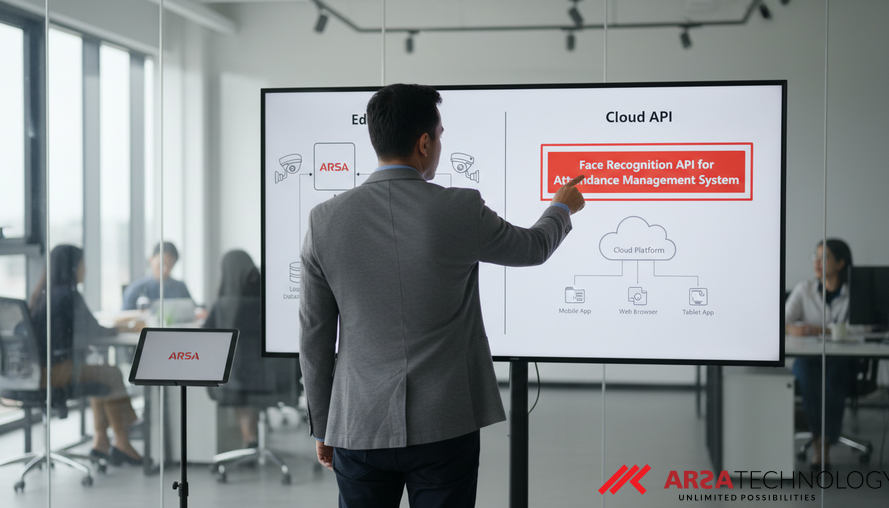

Edge AI vs. Cloud: Choosing the Right Face Recognition API for Attendance Management System
For system integrators tasked with modernizing enterprise operations, selecting the optimal technology for identity verification is paramount. When it comes to implementing a robust face recognition API for attendance management system, the choice between edge-based AI and cloud-based solutions presents a critical architectural decision. Both approaches offer distinct advantages and trade-offs, particularly concerning data privacy, scalability, and operational costs. Understanding these nuances is key to delivering a solution that not only meets immediate client needs but also provides long-term value and compliance.
ARSA Technology, with its extensive experience in AI and IoT solutions, offers flexible deployment models designed to cater to diverse enterprise requirements. This guide will help system integrators navigate the complexities of edge versus cloud, focusing on how each model impacts the deployment of a reliable facial authentication system.
The Rise of Biometric Attendance Systems
Traditional attendance methods are prone to inefficiencies, buddy punching, and manual errors. Biometric systems, especially those leveraging face recognition, offer a secure, accurate, and touchless alternative. For system integrators, the challenge lies in integrating these advanced capabilities seamlessly into existing infrastructure while ensuring data integrity and user experience. A well-chosen face recognition API for attendance management system can drastically reduce administrative overhead and enhance security protocols.
Edge AI for Face Verification: Local Processing, Maximum Control
Edge AI refers to artificial intelligence processing that occurs directly on a local device, such as a dedicated AI Box or an on-premise server, rather than sending data to a centralized cloud. This model offers significant benefits for specific use cases:
- Data Sovereignty and Privacy: For government agencies and highly regulated industries, keeping sensitive biometric data within the local network is often a non-negotiable requirement. Edge processing ensures that video streams and facial templates never leave the client’s infrastructure, addressing strict data privacy regulations like GDPR and Indonesia PDPA.
- Low Latency and Real-time Performance: Processing data at the source eliminates network delays associated with cloud communication. This is crucial for applications demanding sub-second response times, such as high-volume employee check-in systems or critical access control points where immediate verification is essential.
- Offline Operation: Edge solutions can operate entirely without an internet connection, making them ideal for remote sites, facilities with unreliable connectivity, or air-gapped environments.
- Reduced Bandwidth Costs: By processing video streams locally, only metadata or aggregated results need to be transmitted, significantly reducing bandwidth consumption and associated cloud data transfer costs.
However, edge deployments also come with their own set of considerations. They typically require more upfront hardware investment, on-site IT expertise for maintenance, and can be more complex to manage across geographically dispersed locations. ARSA’s AI Box series, for instance, offers plug-and-play edge processing for specific video analytics tasks, demonstrating the power of localized AI.
Cloud-Based Face Recognition API for Attendance Management System: Scalability and Simplicity
Cloud-based face recognition solutions, like the ARSA Face Recognition & Liveness API, leverage the vast computational resources of cloud infrastructure to deliver powerful AI capabilities. This model is often preferred for its ease of deployment, scalability, and reduced operational burden.
- Rapid Deployment and Integration: A cloud API allows system integrators to quickly integrate advanced face recognition capabilities into new or existing applications with minimal setup. ARSA’s API, available on RapidAPI, offers a free tier for testing and scales effortlessly to handle massive user bases, making it ideal for rapid prototyping and deployment.
- Cost-Effectiveness for Scalability: For many businesses, the pay-as-you-go model of cloud services can be more economical than investing in and maintaining dedicated edge hardware. As usage scales, the cloud infrastructure scales with it, without requiring additional on-site hardware procurement or management.
- Managed Service and Maintenance: Cloud providers handle all infrastructure maintenance, updates, and security patching, freeing up internal IT resources. This ensures high availability and continuous performance without the need for specialized on-premise teams.
- Centralized Management: Managing a large user database for a face verification for employee check-in system across multiple locations becomes simpler with a centralized cloud platform. All data (with appropriate encryption and access controls) resides in one secure location, simplifying reporting and analytics.
While cloud solutions offer immense flexibility, system integrators must consider data transfer implications and the necessity of a stable internet connection for continuous operation. However, for many modern enterprises, the benefits of scalability and ease of management often outweigh these concerns.
Key Considerations for System Integrators
When advising clients on the best face recognition API for attendance management system, system integrators should evaluate several factors:
1. Data Privacy and Compliance: Understand the client’s specific regulatory environment (e.g., GDPR, HIPAA, Indonesia PDPA). If strict data sovereignty is required, an on-premise SDK or edge solution (like ARSA’s Face Recognition & Liveness SDK) might be necessary. For less stringent requirements, a secure cloud API with robust encryption and data handling policies, such as the Face Recognition & Liveness overview, can be highly effective.
2. Scalability Requirements: How many users will the system need to support? How many locations? Cloud APIs excel at scaling on demand, while edge solutions require careful planning for hardware distribution and management. ARSA’s Face Recognition API can scale to 500,000 API calls per month, supporting large enterprise needs.
3. Integration Complexity: Cloud APIs generally offer simpler integration via RESTful interfaces, accelerating development cycles for a facial authentication API for access control app. Edge solutions might require more bespoke integration with local network components.
4. Budget and ROI: Analyze the total cost of ownership (TCO) including hardware, software, maintenance, and potential bandwidth costs. ARSA’s cloud API can reduce manual verification costs by up to 80% with sub-second verification response, offering a clear ROI.
5. Performance Needs: For critical applications like a face ID API for building access control, real-time performance is non-negotiable. Both well-optimized edge and cloud solutions can deliver this, but network latency is a bigger factor for cloud.
6. Anti-Spoofing and Security: Ensure the chosen solution includes robust active and passive liveness detection to prevent identity fraud using photos, videos, or masks. ARSA’s Face Recognition & Liveness API boasts 99.67% accuracy and advanced anti-spoofing measures.
ARSA Technology: Flexible Solutions for Every Need
ARSA Technology understands that no single solution fits all. Our product portfolio is designed with flexibility in mind, offering both cloud and on-premise options to meet diverse client needs.
For system integrators building a biometric API for visitor management platform, or an advanced face verification for employee check-in system, the ARSA Face Recognition & Liveness API provides a powerful, scalable, and easy-to-integrate solution. It offers:
- 1:1 Face Verification: Confirming identity with high accuracy.
- 1:N Face Identification: Searching against a database for quick recognition.
- Active and Passive Liveness Detection: Essential for preventing spoofing attacks and ensuring genuine presence.
- Face Database Management: Securely enroll, update, and manage user identities.
- E-KYC Readiness: Automate digital onboarding processes, reducing fraud and manual effort.
Beyond attendance and access control, ARSA’s AI capabilities extend to various other applications. For instance, our ARSA DOOH Audience Meter (AI Box) demonstrates how edge AI can provide real-time audience analytics for digital signage, showcasing our versatility across different deployment models. Our commitment is to provide production-ready, reliable AI solutions that drive measurable business outcomes. You can explore all ARSA products to see the full range of our offerings.
Conclusion
The decision between an edge-based or cloud-based face recognition API for attendance management system ultimately hinges on a thorough assessment of your client’s specific operational context, security requirements, and scalability needs. While edge solutions offer unparalleled data control and low latency for critical, isolated environments, cloud APIs provide unmatched scalability, ease of integration, and managed services for broader, dynamic deployments.
ARSA Technology empowers system integrators with both options, ensuring that you can deliver the most effective and compliant biometric solutions. By leveraging the ARSA Face Recognition & Liveness API, you can integrate advanced facial authentication that prevents identity fraud, automates verification, and significantly reduces operational costs. Ready to build intelligent, secure, and efficient systems? Contact ARSA solutions team today to discuss your project requirements and discover how our AI can transform your enterprise solutions.
—
Frequently Asked Questions
What is the primary benefit of using a face recognition API for attendance management system in the cloud?
The primary benefit of a cloud-based face recognition API for attendance management is its scalability and ease of integration. It allows for rapid deployment, handles large user bases effortlessly, and benefits from managed infrastructure, reducing the burden on internal IT teams.
How does ARSA’s facial authentication API for access control app ensure security against spoofing?
ARSA’s facial authentication API includes both active and passive liveness detection. This challenge-response based verification prevents spoofing attacks using photos, videos, or 3D masks, ensuring that only a live, present individual can gain access.
Can ARSA’s face verification for employee check-in system be integrated with existing HR platforms?
Yes, ARSA’s Face Recognition & Liveness API is designed with a REST API, allowing for seamless integration with existing HR platforms, access control systems, and other enterprise applications. This enables a smooth transition to automated employee check-in.
What are the advantages of a biometric API for visitor management platform for government facilities?
For government facilities, a biometric API for visitor management enhances security by accurately verifying visitor identities, streamlining entry processes, and maintaining a secure audit trail. ARSA’s API offers high accuracy and anti-spoofing to prevent unauthorized access and improve overall facility security.
—
Stop Guessing, Start Optimizing.
Discover how ARSA Technology drives profit through intelligent systems.
